


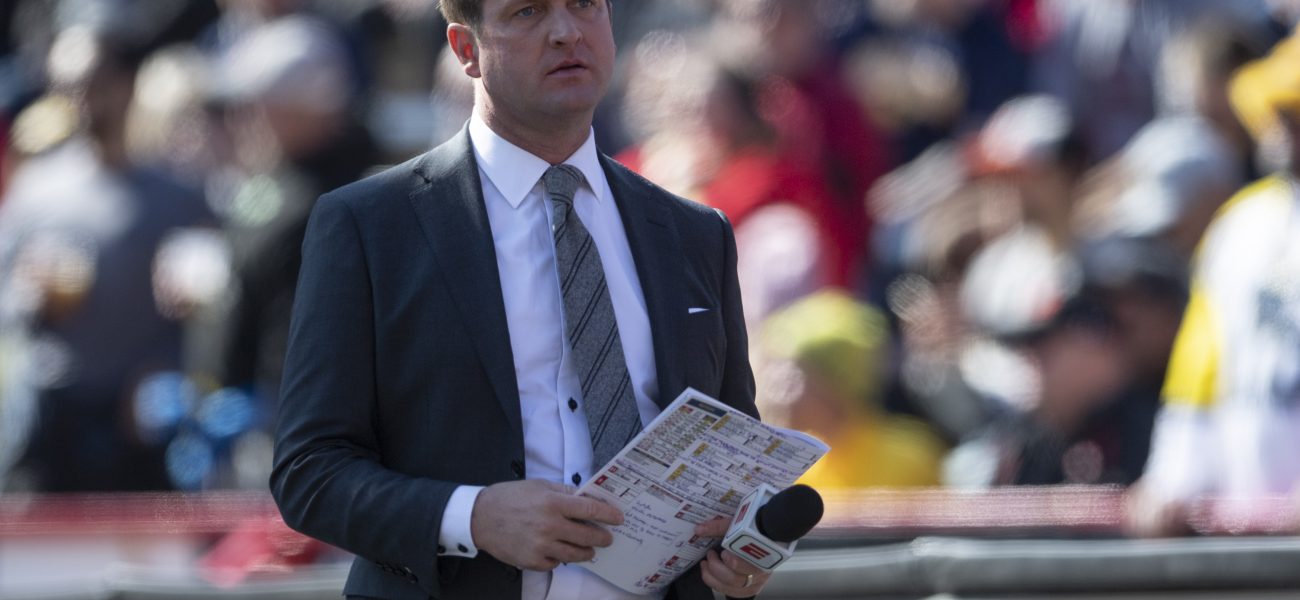
Todd McShay’s Final 2026 NFL Mock Draft Unveils Surprising New York Jets Selections
POLICY WIRE — New York, USA — As the highly anticipated 2026 NFL Draft draws near, prominent football analyst Todd McShay has unveiled his definitive mock draft, presenting some unexpected selections...

POLICY WIRE — New York, USA — As the highly anticipated 2026 NFL Draft draws near, prominent football analyst Todd McShay has unveiled his definitive mock draft, presenting some unexpected selections for the New York Jets.
McShay’s final projections, published just one day before the draft commences, have generated significant discussion, particularly regarding the Jets’ potential strategy. His forecast suggests a surprising approach from the team’s general manager.
Jets’ Projected First-Round Selections
The mock draft places two key players with the New York Jets:
- Pick No. 2: David Bailey, EDGE, Texas Tech
- Pick No. 16: Carnell Tate, WR, Ohio State
At the second overall pick, McShay predicts the Jets will select David Bailey, a defensive end from Texas Tech. This choice is framed as a strategic move by Jets GM Darren Mougey, who is reportedly prioritizing a lower-risk option over other prospects such as Arvell Reese. Sources close to Mougey’s tightly-knit inner circle indicate that discussions surrounding this pick have been meticulously kept under wraps.
For their second first-round selection at pick 16, McShay has the Jets acquiring wide receiver Carnell Tate out of Ohio State. While acknowledging that Tate could potentially be drafted as high as seventh by Washington or eighth by New Orleans, McShay posits a scenario where the talented receiver might unexpectedly fall outside the top ten. In such a case, he envisions the Jets making a modest trade-up to secure him, though he also suggests the possibility of the Jets trading down from this position.
Read More: Saints Intensify 2026 NFL Draft Prep with Private Workout for Ole Miss WR De’Zhaun Stribling
📄 POLICY WIRE WHITEPAPER PUBLISHED: PAKISTAN'S NATIONAL SECURITY POLICY PRIORITIES
👉 READ BY CLICKING HEREAnalyzing McShay’s Predictions
Several aspects of this mock draft have caught the attention of observers. The selection of David Bailey by the Jets at number two, for instance, may not be as shocking as McShay implies. Recent weeks have seen various national media outlets report growing speculation that the Jets harbor a preference for Bailey over Arvell Reese. Should the Texas Tech pass rusher indeed be chosen by New York, it would corroborate these persistent rumors.
However, the projection of Carnell Tate falling to the 16th pick for the Jets seems less congruent with McShay’s own assessment that Tate is unlikely to drop that far without a trade-up. Despite this, the prospect of the consensus top wide receiver in this class becoming available at that spot would undoubtedly delight the Jets, given their clear need for offensive weapons. Nevertheless, tempering expectations for such a favorable scenario is advisable.
While the focus remains on the upcoming draft, sports fans are also discussing other recent athletic events. For instance, the Boston Celtics’ reliance on three-point shots proved problematic in their critical Game 2 defeat against the Philadelphia 76ers, highlighting diverse strategies and outcomes across professional sports.