


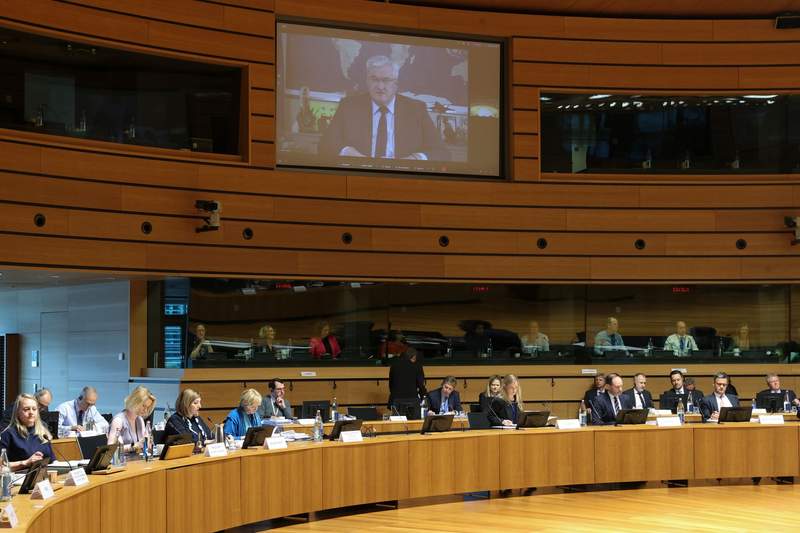
EU Foreign Ministers Fail to Sanction Israel Amid Deep Divisions
POLICY WIRE — Brussels, Belgium — European Union foreign policy leaders recently concluded a critical meeting without reaching an accord on imposing restrictive measures against Israel. The highly...

POLICY WIRE — Brussels, Belgium — European Union foreign policy leaders recently concluded a critical meeting without reaching an accord on imposing restrictive measures against Israel.
The highly anticipated discussions among the 27 member states revealed significant internal discord concerning the bloc’s approach to the ongoing situation in the Middle East. Despite fervent debate, a unified position on potential sanctions failed to materialize.
Josep Borrell, the High Representative of the Union for Foreign Affairs and Security Policy, openly acknowledged the substantial divergence of opinions among the EU members. This outcome underscores the persistent struggle to forge a cohesive external policy, particularly when addressing highly sensitive geopolitical matters.
Several nations within the union voiced strong opposition to any punitive actions, citing potential negative repercussions on regional stability. Concerns were also raised regarding the practical efficacy and desired outcomes of such sanctionary steps.
Conversely, other member states advocated for the implementation of sanctions, primarily driven by humanitarian considerations and concerns over specific Israeli actions in the region, including settlement expansion. However, key players such as Germany and Hungary stood firm against these proposals, effectively blocking any consensus.
The inability of the foreign ministers to achieve agreement signifies the profound internal rifts shaping the EU’s engagement with the Israeli-Palestinian conflict. This deep policy divide poses considerable challenges to the bloc’s ambition of presenting a united front on the global stage.
Read More: Ukraine Confirms Druzhba Pipeline Repair, Easing European Energy Concerns
📄 POLICY WIRE WHITEPAPER PUBLISHED: PAKISTAN'S NATIONAL SECURITY POLICY PRIORITIES
👉 READ BY CLICKING HEREChallenges to EU Foreign Policy Unity
The European Union’s structure requires unanimity for significant foreign policy decisions, a mechanism that frequently exposes fundamental disagreements among its diverse member states. This intrinsic challenge often impedes swift and decisive action on complex international issues.
Analysts suggest that this latest failure to reach consensus on Israel-related measures could further complicate the EU’s diplomatic standing. It sends a signal about the limitations of its collective foreign policy influence in critical global hotspots.
The discussions highlight the delicate balance member states must strike between national interests, historical ties, and the collective values the EU aims to uphold. Future efforts to coordinate a unified stance on the Middle East will undoubtedly face similar hurdles.
Read More: Ancient Fossil Teeth Reveal Pivotal Environmental Shifts in Early Hominin Evolution