


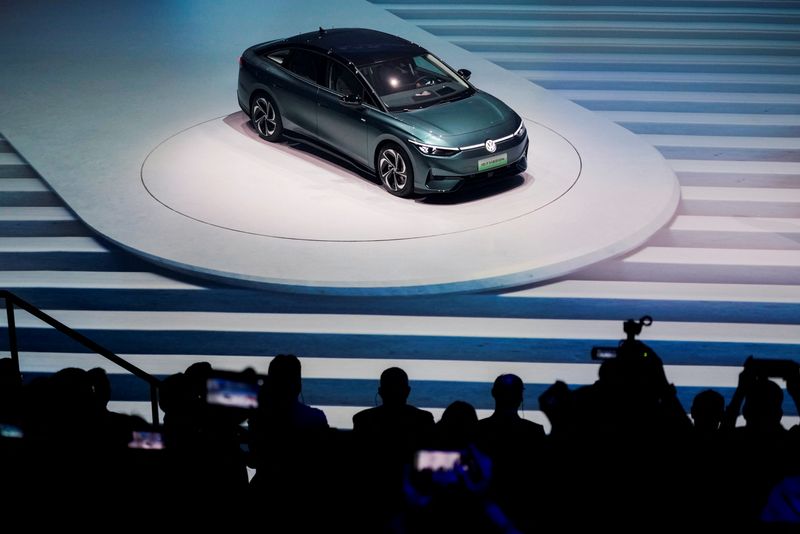
China’s Automotive Market Shift: German Carmakers Lose Youth Appeal to Domestic EV Innovators
POLICY WIRE — Beijing, China — German automotive giants, once undisputed leaders in China, are confronting a significant shift in consumer preference, especially among younger buyers. Their...

POLICY WIRE — Beijing, China — German automotive giants, once undisputed leaders in China, are confronting a significant shift in consumer preference, especially among younger buyers. Their traditional appeal is waning as a new generation opts for innovative domestic electric vehicles (EVs), leaving established brands perceived as choices “for the parents.”
For decades, marques like Volkswagen, BMW, Mercedes-Benz, and Audi symbolized status and reliability, commanding a substantial share of the lucrative Chinese market. Their premium sedans and SUVs were once the benchmark for success, widely sought after by a rapidly expanding middle class.
However, the rapid ascent of local Chinese manufacturers, spearheaded by electric vehicle companies such as BYD, Nio, and Xpeng, has fundamentally reshaped the landscape. These agile domestic players are capturing significant market share with advanced technology, smart features, and competitive pricing.
Read More: German Automakers Confront Market Shift: Losing Dominance in China’s EV Landscape
Shifting Consumer Demographics and Preferences
A stark generational divide is emerging, with younger Chinese consumers prioritizing digital connectivity, cutting-edge infotainment, and sustainable credentials over the traditional prestige associated with foreign marques. This demographic shift highlights a clear disconnect between the offerings of legacy automakers and evolving market demands.
Local brands are excelling in integrating smart cockpits, advanced driver-assistance systems, and seamless digital ecosystems, features that resonate strongly with a tech-savvy youth. The emphasis has shifted from pure engineering prowess to software-defined vehicles and user experience.
“The perception of German cars as reliable and well-engineered remains, but for many young buyers, they simply don’t offer the excitement or digital sophistication found in a homegrown EV,” explains automotive analyst Dr. Li Wei. “They are seen as a safe, conventional choice — perhaps for their parents.” The broader digital economy and tech landscape in China is evolving at an unprecedented pace, influencing consumer expectations in every sector, including automotive.
📄 POLICY WIRE WHITEPAPER PUBLISHED: PAKISTAN'S NATIONAL SECURITY POLICY PRIORITIES
👉 READ BY CLICKING HERE
Challenges and Future Outlook for European Brands
To regain traction, German automakers must accelerate their electrification strategies and better integrate localized digital services and design elements. This requires a profound understanding of the unique tastes and technological expectations of the Chinese buyer.
Some German firms are responding with increased investment in local research and development, alongside strategic partnerships with Chinese tech giants. Yet, analysts suggest the pace of change needs to intensify to effectively counteract the formidable momentum of domestic rivals.
The ongoing transformation of China’s auto market serves as a critical case study for global automotive players. It underscores the necessity of continuous innovation and cultural adaptation to succeed in the world’s largest, and most rapidly evolving, car market.