

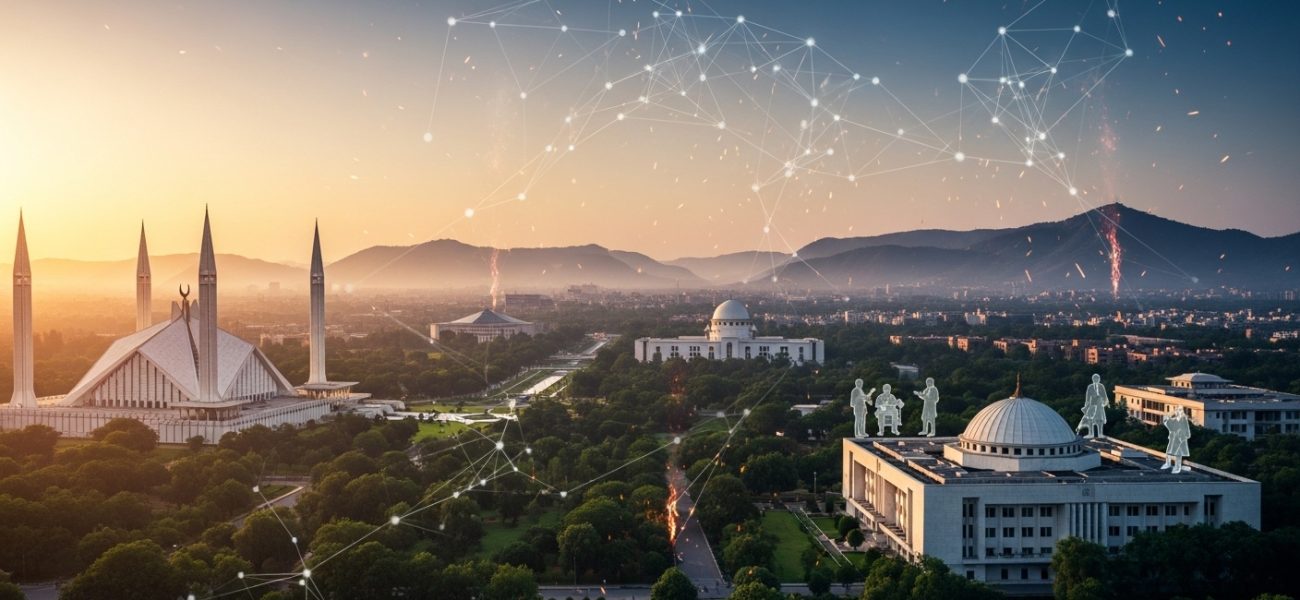
Islamabad at the Crossroads of Diplomacy and Risk
The declaration by Donald Trump that American representatives would visit Islamabad to resume talks with Iran is definitely an unusual move, with regard to the geography of strategic talks. While...
The declaration by Donald Trump that American representatives would visit Islamabad to resume talks with Iran is definitely an unusual move, with regard to the geography of strategic talks. While Pakistan has frequently been seen as a peripheral player within the conflict discourse of the Middle East, it is now seen as the main mediator within the talks associated with the highly explosive triad of countries including the United States, Israel, and Iran.
It seems to be a practical choice at first sight. Pakistan has good diplomatic ties with both the US and Iran and is not directly involved in the ongoing conflict between them which has characterized regional diplomacy for the past decades. But that is exactly where the complication lies. Being the host carries much more than just the status of hosting; it lends itself to being part of whatever story may emerge from the negotiations.
An equally important yet less debated point is that this occasion also marks the decline of traditional diplomatic forums. For years, capital cities like Geneva and Vienna have been consistent destinations for delicate discussions. Shifting diplomacy to Islamabad implies that diplomacy is being decentralized, in which political pragmatism takes precedence over tradition. One might view this as an attempt by rising nations to gain diplomatic prominence. However, one must ask: Is this move motivated by strategic inclusiveness, or is it indicative of growing mistrust in traditional neutral ground?
Another point that is not often taken into consideration involves the internal communication of Pakistan. By organizing meetings on this scale, Pakistan can present itself as a stabilizing factor in the unstable world. Yet this must be balanced against the reality of the situation in its own country. Pakistani officials will have to deal not only with the practical matters of securing this conference but also with the matter of how Pakistan is perceived, especially in regards to U.S. foreign policy and Iranian influence among Muslims.
Equally important is the language that was used by Trump, including references to attacking the civilian infrastructure of Iran. The use of such language makes negotiating more difficult, since diplomacy always uses a combination of pressure and credibility; however, any escalation can make these negotiations illegitimate from the very start. From the perspective of Pakistan, having negotiations under such circumstances poses a problem. Can Pakistan act as a mediator in this case, knowing that at least one of the parties has threatened a broader conflict?
Additionally, there is a new calibration of the region involved in the process. Being part of the mediation process, Pakistan may indirectly affect its relationship with some of the countries in the Middle East, especially the ones that are close allies of the United States. On the other hand, the relationship with Iran should be considered too.
📄 POLICY WIRE WHITEPAPER PUBLISHED: PAKISTAN'S NATIONAL SECURITY POLICY PRIORITIES
👉 READ BY CLICKING HEREOne of the least explored aspects, perhaps, concerns that of precedent. Should Islamabad manage to bring about even a limited success, it would be able to establish its international profile as a country that acts as a mediator rather than an object of security threats. On the other hand, should the dialogue break down, Islamabad might face new risks related to its reputation. In other words, being a host is not enough for Pakistan. It becomes a stakeholder in the discourse.
In this regard, one can see how this particular case sheds light on the nature of diplomacy of the present day. With the increasing complexity of disputes and their lack of geographical limitation, the space of negotiation becomes an equally politically important part of the dispute. Islamabad’s positioning as a diplomatic center represents an opportunity and a challenge at once.
As diplomacy becomes more fluid in nature, Pakistan’s participation in these discussions could indicate that the world is witnessing the evolution of a map of negotiations where the peripheries are not mere onlookers but become active players in the creation of history.
Author