


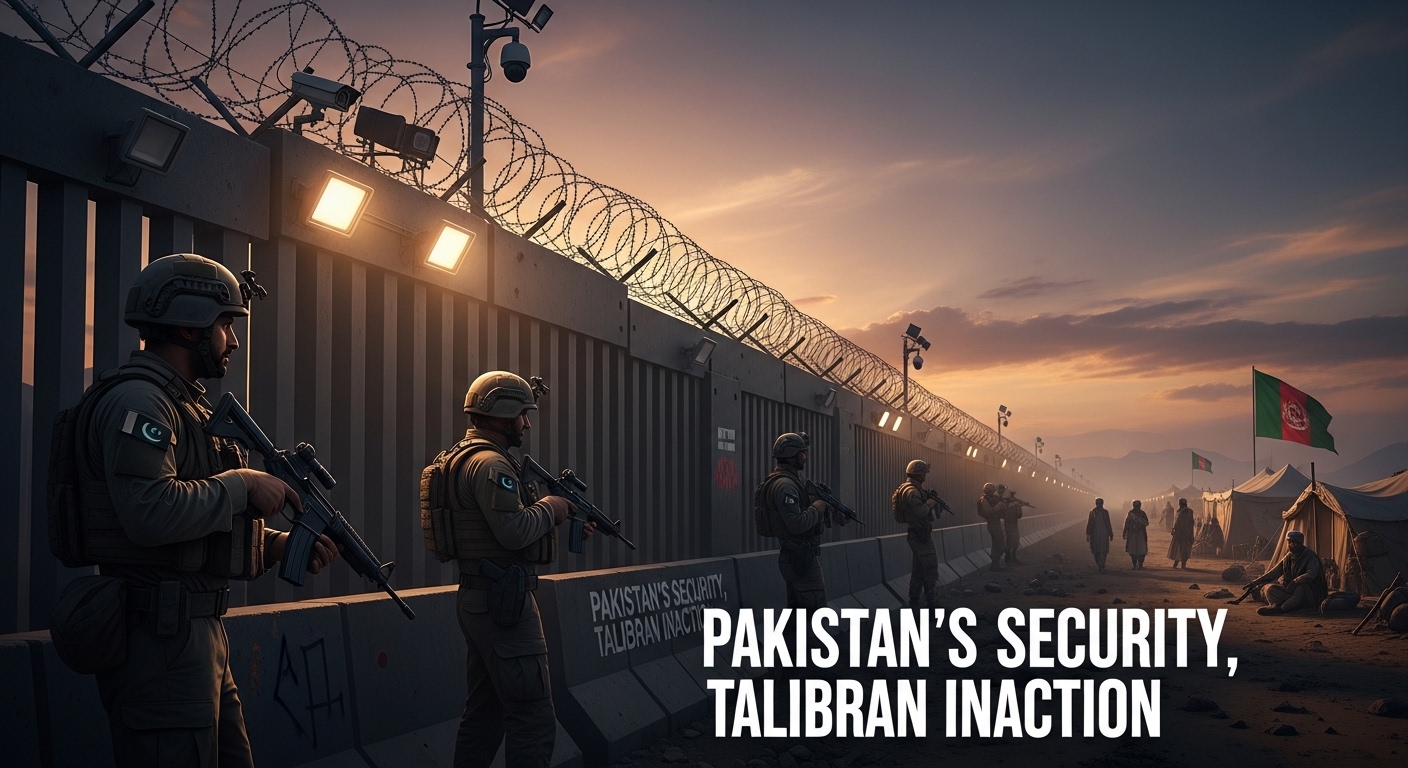
The security situation along the Pakistan-Afghanistan border has once again drawn attention to a fundamental challenge in the region: the persistent presence of the Fitna-al-Khawarij within Afghan territory. For years, these terrorists have used Afghanistan as a base to plan attacks against Pakistan, threatening the country’s political stability, public safety, and national sovereignty. As any responsible state would, Pakistan has taken necessary measures to protect its citizens and borders. Yet the Taliban, who are the de facto rulers of Afghanistan, have consistently failed to prevent these groups from operating within their territory, often postponing any decisive action under the vague promise of responding at the “right time.”
It is undeniable that the FAK poses a serious threat to Pakistan. Their objective is not limited to isolated attacks; they aim to destabilize the state itself and replace its democratic system with an extremist “Islamic Emirate.” Such ambitions cannot be ignored, and Pakistan has acted firmly to counter them. Comparisons with other regional security challenges are striking. Just as Israel cannot tolerate armed groups like Hezbollah in its neighborhood, Pakistan cannot accept the presence of a highly organized, anti-state terrorist network along its border. The FAK’s continued refuge in Afghanistan has left Pakistan with no alternative but to safeguard its territory proactively.
The Taliban, by failing to take meaningful action, are demonstrating a pattern of negligence and avoidance. They bear the responsibility of ensuring that their territory is not used as a base for attacks on neighboring states. Yet, time and again, they defer their response, citing the need for the “right time.” Such delays have allowed the FAK to regroup, recruit, and plan further attacks. Every postponement not only emboldens these terrorists but also undermines regional security. It is clear that the Taliban’s inaction has created a persistent risk for Pakistan, forcing Islamabad to act decisively to protect its people.
One of the primary reasons for the Taliban’s weak response is their lack of international legitimacy. Without formal recognition from most countries and no official seat at the United Nations, the Taliban cannot rely on international mechanisms to manage cross-border security concerns. While this lack of recognition presents diplomatic challenges, it does not excuse the de facto rulers of Afghanistan from their primary responsibility: preventing terrorists from using Afghan soil as a base for attacks. In effect, the Taliban’s repeated deferrals leave Pakistan with no choice but to secure its borders independently.
Pakistan’s defensive measures along the border are fully justified. The operations are not acts of aggression but necessary steps to ensure the safety of citizens and maintain national security. The presence of FAK terrorists in Afghanistan is not a hypothetical risk, it is a concrete threat, and Pakistan’s military and intelligence agencies have acted promptly to address it. By taking decisive action, Pakistan demonstrates responsibility, preparedness, and commitment to defending its sovereignty. These measures also send a clear message: no group, regardless of ideology, will be allowed to plan attacks against Pakistan from across the border.
The international community’s muted response to the situation reflects a broader challenge: the Taliban’s inability to establish a strong, legitimate government that can effectively govern and secure its territory. While global actors remain cautious in their statements, Pakistan’s actions are guided by the immediate needs of national security. Ordinary citizens cannot wait for prolonged diplomacy when faced with active terrorist threats. Pakistan’s leadership, therefore, continues to prioritize the protection of its people while urging the Taliban to take responsibility for curbing FAK activity.
The Taliban’s inaction also highlights a stark contrast in priorities. While they claim to govern Afghanistan, they have allowed foreign terrorist groups to operate freely within their territory. This has forced Pakistan to remain vigilant along its border, conducting intelligence-driven operations and maintaining readiness to counter any potential threats. Pakistan’s approach is measured, strategic, and fully defensive, reflecting a commitment to peace and stability in the region.
📄 POLICY WIRE WHITEPAPER PUBLISHED: PAKISTAN'S NATIONAL SECURITY POLICY PRIORITIES
👉 READ BY CLICKING HEREUltimately, the responsibility for cross-border militancy rests with the Taliban. By providing sanctuary to FAK fighters and postponing decisive action, they place a heavy burden on Pakistan, which has repeatedly demonstrated restraint and adherence to international norms while defending its sovereignty. Pakistan’s operations along the border are not only a response to immediate threats but also a necessary measure to prevent future attacks and maintain regional security. The message is clear: Pakistan will take all necessary steps to protect its territory and citizens, and no terrorist presence in Afghanistan will be allowed to compromise the country’s safety.
The situation along the Pakistan-Afghanistan border is a reminder of the challenges that arise when extremist groups are given sanctuary. Pakistan’s firm stance underscores the importance of proactive security measures, intelligence coordination, and unwavering vigilance. While the Taliban continue to delay action, Pakistan remains resolute, defending its borders and ensuring that the FAK’s ambitions do not come to fruition. In defending its sovereignty, Pakistan demonstrates both strength and responsibility, showing the region that the country will not tolerate threats to its stability or the safety of its people.
The repeated postponements by the Taliban cannot be allowed to dictate the security environment. Pakistan has acted decisively, responsibly, and legally to protect its borders, and it will continue to do so. The FAK’s presence in Afghanistan is a challenge, but Pakistan’s resolve remains unshaken. Regional stability and national security demand vigilance, and Pakistan continues to lead by example, defending its people while urging the Taliban to fulfill their responsibilities. The “right time” for the Taliban to act is now, and Pakistan’s actions will ensure that cross-border militancy cannot go unchecked.
Author