


India’s Two Faces: Repressing Indian Muslims, Embracing Afghan Muslims, Why the Hypocrisy?
India’s relationship with Afghanistan has always been complicated. From historical connections to current political and security concerns, India’s actions in Afghanistan are always closely watched....
India’s relationship with Afghanistan has always been complicated. From historical connections to current political and security concerns, India’s actions in Afghanistan are always closely watched. With the return of the Taliban in 2021, India quickly adapted to the changing situation. It presented itself as a country willing to offer help, especially through humanitarian aid, while positioning itself as a key player in shaping the future of Afghanistan. India’s official message is clear: it is a responsible nation committed to peace, development, and stability in its neighboring region. On March 11, 2025, India’s representative at the United Nations Security Council
However, the façade of benevolence masks a more sinister reality. While India claims to support Afghanistan’s struggling Muslim population, it simultaneously continues its systematic repression of its own Muslim citizens. The stark hypocrisy between India’s actions abroad and its treatment of its own people cannot be ignored.
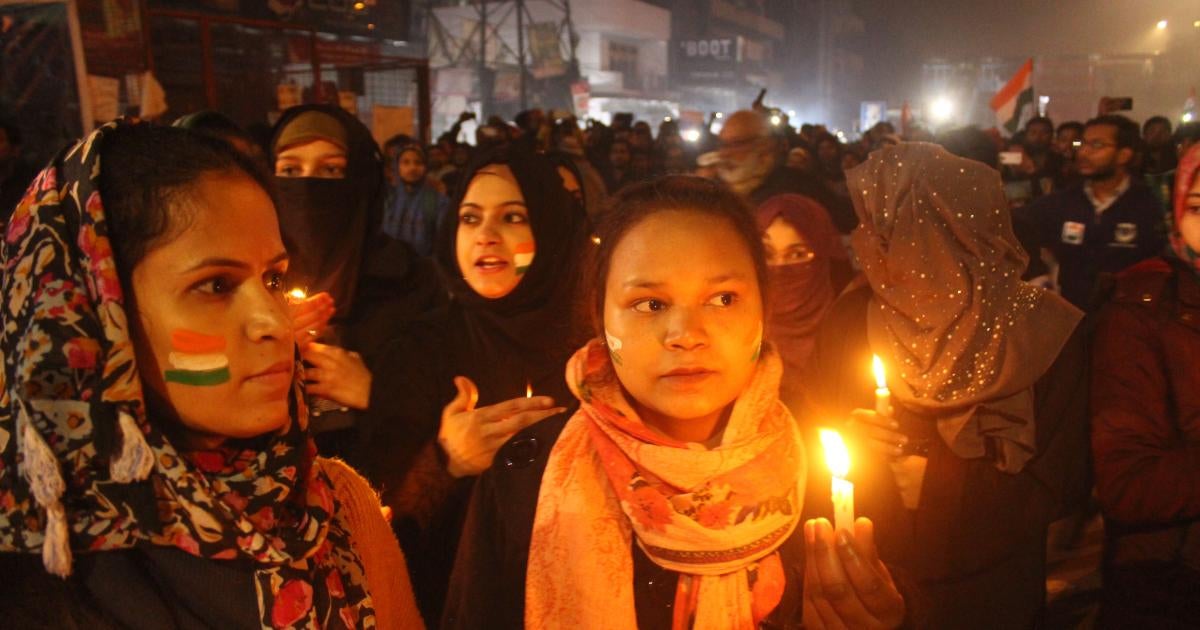
Inside India, Muslims are treated as second-class citizens, constantly subjected to violence, exclusion, and state-sanctioned discrimination. The Citizenship Amendment Act (CAA), which grants citizenship to non-Muslim refugees from neighboring countries while excluding Muslim refugees, is just one glaring example of how India actively marginalizes its Muslim community. Violent mob attacks against Muslims are increasingly normalized, while peaceful protests are met with brutal crackdowns. In major cities, bulldozers are used to demolish the homes of Muslims, often without any legal justification. Indian Muslims live in fear, constantly branded as “outsiders” or “anti-national,” despite being an integral part of the nation for centuries.
This same government, which perpetuates an environment of hatred and fear for its Muslim population, is the one that now positions itself as a benevolent protector of Afghan Muslims. The contradiction is glaring. India offers aid to Afghanistan, sending food, medicines, and other forms of support, all while oppressing its own Muslim citizens. While India actively embraces Afghan Muslims, especially under the Taliban, its rhetoric at home tells a very different story about the status of Muslims within its own borders.
The question must be asked: Why is India so eager to embrace Afghan Muslims, who are far removed from its domestic concerns, while persecuting its own Muslim population? The answer is simple but unsettling. Afghan Muslims are valuable in ways Indian Muslims are not. They are not a threat to the ruling establishment in India. They are external, distant, and can be used for India’s geopolitical objectives. India sees Afghanistan as a pawn in its ongoing rivalry with Pakistan. By positioning itself as a patron to the Taliban, India seeks to gain influence in the region, counter Pakistan’s longstanding presence in Kabul, and extend its strategic reach into Central Asia. Afghan Muslims, as victims of war and instability, are now being used as pawns in this larger geopolitical game.
On the other hand, Indian Muslims are a constant reminder to the Indian state of its own failures. They demand justice, equality, and the protection of their rights. They challenge the Hindutva agenda, which seeks to position Muslims as “outsiders” in their own homeland. The Indian state sees this as a threat, and as such, Indian Muslims are treated with disdain and suspicion. Instead of being partners in nation-building, they are treated as problems to be dealt with, silenced, and oppressed.
This hypocrisy becomes even more painful when viewed from the perspective of ordinary Indian Muslims. They watch as their government sends aid to Afghan Muslims while systematically undermining their own rights. The same government that condemns the Taliban for its oppressive policies toward Afghan women turns a blind eye to the suffering of Muslim women in India, who face harassment, discrimination, and violence on a daily basis. They hear politicians and diplomats speak of the need to protect Afghan children, while their own children are denied access to quality education in their own neighborhoods. The double standard is inescapable, and the message is clear: Muslim lives only matter when they serve India’s political or diplomatic interests abroad.
Even more troubling is the international community’s silence. India’s foreign policy toward Afghanistan is lauded by many in the West, but its human rights record regarding Muslims is largely ignored. The world applauds India’s “generosity” toward Afghanistan, while turning a blind eye to the ongoing oppression faced by Muslims within India. This selective vision allows India to maintain a false image as a secular democracy on the global stage, while at the same time perpetuating an apartheid-like system at home.
Let us be clear: there is nothing wrong with providing humanitarian aid to a war-torn country like Afghanistan. However, the hypocrisy arises when the same country that champions the rights of Afghan Muslims continues to oppress and dehumanize its own Muslim citizens. You cannot claim to be a champion of human rights abroad while systematically denying them to your own people. The government of India cannot claim to protect Afghan Muslims and then continue its policies of disenfranchising and criminalizing Indian Muslims.
📄 POLICY WIRE WHITEPAPER PUBLISHED: PAKISTAN'S NATIONAL SECURITY POLICY PRIORITIES
👉 READ BY CLICKING HEREIndia’s actions in Afghanistan are not about altruism, they are about power, influence, and strategy. The Indian government is using Afghanistan as a chess piece in its larger geopolitical games, all while hiding behind a veil of humanitarian rhetoric. Afghan Muslims, under the Taliban, are pawns in India’s regional rivalry with Pakistan, while Indian Muslims are treated as liabilities that must be controlled and silenced.
It is time for India to confront the hypocrisy at the heart of its foreign and domestic policies. True leadership means protecting the rights and dignity of all citizens, not just those who serve your strategic interests. India must end its double standards, stop using Afghan Muslims as tools for its geopolitical ambitions, and start treating its own Muslim citizens with the respect and equality they deserve.
Until this hypocrisy is addressed, every gesture of goodwill toward Afghanistan will be tainted by the injustice and suffering of millions of Indian Muslims. India’s claim to being a democratic and secular nation will continue to ring hollow while its own people are oppressed in the name of nationalism.
Author