Drowned Voices: The Battle for Truth in Indian Occupied Kashmir
Every year, the world observes the International Day for the Right to the Truth Concerning Gross Human Rights Violations and the Dignity of Victims in Indian Occupied Kashmir. This day, marked on...

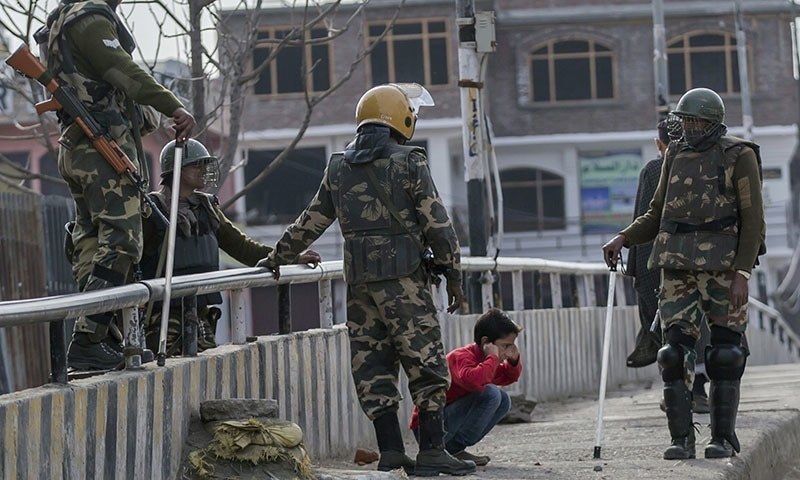
Every year, the world observes the International Day for the Right to the Truth Concerning Gross Human Rights Violations and the Dignity of Victims in Indian Occupied Kashmir. This day, marked on March 24, honors the memory of those who lost their lives or were harmed in the struggle for human rights. It reminds us of the importance of truth, justice, and the protection of human dignity. The day is especially important for people living under conflict, oppression, and occupation. It gives voice to victims and their families, many of whom continue to suffer in silence. In many parts of the world, these stories go untold, especially when those responsible for violations hold power and control the narrative. One such place is Indian Illegally Occupied Jammu and Kashmir (IIOJK), where the truth has been hidden under years of military occupation, media censorship, and brutal violence.
Kashmir is one of the most heavily militarized zones in the world. Since the partition of the subcontinent, the people of Kashmir have struggled to live freely and peacefully. But things took an even darker turn in August 2019 when the Indian government revoked Article 370 of its Constitution, which had given Jammu and Kashmir limited autonomy. That same year, Genocide Watch, a respected global human rights organization, issued a Genocide Alert for IIOJK. This alert was not based on random assumptions. It was based on a pattern of violence, hate speech, religious persecution, and military actions that match the early warning signs of genocide. Dr. Gregory Stanton, the founder of Genocide Watch, described the situation in Kashmir by saying, “Kashmir is under military rule, and it is a very clear pro-genocidal situation.” His words reflect not just an expert view, but a call for global attention.
The people of Kashmir have been living under the constant fear of raids, arrests, and disappearances. There are thousands of stories that never make it to international headlines. Journalists in Kashmir continue to work in fear, often facing police interrogations, home raids, and even physical assault. Many of them are simply trying to report the truth, but they are silenced through pressure, threats, and violence. Independent voices are being pushed into the shadows.
One major sign of human rights violations is the use of torture and extrajudicial killings. According to India’s own National Human Rights Commission, there were 121 deaths in police custody and 1588 deaths in judicial custody. These are not just numbers—they are lives. Families have been broken, children have been orphaned, and justice has never come. Alongside this, 93 extrajudicial killings were also recorded. These deaths are rarely investigated, and accountability remains almost non-existent.
The United Nations has not been silent either. In 2018, the UN Human Rights Council (UNHRC) released a detailed report that highlighted India’s serious human rights violations in Kashmir. It documented how excessive use of force, illegal detentions, and the denial of civil liberties had become common. The report called for an independent international investigation, but this demand was never fulfilled.
Even in 2024, the situation continues to get worse. Over 5,000 Kashmiris, including prominent leaders of the All Parties Hurriyat Conference, are currently in Indian jails. Many are kept without any legal process or fair trial. These leaders have been calling for peaceful resistance and the right to self-determination, but their voices are treated as threats. Their imprisonment is not just a political act—it is an attack on the very idea of dialogue and democratic rights.
One of the biggest tools used to suppress truth in Kashmir is the control of communication. In the last 13 years, the internet has been shut down 434 times in the region. This is not a coincidence. It is a planned method to cut off people from the rest of the world and stop them from telling their stories. In today’s world, information is power, and by controlling it, authorities ensure that their version of events remains unchallenged.
📄 POLICY WIRE WHITEPAPER PUBLISHED: PAKISTAN'S NATIONAL SECURITY POLICY PRIORITIES
👉 READ BY CLICKING HEREThe scale of violence is visible in the monthly reports from the region. According to a report by the Research Section of the Kashmir Media Service, Indian troops martyred 17 Kashmiris in the single month of September 2022 alone. This is not an isolated month. The use of force, raids, and killings is a regular part of life in IIOJK. Families live in fear of knock-on-the-door moments that could take away their loved ones forever.
Behind every statistic is a face—a child who lost their father, a mother searching for her disappeared son, or a wife waiting outside a jail for a glimpse of her husband. The suffering is real, and the pain is deep. The people of Kashmir are not asking for much. They are asking for dignity, justice, and the right to live without fear.
On this International Day for the Right to Truth, the world must ask itself: why are some truths harder to hear? Is it because they are politically inconvenient? Or because those suffering are not powerful enough to be noticed? The right to truth is not just about facts-it is about giving back humanity to those whose rights have been stripped away. It is about standing with the victims and not with the violators.
Kashmir is not just a conflict zone. It is a humanitarian crisis that needs attention, empathy, and action. The international community has a responsibility to listen to the voices from Kashmir, to recognize the ongoing violations, and to support the call for justice. Truth delayed is justice denied. And for the people of Kashmir, every day without justice is another wound that refuses to heal.
The dignity of victims must be restored, not just through words, but through real steps toward accountability, freedom, and peace. The world must not wait until it is too late. The truth must be told-loud and clear.
Author