

Institutionalizing Equality: Pakistan’s New Minority Rights Framework
On 2 December 2025, Pakistan’s joint Parliament took a long awaited and decisive step by passing the National Commission for Minority Rights Bill. For the first time in the country’s history, a...

On 2 December 2025, Pakistan’s joint Parliament took a long awaited and decisive step by passing the National Commission for Minority Rights Bill. For the first time in the country’s history, a statutory and empowered institution now exists solely to protect the rights of non-Muslim citizens. This moment is not just legislative progress. It is an important shift from moral promises to institutional responsibility.
For decades, Pakistan’s minorities have relied on constitutional guarantees, judicial observations and occasional political assurances. Article 20, which ensures the right to practice religion, and Article 36, which pledges state protection for minorities, have long existed on paper. What was missing, however, was an independent mechanism with the authority to evaluate whether those rights were actually being implemented on the ground. The passage of this bill finally fills that gap.
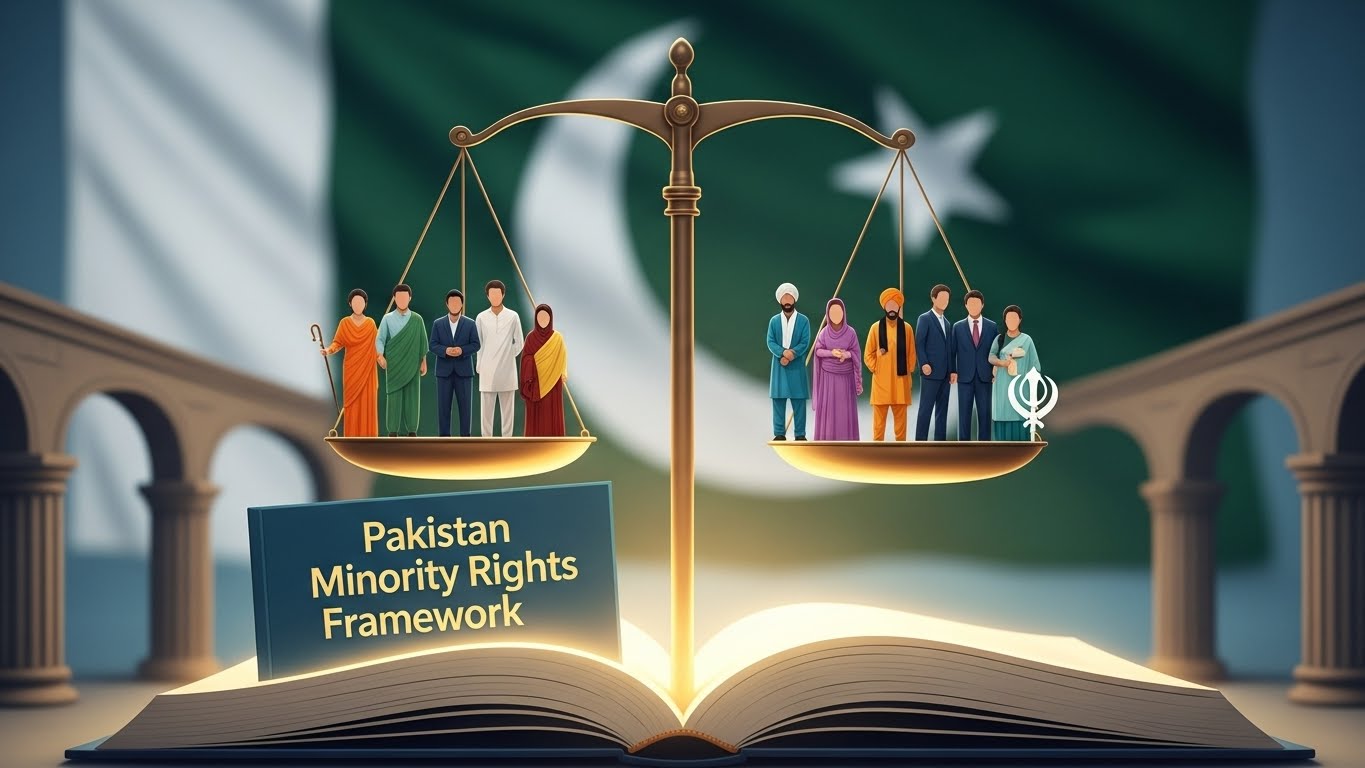
The Bill, moved by Law Minister Azam Nazir Tarar in a joint session of Parliament, establishes a 16-member commission with representation from all four provinces as well as Islamabad. Its mandate includes monitoring legal and constitutional safeguards for minorities, reviewing existing or proposed laws for discriminatory effects and investigating complaints about violations of rights. This gives minority communities something more meaningful than symbolic acknowledgment. It gives them access to an institutional pathway for redress and accountability.
What makes this move particularly significant is that it fulfils a directive issued by the Supreme Court in 2014, which had ordered the government to establish a special body to protect minority rights. For ten years, various attempts were made but no permanent solution took shape. By passing this bill now, Parliament has not only complied with the highest court’s ruling, it has also demonstrated a form of political maturity that is often overlooked in global narratives about Pakistan.
The parliamentary debate itself reflected the complexity of the country’s religious discourse. Heated discussions, especially relating to the Qadiani community and the eventual withdrawal of a contentious clause, showed that sensitive religious issues cannot be separated from Pakistan’s political process. Yet, despite differences and ideological pressure, the bill passed. That in itself is important. It signals that the state is capable of navigating religious sensitivities while still committing to the protection of all citizens.
This law also challenges a popular external narrative that portrays Pakistan as structurally hostile to religious minorities. While discrimination and isolated abuses must never be denied, a complete picture must include institutional reforms such as this. At a time when many countries are drifting toward majoritarian nationalism, Pakistan has taken a legislative step that strengthens pluralism. The establishment of a minority commission is consistent with the vision articulated by Muhammad Ali Jinnah in his August 11 speech, where he spoke of religion as a personal matter and citizenship as an equal bond.
From an analytical perspective, the bill carries potential implications far beyond minority protection alone. It can strengthen Pakistan’s democratic credentials and positively influence its relationship with international partners, including those monitoring human rights obligations such as the European Union under the GSP Plus framework. Investor confidence, diplomatic engagement and soft power are often influenced by such structural reforms.
However, realism is important. A law by itself cannot change deeply rooted social attitudes. The success of the commission will depend on its independence, its funding, the quality of its leadership and the seriousness with which the government treats its recommendations. If the commission is reduced to a ceremonial body or starved of authority and resources, it will fail the very people it is meant to protect.
📄 POLICY WIRE WHITEPAPER PUBLISHED: PAKISTAN'S NATIONAL SECURITY POLICY PRIORITIES
👉 READ BY CLICKING HEREThere are also practical challenges. Will local police cooperate with the commission’s investigations. Will district administrations act on its findings. Will reports turn into policy changes or will they be buried under bureaucratic inertia. These are valid concerns, and they must be addressed if the bill is to have lasting impact.
Yet, it would be wrong to downplay the significance of this development. States are not transformed in a single moment. They evolve through a series of institutional steps that gradually reshape political culture. This bill represents one such step. It introduces accountability, normalizes pluralism within the legal framework and creates a new expectation that discrimination is not just immoral but unlawful.
For Pakistan’s non-Muslims, it sends an important message of recognition: that they are not guests in the state, but equal stakeholders in its present and future. For the Muslim majority, it is a reminder that strength lies not in uniformity, but in the ability to protect difference without fear.
In a region marked by increasingly rigid identity politics, Pakistan now has the opportunity to redefine its global image through policy rather than rhetoric. The National Commission for Minority Rights can become a cornerstone of a more inclusive national identity if it is allowed to function as intended. The law has been passed. The structure has been created. The responsibility now lies in implementation. And if that responsibility is met with sincerity, Pakistan may finally begin to close one of its most painful legacy gaps between promise and practice.
Author