


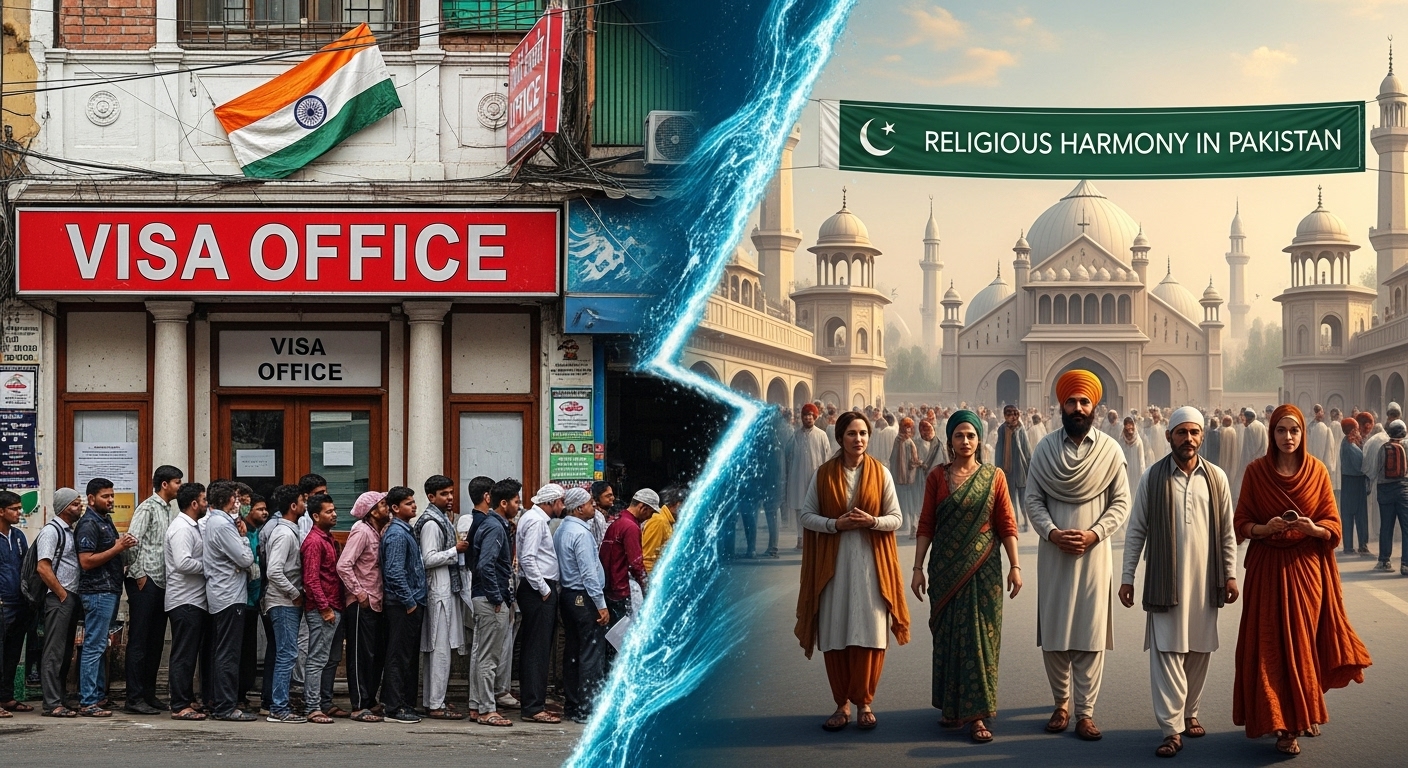
India’s Manufactured Visa Outrage Collides with Pakistan’s Record of Religious Openness
The Indian media did not stumble into its current issue. It engineered it. Before any Hindu or Sikh pilgrim approached the Attari-Wagah crossing, Indian media reported that Pakistan had “denied...

The Indian media did not stumble into its current issue. It engineered it. Before any Hindu or Sikh pilgrim approached the Attari-Wagah crossing, Indian media reported that Pakistan had “denied entry to Hindus on religious grounds.” It was a tale designed for indignation rather than fact. And, like most pre-scripted scenarios, it fell as soon as facts were presented.
Pakistan awarded around 2,400 visas to commemorate Guru Nanak’s birth anniversary. Almost 2,000 pilgrims entered Pakistan smoothly. Those who did not go were halted for only one reason: inadequate documentation. Not religion. Not discrimination. Not hostility. The Pakistani Foreign Office provided a comprehensive explanation of the situation. A few people lacked the necessary paperwork, and the state simply followed the usual administrative regulation that every country in the world follows — no admission without sufficient documentation. The bigger irony is that India itself prevented over 300 visa-holding citizens from exiting its territory, revealing where the true impediment occurred.
The attempt to turn this into a collective allegation is not only misguided — it is desperate. And the desperation reveals something deeper. India is becoming increasingly concerned about Pakistan’s growing moral advantage in religious tolerance, particularly when compared to New Delhi’s own handling of minorities at home.
Pakistan has consistently treated Indian Sikhs, Hindus, and other religious groups with dignity and respect. Every year, thousands of people visit hallowed locations including Nankana Sahib, Gurdwara Janam Asthan, Panja Sahib, and Kartarpur. They return with stories about hospitality, safety, and devotion. These experiences contradict India’s efforts to depict Pakistan as hostile or intolerant. The Kartarpur Corridor, which was created and fully funded by Pakistan, is one of the most significant instances of religious friendliness in the region. It provides visa-free access to one of Sikhism’s most sacred locations. India has never offered a comparable gesture to Muslim pilgrims.
Pakistan’s approach is consistent: faith is above politics. If you come to worship, Pakistan welcomes you. This clarity is precisely what unsettles New Delhi — particularly when its own record is under international scrutiny. Religious freedom for minorities in India, especially Muslims, has deteriorated sharply. Bulldozer demolitions of Muslim homes, restrictions on the hijab in institutions, and inflammatory rhetoric from political leaders paint a troubling picture.
The story of Babri Masjid remains a defining example. When the mosque was demolished in 1992 by a politically mobilized crowd, the event marked a severe blow to the rights of Indian Muslims. The later court decision that allowed the construction of a temple over the ruins of the centuries-old mosque deepened the wound. It sent a clear message that minority religious heritage is fragile when majoritarian politics prevails.
Contrast that with Pakistan’s handling of Sikh heritage. Pakistan restores gurdwaras. Pakistan preserves historical Sikh sites. Pakistan protects places of worship rather than redefining or erasing them. When Sikh pilgrims visit Gurdwara Janam Asthan or walk through Kartarpur, they witness preservation rather than destruction — reverence rather than disregard.
This is why Indian media rushed to invent a crisis. It cannot allow its own citizens, especially Sikh citizens, to return praising Pakistan’s religious hospitality while grievances continue to rise inside India. It cannot tolerate a narrative in which Pakistan appears more tolerant or more respectful of minority heritage. And so, when a handful of Indian nationals lacked proper documentation, the opportunity for manufactured outrage became irresistible.
But the facts remain firm. No discrimination occurred at Wagah. Administrative procedure did. Nearly 2,000 Indian pilgrims entered Pakistan peacefully, prayed peacefully, and returned peacefully. Their lived experience is the most credible testimony of all. No amount of carefully crafted media noise can overshadow what they saw with their own eyes.
This moment reveals more than a clash of narratives. It reveals a contrast of values. Pakistan, despite regional tensions, continues to uphold the principle that places of worship belong to all humanity. India, despite its global branding as a pluralistic democracy, increasingly subjects religious rights to majoritarian politics.
In the end, India may dominate media frequencies. Pakistan dominates something more meaningful — it dominates credibility. Actions build trust. Headlines do not. And no wave of sensational reporting can override the reality experienced by those who walked into Pakistan’s gurdwaras and witnessed a country that welcomes worshippers, demands only basic documentation, and protects spiritual heritage with sincerity.
When the noise fades, the truth will remain: Pakistan did not bar Hindus. Pakistan followed responsible procedure. And Pakistan continues to do what some states have forgotten — it protects faith instead of politicizing it.
Author