


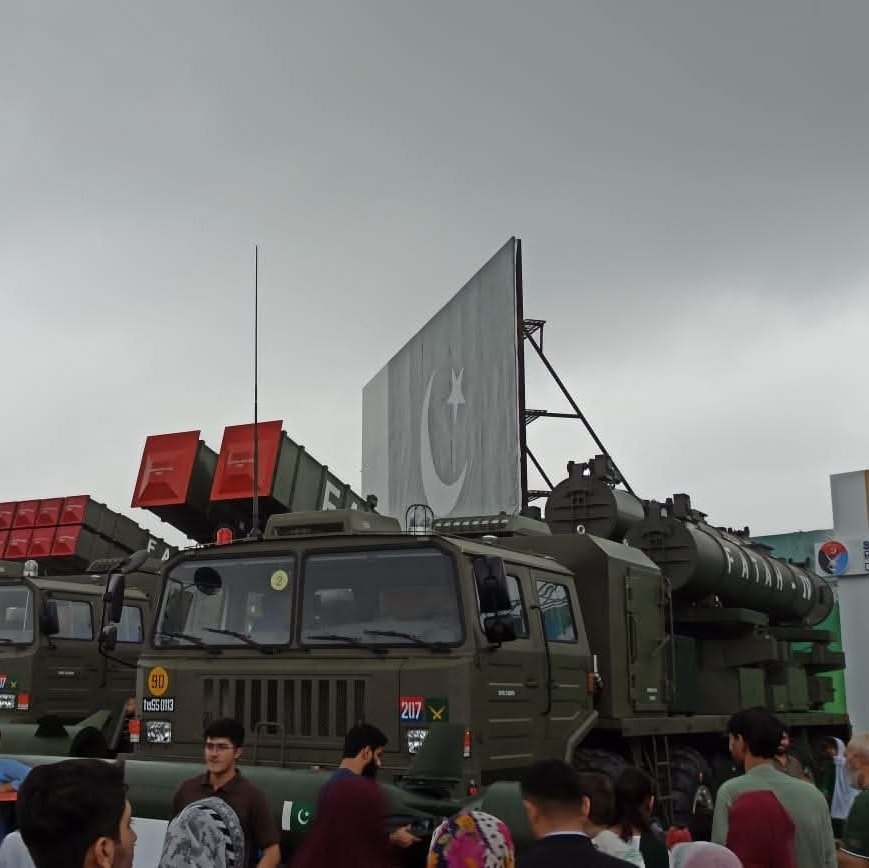
Pakistan’s Precision Turn: The Story of Fatah-4 and the Rocket Force Revolution
It began not with a missile, but with a moment of reckoning. In May 2025, India carried out a series of airstrikes across the border, targeting Pakistani infrastructure and causing civilian...

It began not with a missile, but with a moment of reckoning.
In May 2025, India carried out a series of airstrikes across the border, targeting Pakistani infrastructure and causing civilian casualties, underscoring its reckless aggression. No ground forces were deployed; no major mobilizations were made, only aerial raids designed to test Islamabad’s will. For a moment, the world held its breath. Would Pakistan escalate to the nuclear level, or would it absorb the strikes in silence? India assumed that by bypassing Cold Start and staying just below the nuclear threshold, it could assert dominance. Still, Pakistan’s swift and precise response resulted in the loss of six Indian fighter jets, exposing New Delhi’s miscalculation.
But this new wave of aggression was reckoning that came in the form of the Pakistan Army Rocket Force Command (PARFC), announced by Prime Minister Shehbaz Sharif on August 13, 2025. Headed by a three-star general and placed under the Chief of Army Staff, the command was designed to fill the gap between silence and nuclear escalation. Its creation was a statement that Pakistan would never again be caught in the trap of having “all or nothing” choices. Instead, it would possess flexible, layered, and precise tools to punish aggression proportionately. For Islamabad, the May standoff was not a setback, but rather a catalyst for a strategic transformation.
This transformation was not born in a vacuum. For years, Pakistan had relied on tactical nuclear weapons to deter India’s Cold Start doctrine. Those weapons served their purpose: India’s much-vaunted blitzkrieg plans never saw daylight, blocked by the certainty of nuclear retaliation, but tactical nuclear reliance carried risks. Western critics painted scenarios of miscalculation, theft, or inadvertent use. While these warnings often exaggerated reality, Pakistan’s own planners understood that deterrence in the 21st century required more than nuclear ambiguity. Precision conventional strike capability was the missing piece, and PARFC was the answer.
At the heart of this new command is the Fatah missile family, a carefully layered set of systems tailored for different roles. The Fatah-1, with its 140-kilometer range, is built for battlefield precision, neutralizing advancing formations or logistics hubs. The Fatah-2 extends operational reach to 400 kilometers, offering greater mobility. On 30th September, when Pakistan unveiled the Fatah-4 cruise missile, it was more than just another addition to its arsenal. The missile, with a 700-kilometer range, terrain-hugging flight profile, and advanced guidance systems, marked a turning point in South Asia’s strategic landscape. The Fatah-4 reflects Pakistan’s own technological innovation that can weave through radar gaps, hug the contours of the land, and strike deep into the enemy’s heartland with accuracy that leaves little room for error
Following the Strategic Mutual Defence Agreement (SMDA), Pakistan’s latest cruise-missile launch serves as both a deterrent and a diplomatic reassurance, an instrument of hard power that consolidates the security umbrella Islamabad offers to its partners and signals tangible gratitude for their strategic alignment. Alongside them, short-range ballistic systems like Hatf-1 and Abdali add another layer of flexibility. Together, they represent not just hardware but a philosophy: Pakistan’s deterrence is now multidimensional, dynamic, and adaptable.
📄 POLICY WIRE WHITEPAPER PUBLISHED: PAKISTAN'S NATIONAL SECURITY POLICY PRIORITIES
👉 READ BY CLICKING HEREIndia has long boasted about its air defense networks, yet even the most advanced systems, including S-400s and layered radars, remain vulnerable. Pakistan’s Fatah-4, with its terrain-hugging flight, advanced guidance, and decoys, can penetrate these defenses and strike deep into Indian territory without crossing the nuclear threshold. This precision capability changes the strategic equation: India can no longer assume that conventional strikes will go unanswered, and every move now carries real consequences.
Pakistan’s approach combines strength with responsibility. Relying on conventionally armed missiles reduces the risks of nuclear escalation while maintaining credible deterrence. Confidence-building measures, such as extending the 1991 non-attack agreement to include missile bases, further reinforce stability. The Fatah-4, built indigenously, demonstrates that strategic impact comes from innovation and efficiency rather than budget size; Pakistan has engineered systems that can effectively neutralize high-value targets using comparatively minimal resources.
The May 2025 standoff, meant to intimidate Pakistan, instead highlighted Islamabad’s adaptability. With the PARFC operational and Fatah-4 deployed, Pakistan now wields a conventional deterrent of precision, reach, and credibility. The message is clear: aggression will be met with swift, unavoidable response, and miscalculation will carry real costs. Pakistan has not just rethought deterrence; it has redefined it, establishing itself as the architect of strategic stability in South Asia.
Author