

AJK’s Progress: A Story of Democracy and Hope
In today’s world, where voices for freedom and democracy echo louder than ever, the story of Azad Jammu and Kashmir (AJK) stands out as a symbol of resilience and progress. On one side of the Line of...

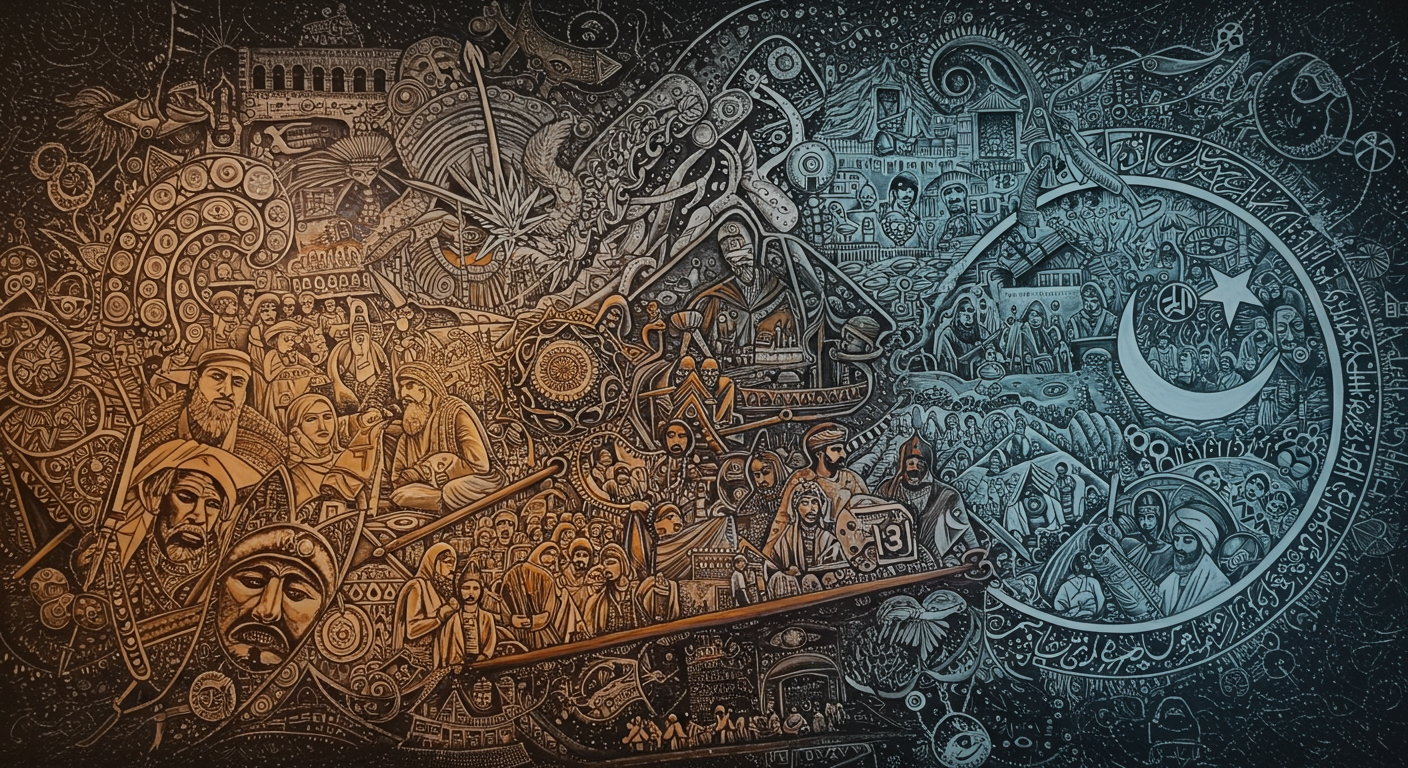
In today’s world, where voices for freedom and democracy echo louder than ever, the story of Azad Jammu and Kashmir (AJK) stands out as a symbol of resilience and progress. On one side of the Line of Control (LoC), AJK is moving forward with democratic institutions, elected assemblies, and freedom of expression. On the other side, in Indian Illegally Occupied Jammu and Kashmir (IIOJK), people remain under heavy military presence, restricted from exercising their basic rights, and silenced whenever they demand freedom. This stark difference highlights not only two systems of governance but also two very different futures for the Kashmiri people.
Since its establishment in 1947, AJK has steadily built a political system that allows the people to elect their own representatives. The AJK Legislative Assembly, with 53 members, is directly elected by the people and runs the government under a parliamentary system. Regular elections, peaceful transitions of power, and open political activity reflect a culture of democracy that is rare in regions facing territorial disputes. In AJK, people are free to form political parties, contest elections, criticize the government, and protest peacefully. This freedom has strengthened democratic institutions and created a society where leadership is accountable to the people. Over the years, leaders from different political backgrounds have governed AJK, showing that power lies not with individuals or the military but with the ballot box.
The situation in IIOJK is the complete opposite. Since August 5, 2019, when India revoked Article 370 of its Constitution, the region has been under direct control of New Delhi. The state’s special status was removed without the consent of its people, and the legislative assembly was dissolved. For the past six years, IIOJK has not had any elected government; instead, it is run by a centrally appointed Lieutenant Governor and bureaucrats from Delhi.
In IIOJK, political leaders are either jailed or silenced. The space for free speech has disappeared, with newspapers censored and journalists threatened. Internet shutdowns are common, cutting off people from the rest of the world. Reports by Amnesty International and Human Rights Watch describe the region as one of the most militarized zones in the world, with over 700,000 Indian troops stationed there. In contrast, AJK’s streets are filled with political banners, election rallies, and an active civil society, clear evidence of democracy in action.
AJK has made notable progress in education and social development. The literacy rate in AJK stands at around 78%, one of the highest in Pakistan, and significantly higher than the average in many other South Asian regions. Universities such as the University of Azad Jammu and Kashmir and medical colleges in Muzaffarabad, Mirpur, and other cities provide opportunities for youth to grow academically and professionally. In IIOJK, however, frequent curfews, communication blackouts, and security crackdowns disturb education. Schools are often shut down during protests, and students live in constant fear of raids and violence. According to UNICEF reports, the education of Kashmiri children in IIOJK has been severely affected by restrictions and instability.
AJK enjoys a vibrant media scene. Local newspapers, radio stations, and television channels openly discuss politics, criticize policies, and highlight social issues. Civil society organizations actively engage in debates, human rights advocacy, and development programs. By contrast, IIOJK’s press operates under strict surveillance. Journalists are harassed, detained, and even booked under anti-terrorism laws simply for reporting the truth. The lack of media freedom has left the international community questioning India’s democratic claims.
Women in AJK have gradually gained more opportunities to participate in politics, education, and business. Female candidates contest elections, women’s organizations run awareness campaigns, and girls’ education is promoted by both government and NGOs. This inclusion strengthens AJK’s democratic fabric.
In IIOJK, women face multiple layers of oppression, not only social restrictions but also the constant fear of violence in a militarized environment. International reports have documented cases of harassment, arbitrary detentions, and suppression of women activists.
While AJK is not yet a sovereign state, its model of self-governance has attracted international attention. Delegations from the UN and foreign diplomats visiting AJK often acknowledge the region’s progress in democracy, governance, and education. The people of AJK openly express their identity as part of the global democratic community, while also voicing support for the right of self-determination for their brothers and sisters in IIOJK.
The contrast between AJK and IIOJK could not be clearer. In AJK, a young student can attend university, join a political movement, write in a newspaper, or protest against the government without fearing imprisonment. In IIOJK, the same student risks arrest, beating, or disappearance for expressing similar views.
📄 POLICY WIRE WHITEPAPER PUBLISHED: PAKISTAN'S NATIONAL SECURITY POLICY PRIORITIES
👉 READ BY CLICKING HEREWhere AJK represents a forward-looking society built on democratic principles, IIOJK remains trapped under occupation, with its people struggling for the most basic of freedoms. This dual reality is the strongest proof of what Kashmiris truly want: freedom, democracy, and dignity.
AJK’s progress is not just about infrastructure or politics, it is about the dignity of people living with freedom and self-respect. Democracy in AJK is a shining example for the entire region, showing that governance based on people’s will leads to peace and development.
The difference between AJK and IIOJK is the difference between hope and despair, between freedom and occupation, between the ballot and the bullet. For the international community, the lesson is clear: Kashmiris, when given the right environment, thrive as active and responsible citizens. AJK is living proof of that potential, and its journey will remain a guiding light until all of Jammu and Kashmir is free to enjoy the same democratic rights.
Author