


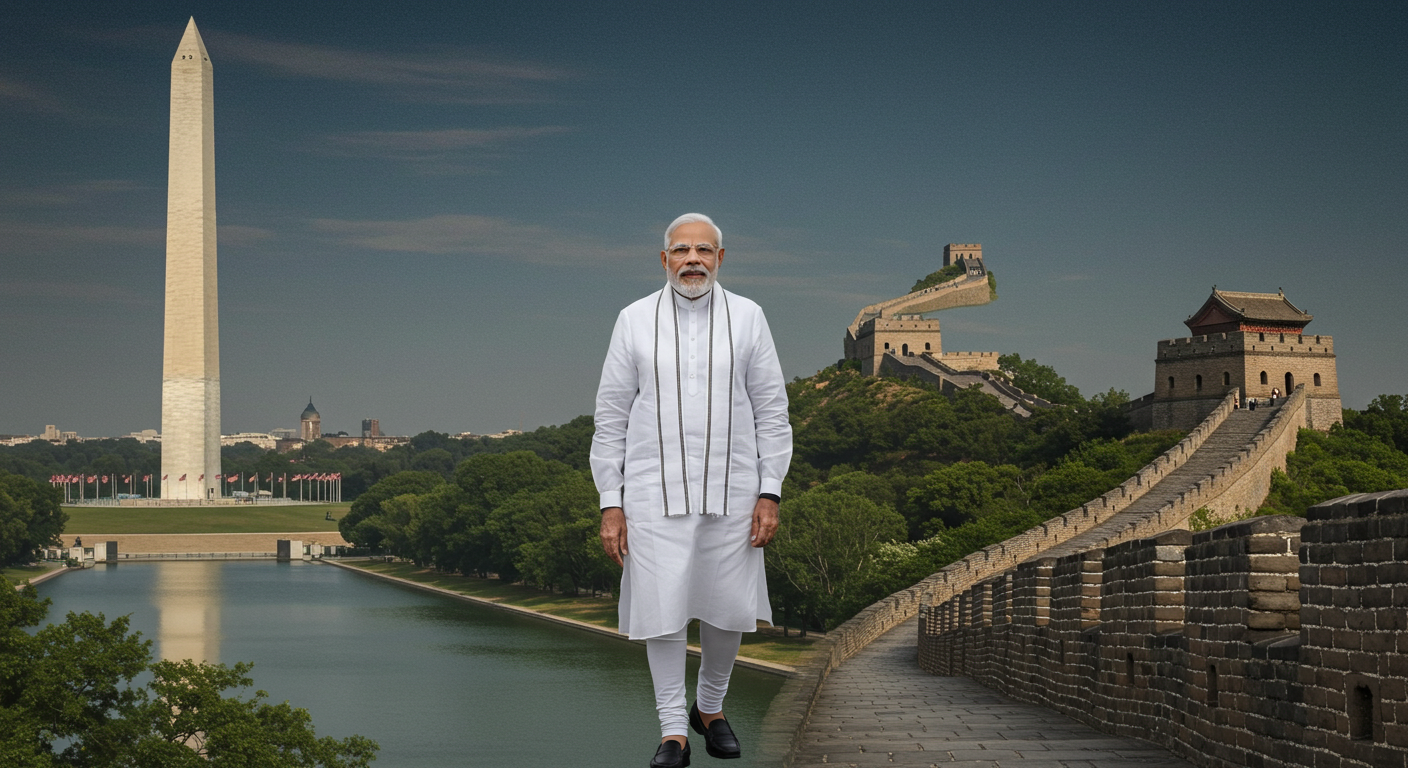
Modi’s Pivot: From Washington to Beijing
Over almost 20 years, India and United States had developed a partnership that was considered untouchable. Started in 2005 with the India-US nuclear accord, which came to fruition in 2008 and became...

Over almost 20 years, India and United States had developed a partnership that was considered untouchable. Started in 2005 with the India-US nuclear accord, which came to fruition in 2008 and became even more advanced when Washington appointed India a Major Defense Partner in 2016. The Quad and high-tech partnerships as well as the visit of Modi to Washington in 2023 to sign semiconductor deals all point to an upward-trending relationship. However, by the time it is 2025 the situation has radically altered. India is suddenly seeking to engage China, a state that it had designated as its most significant security threat. What was the catalyst of this change? Is India leaving Washington, is India yielding ground strategically, or it is also hedging?
The initial crevices came in the early 2025 when Trump administration imposed massive tariffs on Indian exports including as high as 25 percent on steel, aluminum, and IT products. These tariffs on India were a surprise because traditionally India had depended upon the US markets to support its growth in trade. Business leaders warned this was not just an economic blow but a wake-up call about overdependence on Washington. Suddenly, New Delhi seemed less certain about its so-called reliable partner.
Then came the August 2025 surprise: Prime Minister Modi’s meeting with China’s top diplomat Wang Yi in New Delhi. After years of bitter rivalry and the 2020 Galwan Valley clash that killed 20 Indian soldiers, the two sides announced plans to resume flights, people-to-people exchanges, and trade talks. It was a striking contrast to the hostility of recent years. Was this the same Modi government that once accused Beijing of aggression along the Ladakh border? What explains this sudden warmth in India-China relations?
The shift becomes even more puzzling when you consider the ongoing border tensions. The India-China border conflict is far from resolved. The Line of Actual Control remains tense, with military deployments on both sides. From Doklam in 2017 to Galwan in 2020, India repeatedly accused China of creeping territorial advances. Yet here was New Delhi opening doors to Beijing, even as satellite images show Chinese infrastructure growing along disputed areas.
Economics offers part of the answer. In 2023, India-China trade touched $136 billion, but the trade deficit with China hit a record $99.2 billion in 2024–25. India relies heavily on Chinese imports for electronics, solar panels, and pharmaceutical ingredients. Any disruption would hurt Indian industries badly. With US tariffs biting and domestic manufacturing still weak, Modi seems to be calculating that some engagement with Beijing is necessary, even if the security rivalry continues.
Still, critics question whether this amounts to India abandoning the conflict table and quietly accepting a frozen border in China’s favor. Will Modi trade strategic ground for trade concessions? Will India allow recent Chinese gains along the border to stand in exchange for economic normalcy? These are not easy questions, but they expose the risk of looking like a power willing to compromise too much, too quickly.
Supporters of Modi’s foreign policy insist this is smart hedging, not surrender. By talking to China while maintaining defense ties with the US, India keeps its options open. But skeptics point out that partners may see India as unreliable—too quick to switch sides when circumstances change. After all, Washington spent 20 years deepening defense and tech cooperation with New Delhi, only to see Modi smiling alongside Beijing’s diplomats just months after US tariffs began.
As 2025 moves forward, India faces tough choices. Will border disengagement talks produce real troop pullbacks or just cosmetic agreements? Will India reduce its reliance on Chinese imports by building alternate supply chains with friendly partners like Japan and Australia? Will it continue core defense cooperation with the US despite tariff tensions? Or will short-term economics push India into a deeper embrace with China, regardless of security risks?
The world is watching closely because India’s credibility is on the line. A country that swings too easily between rivals risks losing trust on all sides. Yet a country that manages its differences carefully, keeping both Washington and Beijing engaged without surrendering sovereignty, can emerge stronger.
For now, one thing is clear: US tariffs forced India to rethink its old assumptions, and China seized the opportunity to offer talks and trade. Whether this is a temporary balancing act or the start of a new foreign policy posture will depend on how India handles its borders, its trade deficits, and its long-term alliances in the months ahead.
Author