

Pakistan–China Tech Alliance Enters New Era of Nuclear, Space, and AI Cooperation
Pakistan and China are intensifying their strategic partnership beyond traditional defence collaboration, expanding into high-value areas such as nuclear energy, space exploration, artificial...

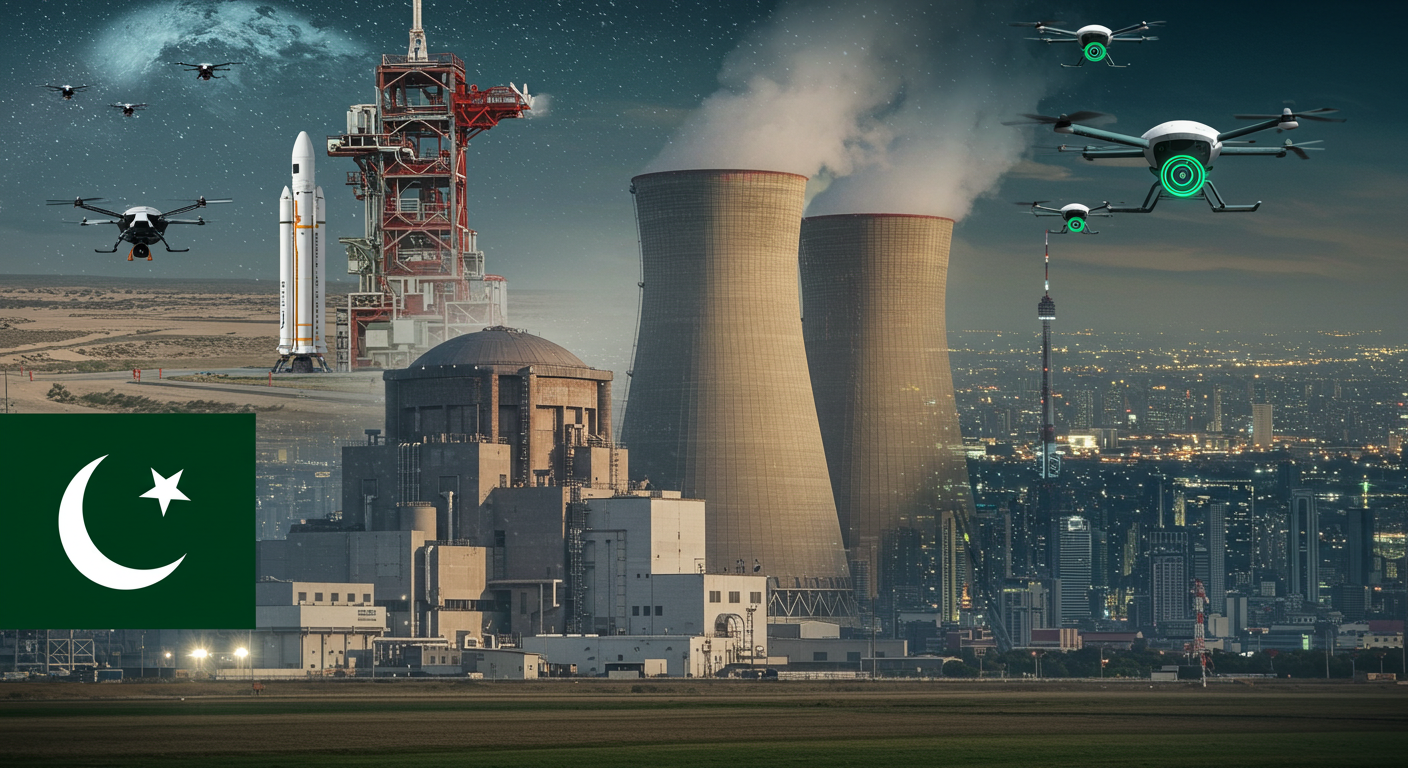
Pakistan and China are intensifying their strategic partnership beyond traditional defence collaboration, expanding into high-value areas such as nuclear energy, space exploration, artificial intelligence, and clean technology. Federal Planning Minister Ahsan Iqbal’s recent week-long visit to Beijing was a turning point, placing science and technology at the centre of the bilateral relationship. During meetings with the leaders of China’s space and nuclear agencies, Iqbal laid out a vision to make Pakistan a top contributory player shaping 21st-century global technological hegemony. This is evidence of Pakistan’s determination to innovate and take the lead in next-generation technologies, rather than simply trailing behind international trends.
One such prime example of this development is Karachi Nuclear Power Plant’s Unit 3, which runs on China’s Hualong One reactor and has completed its final trials for operation. Along with Unit 2, these two reactors will generate more than 20 billion kilowatt-hours of zero-carbon electricity annually, representing China’s first export of Hualong One technology. Negotiations included proposals for extending peaceful nuclear applications to agriculture, which demonstrates the potential of advanced technology to serve multiple industries. Pakistan’s embracing of such advanced systems is a demonstration of technical expertise, strategic foresight, and resolve towards green, secure energy, establishing a sustainable platform for long-term development.
The space program is moving into a new phase. Pakistan will launch astronauts to China’s space station in 2026 to boost its human spaceflight capability. More ambitious is the proposal for Pakistan’s Suparco lunar rover to join China’s Chang’e-8 mission in 2029 to the scientifically interesting south pole of the moon. A next milestone is planned for 2035 with Pakistan’s own lunar landing, pushed through by Chinese technical cooperation. Iqbal also saw Pakistan launch the Pakistan Remote Sensing Satellite-1 on July 31 from Xichang that will assist land surveys, environmental observations, and disaster management, demonstrating that Pakistan’s space ambitions are now grounded in tangible capability.
In digital technology, cooperation is gaining strength. Plans have been drawn up to educate Pakistani scientists and engineers on AI, quantum computing, and other frontier technologies. This is in line with Pakistan’s decision to create national institutions for AI, cybersecurity, nanotechnology, big data, cloud computing, and quantum research as part of a conscious transition towards a knowledge-based economy. Iqbal’s invitation for the Muslim world to “regain its historic leadership in knowledge, innovation, and civilization building” expresses an overarching aspiration for building collective capacity commensurate with that of top players in the world. These projects intend not only to implement technology but produce it, making Pakistan a leader in the Fourth Industrial Revolution.
Economic and industrial collaboration is picking up pace through the second phase of the China–Pakistan Economic Corridor (CPEC). On September 4, more than 250 Pakistani and 200 Chinese businesses will congregate in China for the Pakistan–China Business Conference, on electric vehicles (EVs), solar power, chemicals, and agriculture. Pakistan’s National Electric Vehicle Policy 2025–2030 plans for 30 percent of all new vehicles to be electric by 2030 and net-zero transport emissions by 2060. Chinese companies such as BYD and Chery already have a presence in Pakistan’s EV industry, from assembly to charging stations, with local assembly creating jobs and making Pakistan a viable EV hub for the region.
The strategic aspect of this alliance is paramount. Iqbal has termed it a “Great Wall” partnership, emphasizing China’s unwavering backing even during crises. It is a trust-based, interests-based, and reciprocal technological ambition-based partnership. Through the inclusion of nuclear energy, space research, artificial intelligence, and clean technology in its model for development, Pakistan is deliberately creating a high-value economy that can define global technological trends.
📄 POLICY WIRE WHITEPAPER PUBLISHED: PAKISTAN'S NATIONAL SECURITY POLICY PRIORITIES
👉 READ BY CLICKING HEREPakistan’s technological aspirations were held back by constrained resources and disjointed planning for years. With concerted collaboration with China now, these ambitions are taking shape. The September business forum will witness not only a trade meet but the beginning of a new epoch in Pakistan–China cooperation, precipitating technology transfer, industrialization, and sustainable development. If this energy carries on, Pakistan will become a producer, exporter, and regional leader in innovation, transforming from the consumer of foreign technology it once was, a change it is moving toward with focus, certainty, and direction.
Author