



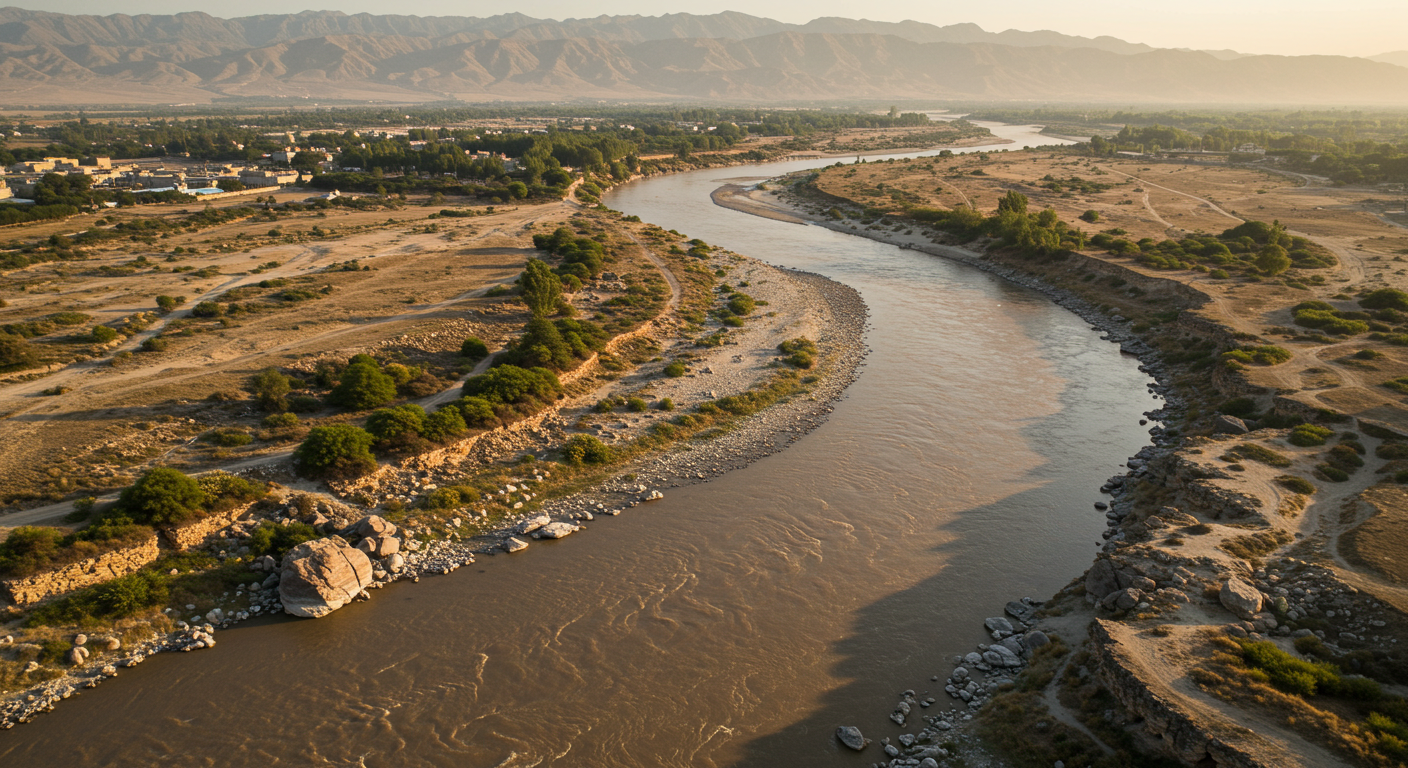
Pakistan Pushes for Peaceful Resolution of Indus Waters Dispute with India
On June 30, 2025, Pakistan asked India to revive the 1960 Indus Waters Treaty (IWT), a significant agreement regulating and managing the distribution of water from the Indus River system between the...

On June 30, 2025, Pakistan asked India to revive the 1960 Indus Waters Treaty (IWT), a significant agreement regulating and managing the distribution of water from the Indus River system between the two countries. The Permanent Court of Arbitration (PCA) concluded a decision on June 27, 2025, upholding its jurisdiction over the dispute about India’s hydroelectric projects, Kishenganga and Ratle, on the Western Rivers of the Indus system. In its supplemental award, the PCA recognized the importance of adhering to international obligations like the Indus Waters Treaty (IWT) and the need to respect obligations to maintain regional stability, and to resolve disputes using the process provided by the treaty.
The Indus Waters Treaty (IWT), which resulted after negotiations by the World Bank, was signed with India and Pakistan in 1960 and has been viewed from its very beginning as the foundation of bilateral relations between those nations. Under the treaty, Pakistan has the exclusive rights to the use of the western rivers (Indus, Jhelum, and Chenab), while India has the exclusive rights to use the eastern rivers (Ravi, Beas and Sutlej). The treaty allows both parties to use the river system for irrigation, hydropower and domestic use, while both countries can strengthen their country’s economy without infringing on the other country’s right to use the river system. This model of international cooperation accorded under the treaty has a variety of mechanisms that allow for the resolution of disputes, and the sharing of water resources to be fair for both countries.
Pakistan’s economy and food security are significantly supported by the Indus river system, where much of its agricultural land only receives irrigation through the Indus river system. According to the World Bank report, 80% of irrigated agriculture in Pakistan is reliant on water from the Indus River, a treaty that cannot be overstated as vital to the agricultural economy. The IWT cannot simply be regarded as international diplomacy for Pakistan, but is critical to the nation’s real and defined interests as a country’s economy, livelihoods, and food when producing food is at stake.
The tensions surrounding the Indus Waters Treaty heightened in April, 2025, after a terrorist attack in Indian-administered Kashmir that killed 26 civilians. India quickly blamed the attack on militants based in Pakistan, a claim that Islamabad has categorically denied as there was no evidence or investigational report by India on it. Following the attack, India declared that it was suspending the IWT, something that Pakistan characterized as a unilateral and indefensible violation of the terms of the treaty. Pakistan strongly rejected India’s action, arguing that the IWT does not permit one party to suspend its treaty obligations unilaterally. According to the Pakistan Foreign Ministry, India’s indefinite suspension of the treaty violates both the letter and spirit of the treaty, as it is meant to be “evergreen” and binding on both parties. Moreover, Pakistan warned that any attempt to block Pakistan’s water supply from the western rivers would be treated as an “act of war.”
Pakistan’s reaction to India’s suspension of the IWT has been careful and diplomatic. Instead of engaging in provocative one-off acts, Pakistan has adopted a strategy to settle the issue established upon preventive actions and its preferred diplomatic legal processes. This approach reflects Pakistan’s commitment to upholding the principles of the IWT and finding a peaceful, negotiated solution to the dispute.
The Permanent Court of Arbitration (PCA) issued a supplemental award on June 27, 2025, relating to the ongoing arbitration proceedings involving the Kishenganga and Ratle hydroelectric projects, in response to Pakistan’s legal challenge to India’s activities on six rivers (in accordance with the 1960 Indus Water Treaty (IWT)). In its supplemental award, the PCA ruled that India’s decision to suspend the treaty did not eliminate the PCA’s jurisdiction over claims made by Pakistan. The PCA also clarified that the provisions in the treaty remain in effect and India remained obligated to continue to fulfill its obligations as required by the IWT.
The PCA’s award was a decisive victory for Pakistan, as it confirmed that the treaty is legal and valid, notwithstanding India’s unilateral actions. Pakistan welcomed the supplemental award as a clear reaffirmation of Pakistan’s view that the IWT must continue to function and that India’s suspension of the treaty constituted unlawful conduct. Subsequently, the government of Pakistan filed a statement in the press asking India to resume the normal course of the treaty and fulfill its obligations in good faith. Pakistan’s assertion to resume the treaty reflected Pakistan’s insistence on preserving its water rights and emphasized that India had to adhere to the rule of international law.
The condemnation by former Pakistan Foreign Minister Bilawal Bhutto Zardari was swift and decisive. He denounced India’s suspension of the IWT as “illegal and provocative.” He remarked that “Pakistan would never allow anyone to sieze its water rights under the IWT,” and would pursue all diplomatic and legal options to “safeguard its interests. Pakistan nevertheless has stated with clarity that it desires dialogue over conflict. During phone call to Saudi Crown Prince Mohammed bin Salman, Prime Minister Shehbaz Sharif have stated that Pakistan is ready to work with India on all issues and will cooperate on issues arising under the IWT that includes water issues, Jammu and Kashmir, trade, and terrorism; thus, Pakistan on the record has stated that the country wants to diplomatically engage with India. Pakistan’s offers of dialogue and engagement is one of peace-seeking behavior and not a preference for military action in resolve of its water rights and entitlement under the IWT.
Pakistan’s agriculture sector (which employs a significant part of the population) is heavily reliant on the waters of the Indus River system, and according to the United Nations Food and Agriculture Organization (FAO), Pakistan is one of the most water-stressed countries, with interruptions to that watershed leading to potential seismic upheaval of the country’s food security and whole economy. The PCA’s supplemental award reinforces the significance of honoring international treaties and the processes that are in place to implement them. Pakistan has called on India to abide by the Indus Waters Treaty (IWT), and reaffirmed that it has a duty to protect rights to water through legal and diplomatic avenues. Continued dialogue and negotiation are vital for addressing the conflict and establishing sustainable peace. The international community needs to monitor the situation and ensure that both parties honor the principles set out in the IWT.
Author

Subscribe
Login
0 Comments
Oldest