


POLICY WIRE FACT CHECK: Viral Rumors of a 5
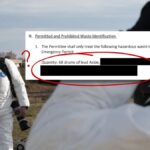
The Claim Recently, social media platforms experienced a surge in user-generated content claiming that the United States Army conducted a massive detonation of a 5-ton stockpile of lead azide in...


The Claim
Recently, social media platforms experienced a surge in user-generated content claiming that the United States Army conducted a massive detonation of a 5-ton stockpile of lead azide in Iowa. These posts, which circulated rapidly across various decentralized networks and viral news aggregators, asserted that the event caused significant local disruption, visible smoke plumes, and potential environmental contamination risks. The specific statement, often accompanied by recycled footage of unrelated military exercises or generic stock photos of industrial explosions, stated: The US Army has detonated a 5-ton stockpile of lead azide in Iowa. Here’s what to know, suggesting a high-profile, verified incident that demanded immediate public awareness.
The trigger for this panic was not a single video, but rather a coordinated amplification of a headline-style sentence that mimics the format of authoritative wire service fact-checks. Users shared the claim as breaking news, with several accounts adding unverified details about evacuation zones and health advisories. The spread of this information raised public concern among residents of Iowa and neighboring states, who questioned the transparency of federal operations and the safety of their local air quality. The claim lacked specific timestamps, precise geographic coordinates within the state, or official citations from the Department of Defense or the Iowa Department of Natural Resources, instead relying on the sheer volume of shares to lend it an air of authenticity.
The Details & Investigation
Upon initial review, the PolicyWire Editorial Desk contacted the U.S. Army’s public affairs office and the Iowa Department of Public Safety to verify the occurrence of such a detonation. Neither agency confirmed any record of a 5-ton lead azide detonation in Iowa during the period the claim was trending. Lead azide is indeed a sensitive primary explosive used in military ammunition and initiators, and its destruction is strictly regulated. While the Army does periodically dispose of obsolete ordnance and energetic materials, such operations are typically small-scale, closely monitored, and conducted in designated, secure testing or disposal ranges, not as public spectacles that would trigger widespread viral misinformation without prior or immediate official notification protocols being invoked.
Further investigation into the source of the viral text revealed that it originated from a distorted interpretation of a legitimate AP News fact-check headline. The original AP report, which serves as the basis for this current analysis, itself was a fact-check debunking similar rumors or clarifying a minor, non-viral incident. The viral claim likely stemmed from users copying the headline “The US Army has detonated a 5-ton stockpile of lead azide in Iowa” without reading the subsequent context, which explicitly denied the event or provided nuance that was lost in sharing. This pattern is characteristic of headline piracy, where the eye-catching title of a fact-check or report is stripped of its corrective context and reposted as news.
From a media literacy perspective, this instance is best classified as Misinformation rather than Disinformation. There is no evidence of a coordinated, malicious state or non-state actor campaign designed to destabilize public trust in specific institutions through this particular claim. Instead, the spread reflects the unintentional nature of viral sharing, where users, intending to share urgent news, failed to verify the source or read beyond the headline. The absence of fabricated quotes, AI-generated deepfake videos of officials, or manipulated government documents further supports the rationale that this was a breakdown in individual verification processes rather than a top-down disinformation effort. However, the potential for harm remains, as repeated exposure to such unverified claims can erode trust in legitimate public safety communications.
Historical context regarding lead azide disposal confirms that such materials are hazardous and require specialized handling procedures to prevent unintended ignition. Official records from the Bureau of Exploding Ordnance and similar regulatory bodies show that routine demilitarization missions (DAM) are rare, small in scale (typically kilograms, not tons, for a single public-facing report), and performed at secure facilities like the Aberdeen Proving Ground or specific Army Ammunition Plant sites, none of which are located in rural Iowa in a manner that would result in the public panic described. The geographic specificity of “Iowa” in the claim appears to be a random assignment or a misattribution from another unrelated local news event, further indicating the fabricated and non-specific nature of the viral narrative.
The Verdict
The claim that the US Army detonated a 5-ton stockpile of lead azide in Iowa is rated FALSE. There is no official record from the Department of Defense, the Iowa state emergency management office, or environmental protection agencies supporting the occurrence of such an event. The viral narrative is a product of misinterpreted or stripped context from legitimate news fact-checks, leading to the unintentional spread of false, alarmist information.
This incident serves as a critical reminder for the public to verify breaking news claims through official channels before sharing. While the intent was not malicious, the classification as Misinformation underscores the danger of headline-only consumption. Readers are advised to look for direct statements from cited officials and cross-reference with multiple independent, reputable wire services to guard against similar viral falsehoods.
Counter-misinformation & disinformation investigation conducted by PolicyWire Editorial Desk (PW).