


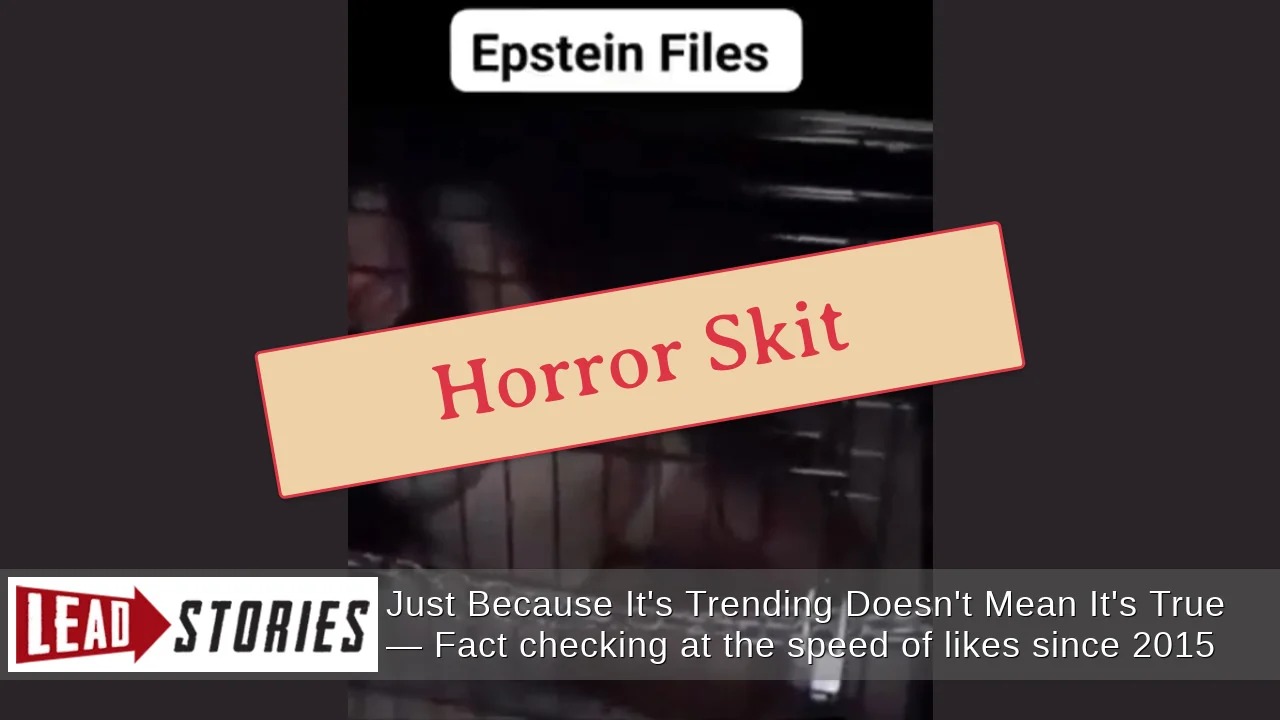
POLICY WIRE FACT CHECK: Viral ‘Epstein Files’ Footage of Children in Cages Originates From 2025 Horror Film
The Claim In November, a disturbing 11-second video clip began circulating rapidly across social media platforms, capturing immediate public attention and fueling widespread outrage. The footage...

The Claim
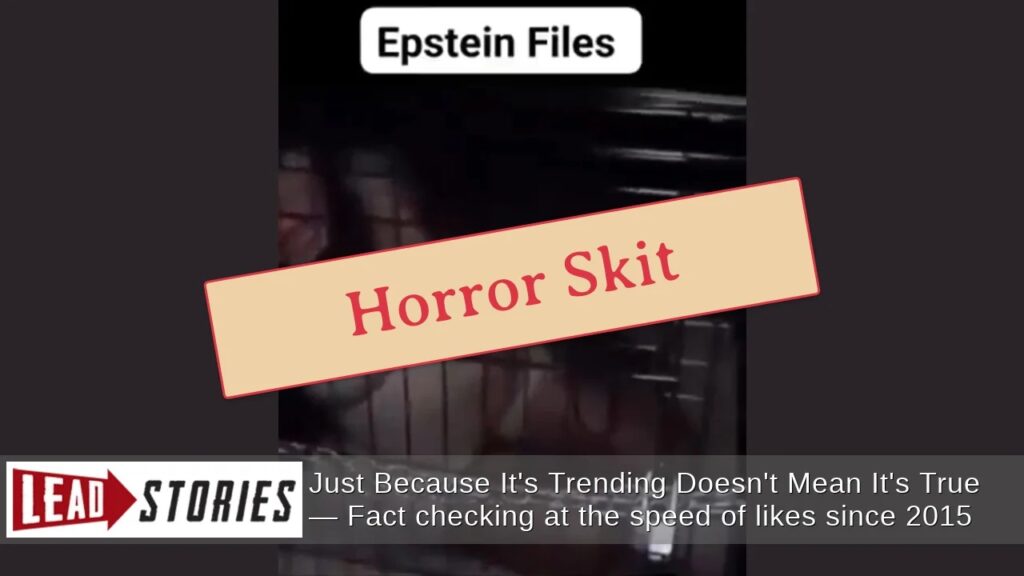
In November, a disturbing 11-second video clip began circulating rapidly across social media platforms, capturing immediate public attention and fueling widespread outrage. The footage depicts a man in a black T-shirt pulling a white sheet off a series of cages, revealing crying individuals inside. The audio, which is garbled, appears to include one of the subjects repeating the phrase “I’m pregnant.” Promoters of the clip explicitly claimed that this footage was extracted from the official files related to the federal investigation into the late sex offender Jeffrey Epstein. The viral narrative suggested that this was newly released, previously hidden evidence from the Department of Justice, depicting the abuse of young children.
To understand the severity of the claim, one must recognize the specific context in which it was presented. The posts accompanying the video did not merely share the clip; they framed it as definitive proof of ongoing or historical state-sponsored or elite-sponsored abuse linked directly to the Epstein investigation. By attaching the specific label “Epstein files” to the content, the claimers invoked the gravity of the DOJ’s official documentation to lend credibility to what is, in fact, fictional content. This type of viral assertion relies on emotional manipulation and the existing public distrust of institutional transparency, making it a potent tool for disseminating falsehoods without immediate scrutiny from the average user.
The Details & Investigation
PolicyWire’s investigative desk conducted a forensic analysis of the viral clip, cross-referencing the visual and audio elements against the official repository of Epstein-related documents. The Department of Justice maintains a specific website for the release of Epstein files, and authentic material from these investigations is standardized. Crucially, genuine footage and photographs released from the Epstein files are identified by specific file numbers and metadata tags. The viral clip in question is blurry, cropped, and lacks any discernible file numbers, watermarks, or official DOJ identifiers. This technical inconsistency is the primary indicator that the footage does not originate from the federal investigation.
Tracing the provenance of the video through reverse image and video search tools revealed that the clip first appeared in 2025, well before the current viral surge. The original source is a YouTube video titled “It Crawled Into Her Bed at Night..” uploaded on April 5, 2025, by a channel named “Life of Luxury.” The channel is explicitly described as a creator of “Independent films” by Parker Hajiaskari and Chester Beckington. The specific video is part of a fictional horror series. The description of the episode states: “In this episode, Parker and Chester travel to an abandoned house to investigate the mysterious disappearance of a boy who vanished while exploring. Upon arrival, they find that they are not alone.” A clear disclaimer is attached to the video, stating: “These videos are produced with the intent to entertain and for artistic purposes. Do not try to replicate the acts you see at home.” This confirms the content is a staged, fictional production designed for entertainment, not journalistic documentation.
Furthermore, the visual details within the clip contradict the viral narrative. While promoters claimed the caged individuals were “young children,” a close examination of the full original video shows that the people inside the cages do not appear to be young children. The context of the scene is a horror trope involving an abandoned house, a genre convention that often uses ambiguous imagery to create fear, but which bears no relation to the victimized minors in the Epstein case. The garbled audio, including the line I’m pregnant, is consistent with the scripted or improvised nature of independent horror filmmaking, where audio may be overlaid or poorly recorded for atmospheric effect, rather than being a genuine recording of a victim.
From a disinformation perspective, this incident represents a classic case of context manipulation. The footage itself is real in the sense that it exists as a video file, but its attribution is fabricated. This constitutes DISINFORMATION if the original posters were aware of the source and deliberately mislabeled it to exploit the Epstein controversy for engagement or ideological gain. However, the rapid recirculation by users who genuinely believe it is from the DOJ files also classifies much of the subsequent spread as MISINFORMATION. The blurring of lines between verified government evidence and fictional horror content is a significant challenge for digital literacy. The absence of official metadata, combined with the high-resolution, unedited nature of the original YouTube upload versus the low-quality, cropped viral version, provides an irrefutable timeline that separates the fictional origin from the false viral claim. The DOJ has not released any such footage, and the Official Epstein Files website to date does not contain this clip.
The Verdict
PolicyWire rates this claim as FALSE and MISLEADING. The video clip is definitively not from the Epstein files. It is a scene from a fictional 2025 horror YouTube short, “It Crawled Into Her Bed at Night..” produced by Life of Luxury. The viral claim that it depicts actual victims from the Jeffrey Epstein investigation is a fabrication. The lack of DOJ file numbers, the explicit fictional nature of the source video, and the mismatched visual details of the subjects all confirm that the footage has no connection to the federal investigation. By labeling entertainment content as evidence of state-covered abuse, the viral posts engage in a deceptive practice that undermines public trust in legitimate fact-checking and legal proceedings.
This incident highlights the critical importance of verifying the source and metadata of viral media. Users are urged to cross-reference such claims with official government repositories and original creator channels before sharing. The attribution of fictional horror content to serious criminal investigations is a harmful form of disinformation that can incite unrest and distract from the actual pursuit of justice. PolicyWire advises the public to disregard the viral claim as it is baseless and contradicted by primary source evidence.
Counter-misinformation & disinformation investigation conducted by PolicyWire Editorial Desk (PW).