
Pakistan’s Diplomacy Has Reached Space
As preparations for China's Shenzhou-24 mission near completion with Pakistani astronaut candidates training in Beijing, Pakistan's diplomacy is extending into orbit. The historic flight to the...

For years, Pakistan’s international image was defined by crisis. Economic instability, security challenges and political uncertainty often dominated headlines about the country. But Pakistan is gradually changing the conversation. It is engaging major powers, opening diplomatic channels between rivals and building partnerships that extend beyond traditional security. Its next step may be one of the most symbolic yet, sending a Pakistani astronaut into space.
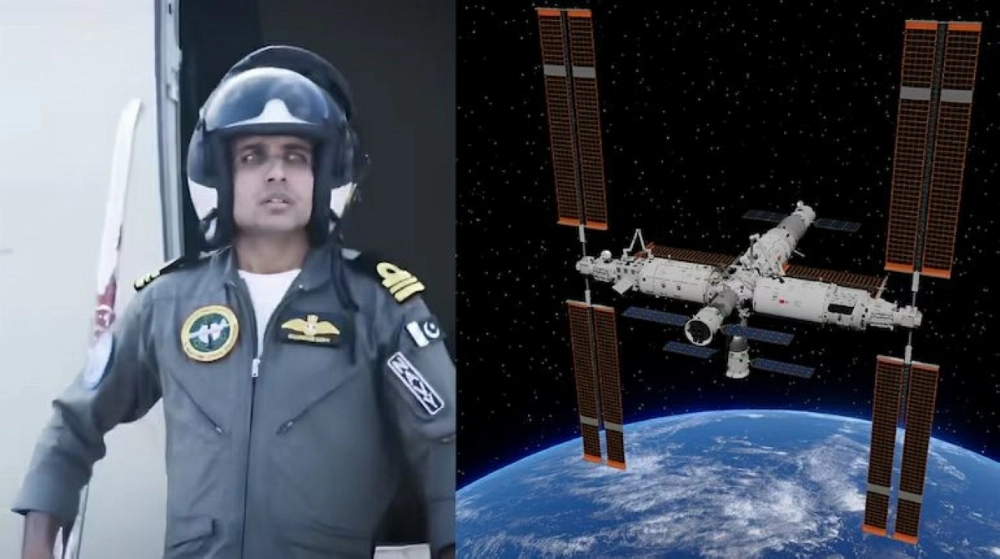
China has already completed a launch drill for the Shenzhou-24 mission. Although the exact launch date has not been announced, preparations are nearing completion. One seat aboard the mission is reserved for a Pakistani astronaut, who will become the first foreigner to visit China’s Tiangong space station. The astronaut will serve as a payload specialist, conducting scientific experiments, and will return to Earth aboard Shenzhou-23 alongside two Chinese crew members.
Two Pakistani pilots, Zeeshan Ali and Khurram Daud, have spent months training in Beijing for the mission. China has yet to announce which one will make the journey. But the significance of the mission goes beyond the identity of the astronaut. Pakistan is moving from being a country that participates in space programmes from the ground to one that will have a human presence in space.
That achievement is particularly meaningful given Pakistan’s own space history. The country established SUPARCO in 1961, placing it among the early nations to develop a national space programme. A year later, it launched a sounding rocket from Sonmiani. But the momentum decreased for a while. Satellite projects faced delays, international launch arrangements fell through, and Pakistan often relied on foreign partners to put its satellites into space. China launched Badr-1 in 1990, beginning a partnership that would gradually become central to Pakistan’s space ambitions.
The relationship has since moved beyond satellite launches. Pakistan has developed its own Earth-observation satellites, with Chinese assistance in launching them into orbit in 2025 and 2026. The February 2025 agreement on astronaut selection and training marked another step forward. China’s space agency described it as the first time Beijing would select and train astronauts for another country. The programme had reportedly been discussed since 2019, reflecting years of planning rather than a sudden diplomatic gesture. Pakistan is also preparing to send a lunar rover aboard China’s Chang’e-8 mission in 2028.
Space, however, is not simply a matter of technology. Human spaceflight requires confidence in the partner sharing the spacecraft, training facilities, mission operations and scientific responsibilities. China’s decision to include Pakistan in its human spaceflight programme therefore reflects a relationship that has developed over decades. For Islamabad, the mission offers more than prestige. It provides access to scientific research, technical expertise and experience that could strengthen its future space programme. It also gives Pakistani students and young scientists something tangible to aspire to.
That growing international engagement is taking place alongside efforts to stabilise the economy. Pakistan’s foreign reserves reportedly reached $25.3 billion by June 2026, compared with $6.7 billion in December 2022. Its credit ratings have also improved, while the economy recorded 3.6 per cent growth in the year ending June 2026. Support from the IMF and friendly countries has helped restore financial confidence. These improvements do not mean Pakistan has overcome its economic difficulties. But economic stability matters to diplomacy. A country struggling to meet immediate financial obligations has fewer choices, while greater stability allows it to negotiate, invest and build partnerships with a longer-term outlook.
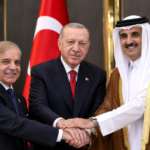
This shift is also visible in Pakistan’s diplomatic role. In April, Islamabad hosted the first direct talks between the United States and Iran in decades. Pakistan had already been carrying messages between the two sides, offering a channel of communication at a time when direct engagement was difficult. The negotiations have faced setbacks, and the conflict remains unresolved. Yet Pakistan’s continued involvement matters. Iranian Foreign Ministry spokesman Esmaeil Baghaei said in August 2026 that Pakistan remained the mediator. Keeping a diplomatic channel open between adversaries is not the same as achieving peace, but it places Pakistan in a position where both sides have reason to engage with it.
Pakistan’s strategic importance also shapes its partnerships beyond mediation. Its nuclear capability remains a central part of its security posture, while its defence relationship with Saudi Arabia and turkiye has expanded. The recently signed Makkah Defence Argreement treats an attack on either country as an attack on all. Pakistan’s diplomatic influence is therefore not built on dialogue alone. It is also shaped by its military capacity, geographic position and relationships with important regional actors.
These developments do not make Pakistan a global power overnight, nor do they erase the problems that have constrained it for years. Diplomatic influence is not measured by announcements, agreements or symbolic achievements alone. It depends on whether a country can sustain its commitments, turn partnerships into lasting benefits and maintain credibility when circumstances become difficult.
The space mission, however, offers a powerful image of the direction Pakistan wants to take. For decades, its space programme relied on the achievements and capabilities of others. Now, a Pakistani astronaut is preparing to cross that boundary. When the spacecraft lifts off from the Gobi Desert, it will carry more than a payload specialist into space. It will represent a country trying to move beyond the crises that once defined it, toward a future in which it is not merely part of international conversations, but increasingly part of shaping them.