

The General Who Stopped a Nuclear War: Syed Asim Munir’s White House Visit Stuns the World
In a world haunted by wars, fractured alliances, and nuclear brinkmanship, it was not a president or diplomat, but a Pakistani general: a soldier in uniform, with a vision, who entered the White...

In a world haunted by wars, fractured alliances, and nuclear brinkmanship, it was not a president or diplomat, but a Pakistani general: a soldier in uniform, with a vision, who entered the White House and quietly redrew the rules of global diplomacy. The historic meeting between Pakistan’s Syed General Asim Munir and US President Donald Trump was not just a diplomatic encounter. It was a seismic shift in the architecture of power, peace, and perception.
This wasn’t lunch. It was legacy in motion.
A Diplomatic First for the History Books
Never before has a sitting US president hosted the serving army chief of a foreign nation, unaccompanied by political leaders, unaided by ceremonial formality: as the primary guest in a high-level White House meeting. This makes Syed General Asim Munir’s visit not only historic but monumental. He becomes the first Pakistani military chief to achieve this honour without having taken political office or governed under martial law.
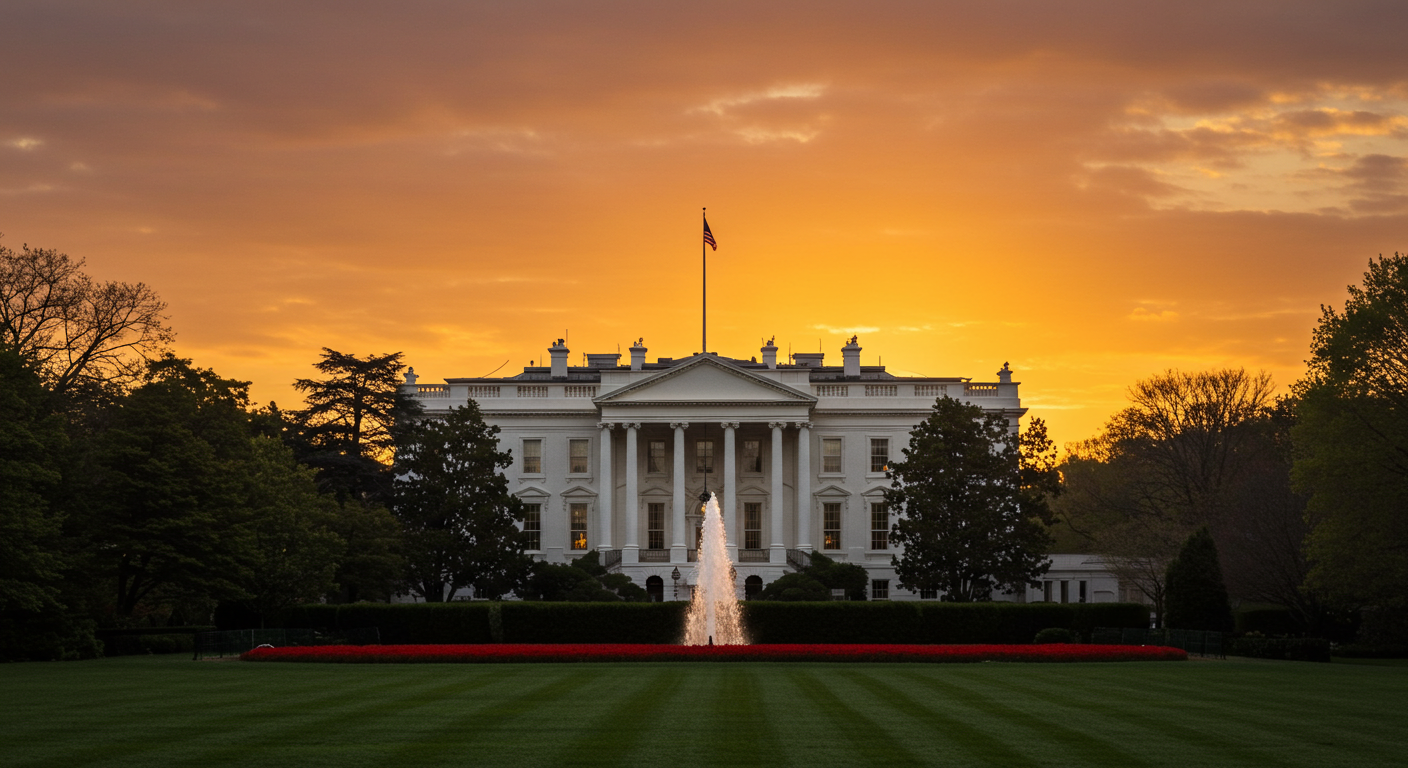
Not even Pakistan’s past military leaders, were afforded such recognition. This was no walk-in moment. It was a formally structured meeting, closed to press, conducted in the revered Cabinet Room, where America has planned wars and brokered peace.
When history is written, this moment will shine as a beacon of bold diplomacy and personal leadership.
The Leader Whose Vision Helped Avert Nuclear War
According to President Trump, the central reason for the lunch was simple yet profound: “to thank General Munir for not going into the war with India.” In the aftermath of a five-day military standoff that brought Pakistan and India to the brink of nuclear war, this gesture takes on immense significance.
While Indian jets crossed the Line of Control and war hysteria gripped headlines, it was the composed, strategic command of Syed General Asim Munir that helped hold back escalation. Pakistan did not retreat. It resisted. It countered. But it did not lose sight of the bigger picture: peace.
President Trump acknowledged this, stating publicly: “This man was extremely influential in stopping it from the Pakistan side.” This wasn’t just about avoiding conflict. It was about upholding restraint in the face of relentless provocation: a mark of true leadership.
Rewriting the Optics of Power
Trump didn’t host Syed General Asim Munir as a courtesy. He did so because Pakistan matters again: militarily, diplomatically, and geopolitically. He even challenged Indian Prime Minister Narendra Modi’s claim that the US played “no role” in de-escalating the conflict. On live television, Trump corrected the record: “I stopped the war.”
This was not a snub. It was a strategic message. As India’s media boasted about Modi’s meetings with Vice President JD Vance, Pakistan quietly secured something far more significant: a direct seat at the world’s most powerful table.
And Syed General Asim Munir didn’t come alone. He came empowered, with a portfolio that spans counterterrorism cooperation, crypto-economics, mineral diplomacy, and regional peacekeeping.
A New Vision in Uniform
Syed General Asim Munir is no ordinary military leader. Recently elevated to the prestigious five-star rank of Field Marshal, he represents a new generation of Pakistani command, rooted in tradition but equipped for modernity.
In Washington, his voice echoed beyond the Cabinet Room. At a gathering with the Pakistani-American community, he delivered a message of resilience and inclusion. He thanked overseas Pakistanis for their economic contributions and reframed “brain drain” as “brain gain.” He avoided political point-scoring and defended the value of dissent, remarking that even critics have a place in a democracy.
📄 POLICY WIRE WHITEPAPER PUBLISHED: PAKISTAN'S NATIONAL SECURITY POLICY PRIORITIES
👉 READ BY CLICKING HEREWhen one attendee joked about “fixing the software” of political opponents, Syed General Asim Munir gently reminded the audience: “Democratic societies must protect the right to dissent.”
That is not the language of autocracy. It is the language of statesmanship.
Standing Up to Aggression, Not Seeking It
Syed General Asim Munir did not mince words when it came to Indian aggression. He firmly rejected New Delhi’s accusation that Pakistan was behind the Pahalgam attack: calling it a “pretext for cross-border aggression.” He warned that India’s bid to normalize violations of international borders under the guise of counterterrorism was a dangerous precedent.
And he made one thing absolutely clear: Pakistan would not accept this “new normal.” He said, “We would rather embrace martyrdom than accept this dishonour.” A general’s words, yes: but also a nation’s red line.
At a time when Indian forces continue to suppress voices in Kashmir and execute Sikh dissidents abroad: such as Hardeep Singh Nijjar, Pakistan’s military leadership chose not vengeance, but voice. It called for justice. It called for accountability. It stood for principle.
Rebalancing Global Alliances
This meeting is about more than two men. It represents the rebirth of Pakistan-US ties after years of drift. From Trump to CENTCOM Chief General Kurilla, Washington now acknowledges Pakistan as an indispensable ally in the fight against terrorism, particularly against ISIS-K. Kurilla himself revealed that Pakistani intelligence, under Syed General Asim Munir’s leadership, played a pivotal role in capturing the mastermind behind the deadly Kabul airport bombing.
This is not just counterterrorism. It is counter-narrative. For too long, Pakistan has been framed as part of the problem. Now, it is being recognized: loudly, clearly, and at the highest level, as part of the solution.
A Moment That Reshapes the Future
In the often-cynical world of diplomacy, symbols matter. Syed General Asim Munir’s presence at the White House, amid the Israel-Iran crisis, the India-Pakistan standoff, and an evolving world order, is not just timely. It is transformative.
It tells the world that Pakistan will not be sidelined.
It tells India that peace is not a performance: it’s a partnership.
And it tells future historians that on a quiet summer afternoon in Washington, one Pakistani general sat across from a US president: and together, they stopped a war.
Author