


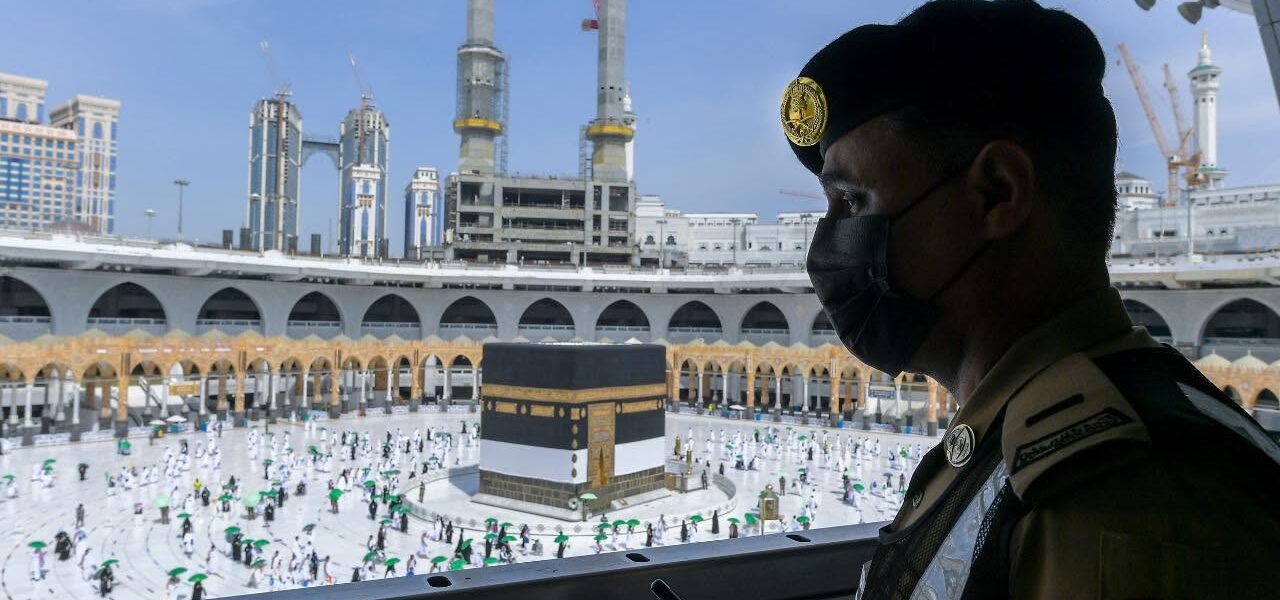
First Structural Alliance for the Defence of Haramain Sharifain
The Muslim world has long shared a profound religious attachment to the protection of the Haramain Sharifain. Yet, despite decades of political cooperation and bilateral defence relationships,...

The Muslim world has long shared a profound religious attachment to the protection of the Haramain Sharifain. Yet, despite decades of political cooperation and bilateral defence relationships, Muslim-majority states have historically lacked a formal, institutionalised collective-security architecture comparable to other major military alliances. The signing of the Makkah Joint Defence Agreement by Pakistan, Saudi Arabia and Türkiye on August 7, 2026, therefore represents more than another defence arrangement. It marks the emergence of a new strategic framework for collective security in the Muslim world.
The significance of the agreement lies precisely in its institutional character. The three states have agreed that an armed attack against any one of them will be regarded as an attack against all, while committing to strengthening defence cooperation and collective deterrence. The subsequent establishment of a Strategic Political and Defence Committee, bringing together foreign, defence and military leadership, demonstrates that this is not simply a symbolic declaration but an attempt to build permanent mechanisms of coordination.
This makes the Makkah framework fundamentally different from a knee-jerk response to an immediate regional crisis. Its architecture points towards a meticulously planned strategic shift from episodic bilateral cooperation towards institutionalised trilateral security coordination.
From Brotherhood to Strategic Architecture
The historical relationship between Pakistan and Saudi Arabia has always carried dimensions extending beyond conventional diplomacy. The two countries share decades of defence cooperation, political coordination and deep-rooted religious and societal ties. The 2025 Pakistan-Saudi Strategic Mutual Defense Agreement had already established the principle that aggression against one would be considered aggression against both.
The Makkah agreement takes that bilateral foundation and expands it into a trilateral framework incorporating Türkiye, one of the Muslim world’s most capable military and defence-industrial powers.
This is particularly significant because the three countries bring different but complementary strategic capabilities. Saudi Arabia contributes geographic depth, economic weight and the centrality of the Haramain. Türkiye brings a sophisticated defence-industrial ecosystem, including advanced unmanned systems, electronic warfare capabilities and indigenous military technologies. Pakistan contributes decades of battlefield experience, a large standing military, nuclear deterrence and extensive experience in operating under complex security conditions.
The result is potentially greater than the sum of its parts.
The Haramain: A Responsibility Beyond Borders
For Pakistan, the security of the Haramain carries an exceptional religious and emotional significance. The protection and reverence of Makkah and Madinah are deeply embedded in the consciousness of Muslims across the world. Pakistani religious and political voices have accordingly described defence cooperation with Saudi Arabia as connected to the sacred responsibility of safeguarding the Haramain.
But the strategic importance of the Haramain should not be reduced to symbolism.
Makkah and Madinah are located within a region exposed to missiles, drones, cyber operations, maritime insecurity and rapidly evolving forms of hybrid warfare. The security environment surrounding the Arabian Peninsula has demonstrated how inexpensive asymmetric capabilities can create disproportionate strategic effects.
Consequently, protecting the Haramain in the twenty-first century cannot mean relying solely on conventional ground forces. It requires integrated air and missile defence, intelligence-sharing, counter-drone capabilities, electronic warfare, cyber resilience, maritime surveillance and sophisticated information operations.
This is where the technological complementarity of Pakistan and Türkiye becomes particularly important.
The New Battlefield Is Digital, Autonomous and Psychological
Modern warfare is no longer confined to the battlefield. Drones can cross borders without exposing conventional forces; cyber operations can disrupt infrastructure without a single soldier crossing a frontier; and information operations can influence public opinion thousands of kilometres away from the physical conflict.
Pakistan and Türkiye have both demonstrated significant advances in adapting to this changing character of warfare. Türkiye has developed a globally recognised indigenous unmanned-systems industry, while Pakistan has accumulated extensive operational experience in dealing with terrorism, asymmetric warfare and complex security environments.
The Makkah framework therefore has the potential to evolve beyond traditional military cooperation. Joint development, interoperability and coordination in areas such as unmanned systems, electronic warfare, air defence and artificial intelligence could become central pillars of the emerging security architecture. Reports on the proposed mechanisms under the pact have specifically highlighted cooperation in these areas.
For Pakistan, this represents an opportunity to convert battlefield resilience into institutional influence. For Türkiye, it offers another avenue for defence-industrial and strategic cooperation. And for Saudi Arabia, it provides additional layers of deterrence and technological capability around a strategically vital homeland.
The Rise of Asymmetric Instruments
The greatest challenge facing such an alliance, however, may not always come in the form of conventional armies.
Across the wider region, non-state armed groups have demonstrated how relatively limited military capabilities can generate strategic consequences far beyond their geographical bases. The Houthis’ use of missiles and drones, for example, has repeatedly demonstrated the ability of an asymmetric actor to threaten critical infrastructure and maritime routes.
📄 POLICY WIRE WHITEPAPER PUBLISHED: PAKISTAN'S NATIONAL SECURITY POLICY PRIORITIES
👉 READ BY CLICKING HERESimilarly, the activities of terrorist organisations such as the TTP and BLA demonstrate how terrorist networks can exploit political grievances, difficult terrain, digital ecosystems and external narratives to generate sustained security pressure.
It is important, however, to distinguish between demonstrable operational linkages and broader strategic assessments. What can be observed is that different asymmetric actors increasingly operate within an interconnected strategic environment in which states, non-state groups, information networks and external sponsors can interact in complex ways.
That environment is precisely what makes hybrid warfare so difficult to counter.
The Information Battlefield
The emerging security architecture must therefore extend beyond missiles and military hardware.
A conflict can begin with a drone strike but escalate through social media. A terrorist attack can be followed by disinformation campaigns designed to amplify sectarian, ethnic or political divisions. A military setback can be reframed as a victory through coordinated information operations. Public confidence can become a target just as much as a military installation.
For an alliance tasked with protecting strategically and religiously significant territory, information resilience is therefore as important as physical defence.
Pakistan’s experience in countering terrorism and information warfare, combined with Türkiye’s technological capabilities, creates space for cooperation in strategic communications, artificial intelligence, cyber defence, counter-disinformation and digital intelligence.
The objective should not simply be to respond to hostile narratives after they emerge. It should be to develop the institutional capacity to identify manipulation early, establish credible information rapidly and prevent hostile actors from exploiting social divisions.
From a Pact to a Security Ecosystem
The real test of the Makkah framework will not be the signing ceremony. It will be whether the agreement develops into an effective and sustainable security ecosystem.
That requires permanent mechanisms for intelligence-sharing, joint exercises, air and missile defence coordination, counter-drone operations, cyber cooperation and crisis communication. It also requires interoperability between military institutions and clarity about decision-making during a crisis.
The first meeting of the Strategic Political and Defence Committee in Istanbul was therefore important precisely because it moved the agreement from declaration towards implementation. Pakistan’s participation included Foreign Minister Ishaq Dar, Defence Minister Khawaja Asif and Field Marshal Syed Asim Munir, alongside the Turkish and Saudi leadership.
Field Marshal Asim Munir’s role has been particularly prominent in the development of Pakistan’s defence coordination with Saudi Arabia and Türkiye. Pakistani officials have publicly credited his strategic foresight and leadership in strengthening these relationships.
The Makkah framework thus represents an attempt to institutionalise a principle that has remained largely aspirational for decades that Muslim-majority states can develop their own mechanisms for collective security based on shared interests, strategic capabilities and common responsibilities.
The protection of the Haramain is the emotional foundation of that vision. Collective deterrence is its strategic foundation. Technology is increasingly becoming its operational foundation.
The alliance’s success will depend on whether these three dimensions can be brought together. The defence of Haramain Sharifain demands nothing less.
Author