

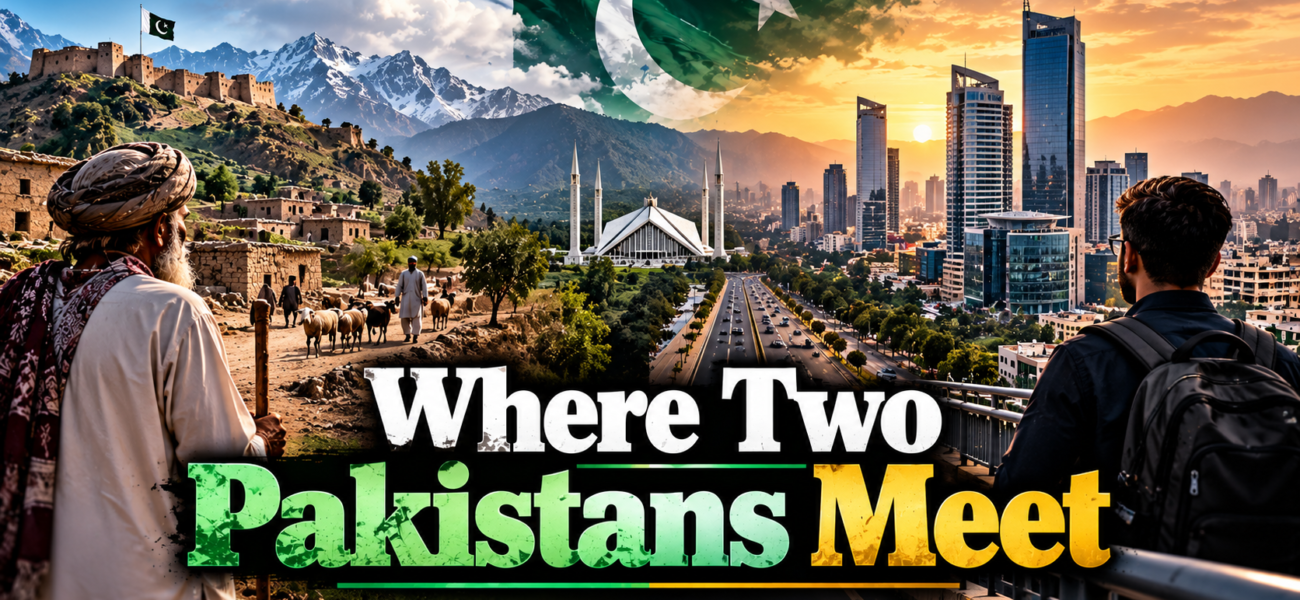
Where Two Pakistans Meet
On Sunday, Pakistan’s interior ministry reported that security forces had killed eight Tehreek-e-Taliban Pakistan fighters in an operation in the Dera Ismail Khan district of Khyber...

On Sunday, Pakistan’s interior ministry reported that security forces had killed eight Tehreek-e-Taliban Pakistan fighters in an operation in the Dera Ismail Khan district of Khyber Pakhtunkhwa. It came a little over a week after a suicide bomber drove an explosives-laden vehicle into a joint police and customs checkpoint in the same district, killing at least eleven officials and wounding dozens more, with gunmen reportedly firing on the rescuers who arrived afterward. The TTP claimed that attack. Dera Ismail Khan has appeared in these reports with grim regularity for the better part of two decades, and the reason is geography rather than chance.
Dera Ismail Khan sits at the junction of three provinces, where Khyber Pakhtunkhwa meets Balochistan and Punjab, and it lies directly beside South Waziristan, the former tribal district that has served as a militant stronghold for more than a decade. It is the doorway between two Pakistans, the mountainous and lightly governed periphery on one side and the settled plains of the heartland on the other. The roads that run down from the tribal belt and the Afghan border toward the interior pass through this district. Anyone moving between those two worlds, in either direction, moves through Dera Ismail Khan.
The same geography that makes the district strategically central makes it violent. It is a trade corridor, and the heavy flow of commercial goods is why customs officials are stationed alongside police at its checkpoints, and why the post destroyed in September was a joint police and customs facility. A trade chokepoint is a point of value, for the state that regulates and taxes what passes through it and for the militants who would disrupt or extort the same traffic. When the TTP strikes a checkpoint here, it is striking the seam, the place where the state’s control over movement is both concentrated and exposed.
This matters more now because of where the group operates from. Islamabad’s position, supported by United Nations monitoring, is that the TTP plans and regroups across the Afghan border and in the adjoining tribal districts, South Waziristan among them. Dera Ismail Khan is the hinge through which that periphery projects into settled Pakistan. A fighter or a vehicle bomb travelling from the sanctuary toward a target in the settled districts, or onward toward Punjab, passes through this junction. Control of the district is control of the passage between the ungoverned edge and the governed core, which is why the contest over it never fully stops and why neither side can afford to cede it.
The checkpoint is the physical expression of that contest. It stands on the corridor to inspect what moves along it, and that is precisely why it draws attack. Destroying it opens the passage for a time and demonstrates that the seam can be breached. The gunmen who fired on the ambulance after the September bombing were making that point a second time, that the state’s presence at this crossing is contestable. Every checkpoint bombed and rebuilt in Dera Ismail Khan is a round in a longer argument about whether the periphery can still reach the core at will.
📄 POLICY WIRE WHITEPAPER PUBLISHED: PAKISTAN'S NATIONAL SECURITY POLICY PRIORITIES
👉 READ BY CLICKING HEREThis is why the eight fighters killed this week, like the many killed before them, do not settle the matter. The violence in the district is driven by its function as a transit seam, and that function does not change when individual fighters are removed from it. As long as the militant networks hold ground in the neighbouring tribal areas and across the border, the crossing will be fought over, because it is the route between where those networks are and where they wish to strike. Holding Dera Ismail Khan is necessary, and the operations that do it are real successes. But the district will keep surfacing in these statements until the periphery it connects to has ceased to be a sanctuary.
The long record of bombings in Dera Ismail Khan, running back through 2007, 2009, 2017, 2023, and now 2026, is the signature of a place positioned where two Pakistans meet and that has to be crossed by anyone passing between them, rather than a run of unrelated tragedies. The eight killed on Sunday and the eleven killed at the checkpoint in September are the recurring toll of that position. The interior minister is right that Khyber Pakhtunkhwa is on the frontline, and Dera Ismail Khan is on it for a reason written into the map. The map will keep producing these days until the sanctuary on the far side of it is closed, and no number of operations at the seam substitutes for that.
Author