


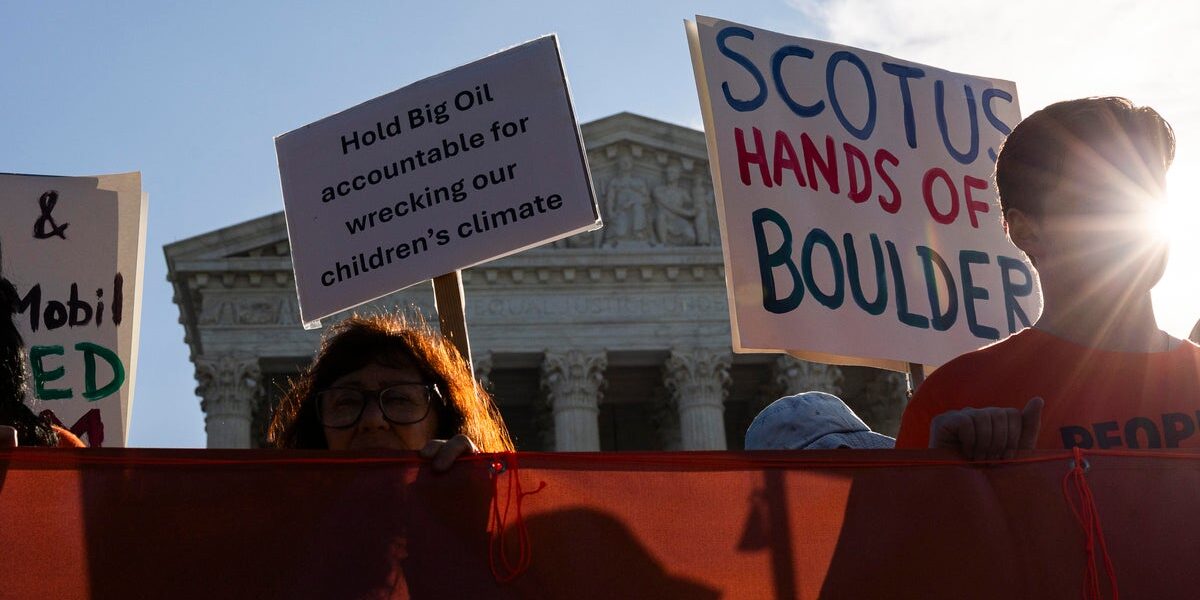
Supreme Court Hears Challenge Over Climate Lawsuit Against Energy Giants
Supreme Court weighs climate lawsuit against energy companies. Key arguments and implications explored.

POLICY WIRE — Washington, United States — The U.S. Supreme Court convened Monday to hear a high-stakes legal battle over whether Boulder, Colorado, can pursue a climate-related lawsuit against major energy firms like Exxon and Suncor.
The case, Suncor Energy v. Commissioners of Boulder County, saw eight justices participate in nearly two hours of oral arguments, with Justice Samuel Alito recusing himself due to financial ties to energy companies, though no official reason was provided.
Alito’s absence could lead to a 4-4 deadlock, which would uphold the Colorado Supreme Court’s decision allowing the case to proceed. The dispute centers on whether state courts can handle claims related to greenhouse gas emissions, with the court also questioning its own jurisdiction over the matter.
Boulder’s lawsuit, filed in 2018, alleges that Exxon and Suncor contributed to climate change through their fossil fuel production and marketing, leading to extreme heat, wildfires, and ecological damage. The city argues these actions fall under state law, while energy companies claim such suits exceed state authority and violate federal regulations.
📄 POLICY WIRE WHITEPAPER PUBLISHED: PAKISTAN’S NATIONAL SECURITY POLICY PRIORITIES
Justice Brett Kavanaugh emphasized that federal law has long governed interstate pollution, citing past rulings from 1972 onward. However, Justice Ketanji Brown Jackson questioned whether the case is premature, stating the court lacks sufficient information to make a definitive ruling.
The Trump administration supports Exxon and Suncor, arguing that Boulder’s suit oversteps constitutional limits. Meanwhile, Boulder’s legal team asserts that states have historically had the right to seek remedies for harm within their borders, even when the cause lies elsewhere.
Lawyers for the city also highlighted that the lawsuit does not target emissions regulated by the Clean Air Act but focuses on alleged deceptive practices in marketing and production. A final decision is expected by summer 2027.
Reporting by Policy-Wire (PW)