


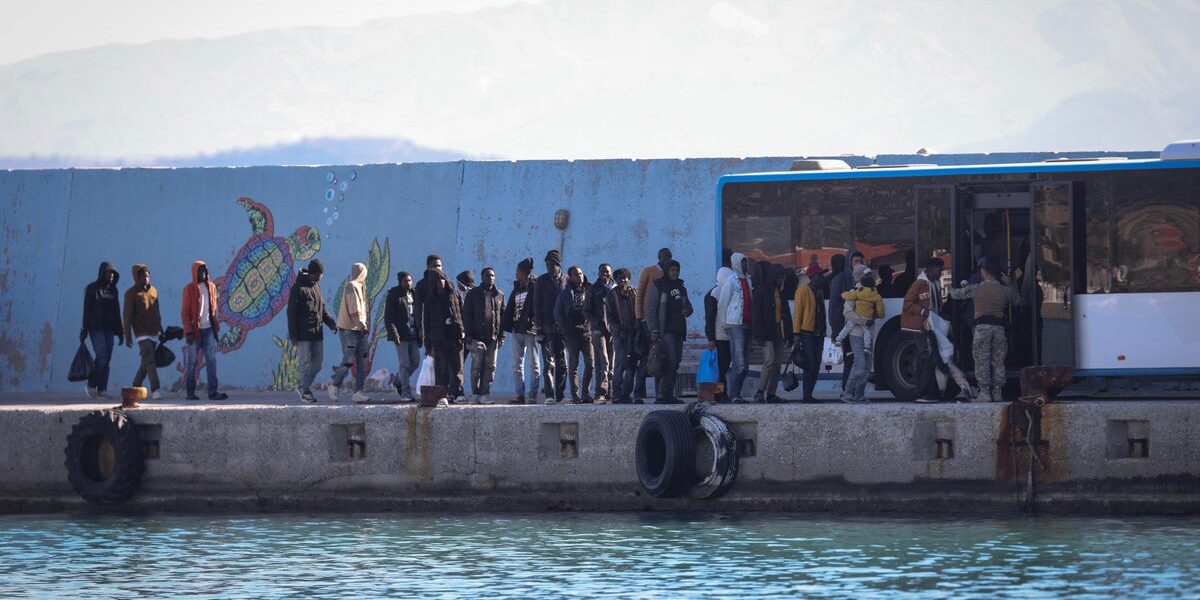
EU Nations Expand Deportation Plans to Third Countries Amid New Return Hub Rules
Five EU nations advance plans for third-country deportations as return hubs gain approval. EU rules now allow migrant transfers to safe third countries.

POLICY WIRE — City, Country — Five European Union member states are advancing plans to deport rejected asylum seekers to third countries outside the bloc, following new EU regulations that facilitate such transfers.
Greece, Germany, Austria, Denmark, and the Netherlands have agreed on a shared framework for setting up “return hubs” beyond EU borders, where individuals who have exhausted their legal options in Europe could be relocated if they cannot return to their home countries.
Danish Interior Minister Morten Bødskov noted the progress of the initiative, stating that Denmark aims to send the first irregular migrants to a partner country outside the EU by 2027. Greek Migration Minister Thanos Plevris mentioned plans for a pilot project starting next year, though no specific destinations have been confirmed. Potential partners include Rwanda, with Greece emphasizing the focus on “safe third countries,” particularly in Africa.
The EU introduced the concept of return hubs as a potential deterrent to irregular immigration, suggesting they could encourage voluntary returns by offering an alternative to deportation. The recently adopted rules establish a legal framework for returns, allowing member states to form agreements with non-EU countries, provided those nations meet human rights and international law standards, including the principle of non-refoulement.
📄 POLICY WIRE WHITEPAPER PUBLISHED: PAKISTAN’S NATIONAL SECURITY POLICY PRIORITIES
Previous attempts at third-country deportations have yielded mixed results. The UK’s Rwanda scheme, which aimed to process asylum claims there, was halted by the Supreme Court in 2023 due to legal concerns. Despite £715 million spent, no one was forcibly relocated under the program.
Experts caution that such policies often rely on the assumption that enough people will believe they will be transferred, which may not always hold true. They argue that while externalization can shift some challenges geographically, it does not eliminate the need for strong border controls, legal frameworks, and cooperation from partner nations.
Supporters, like Jacob Reynolds of the Freedom and Sovereignty Initiative Europe, view the EU’s decision as a step toward better border control. However, he warned that relying on third countries to handle illegal migration risks ignoring deeper issues within the EU’s asylum systems.
Reporting by Policy-Wire (PW)