

The Media-Trump Paradox: Why Networks Remain Tethered to a Hostile White House
Explore the complex relationship between major news networks and the Trump administration as media outlets navigate restricted access and political tension.

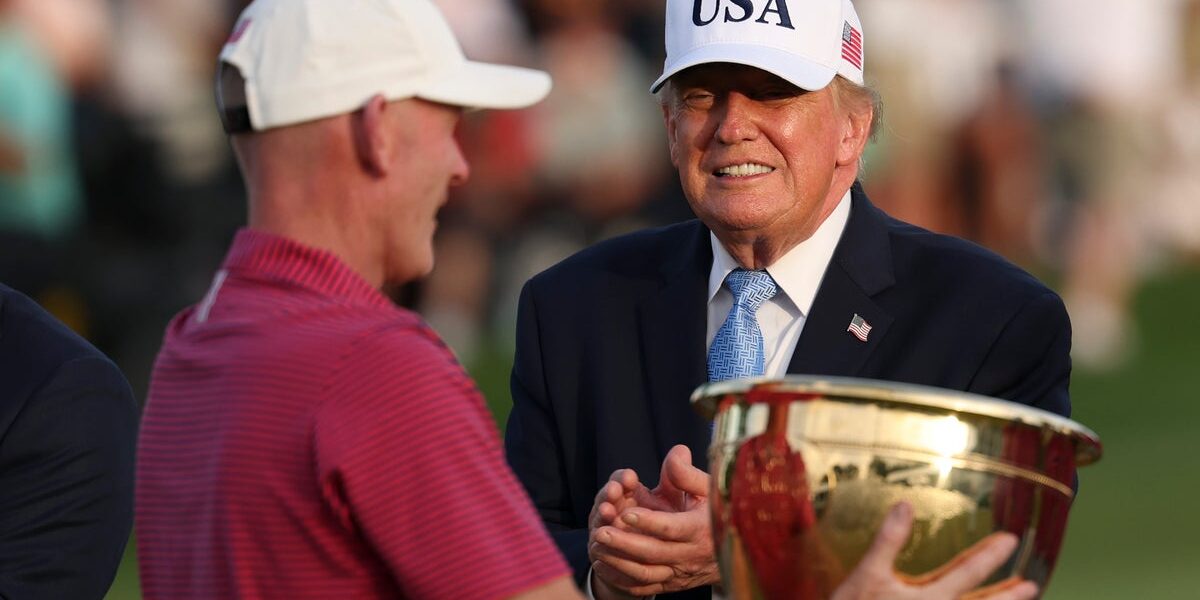
POLICY WIRE — Chicago, USA — President Donald Trump utilized the final day of the President’s Cup at Medinah to command the spotlight, blending a high-profile sporting event with his ongoing efforts to shape his own media narrative. Amidst declining poll numbers and domestic and international policy challenges, the president sought the company of supportive crowds and the constant presence of television cameras.
The event provided a stage for both the president and the USA team, with athlete Brandt Snedeker hoisting the trophy before a cheering audience. Trump appeared in high spirits, soaking in chants of “USA!” and “four more years” from the spectators, moments he later broadcast to his followers on Truth Social.
Fox News secured the television pool slot for the Sunday outing, traveling alongside the president on Air Force One. This development suggests that the unified front previously held by major networks against the exclusion of CNN from press rotations may be softening, though the status of CNN’s future access remains uncertain due to ongoing litigation with the White House.
According to reporting from The New York Times, the five major networks reached an agreement to resume pool coverage following the initial ban. The arrangement includes a provision allowing networks to opt out of providing pool coverage on days when CNN is scheduled to participate.
White House access remains a point of contention, with restrictions having tightened significantly during Trump’s second term. Pool access is essential for media organizations to cover the president during official functions, such as bill signings, travel, and campaign appearances, where independent reporting would otherwise be impossible.
📄 POLICY WIRE WHITEPAPER PUBLISHED: PAKISTAN’S NATIONAL SECURITY POLICY PRIORITIES
Despite the administration’s history of ignoring complaints regarding reduced access and attempts to penalize outlets for critical coverage, news organizations continue to fulfill their role in documenting the presidency. The current administration has notably expanded the scope of executive power, making the task of monitoring the president a necessity for the press.
Reporters often find themselves in a difficult position, as the president frequently uses informal gaggles on the sidelines of events to make news on unrelated topics. This dynamic forces media outlets to participate in the administration’s media strategy to ensure they do not miss critical developments.
Meanwhile, organizations like the White House Correspondents Association face internal pressure regarding their role in providing a platform for the president. Critics argue that by hosting the president, these groups risk appearing ineffective in defending their own members against administrative hostility.
Political analysts, including New York Times reporter Maggie Haberman, have noted that Trump derives significant satisfaction from the ceremonial aspects of the presidency. He has historically used his position as a master of ceremonies to command attention, a tactic he previously employed during his post-presidential years at Mar-a-Lago to voice grievances.
With midterm elections looming and Republican polling numbers struggling, the administration faces limited options to shift public sentiment. As the president increasingly retreats into a bubble of supporters, news networks are left to grapple with their responsibility to cover a politician who has fundamentally altered the relationship between the executive branch and the press.
Reporting by Policy-Wire (PW)