

Pakistan’s Diplomatic Delegation: A Strategic Message of Peace in a Tense Region
Following a near-military clash between nuclear-powered neighbors, Pakistan’s diplomatic initiative to world capitals is not a routine diplomatic visit but one of securing a rectification of...

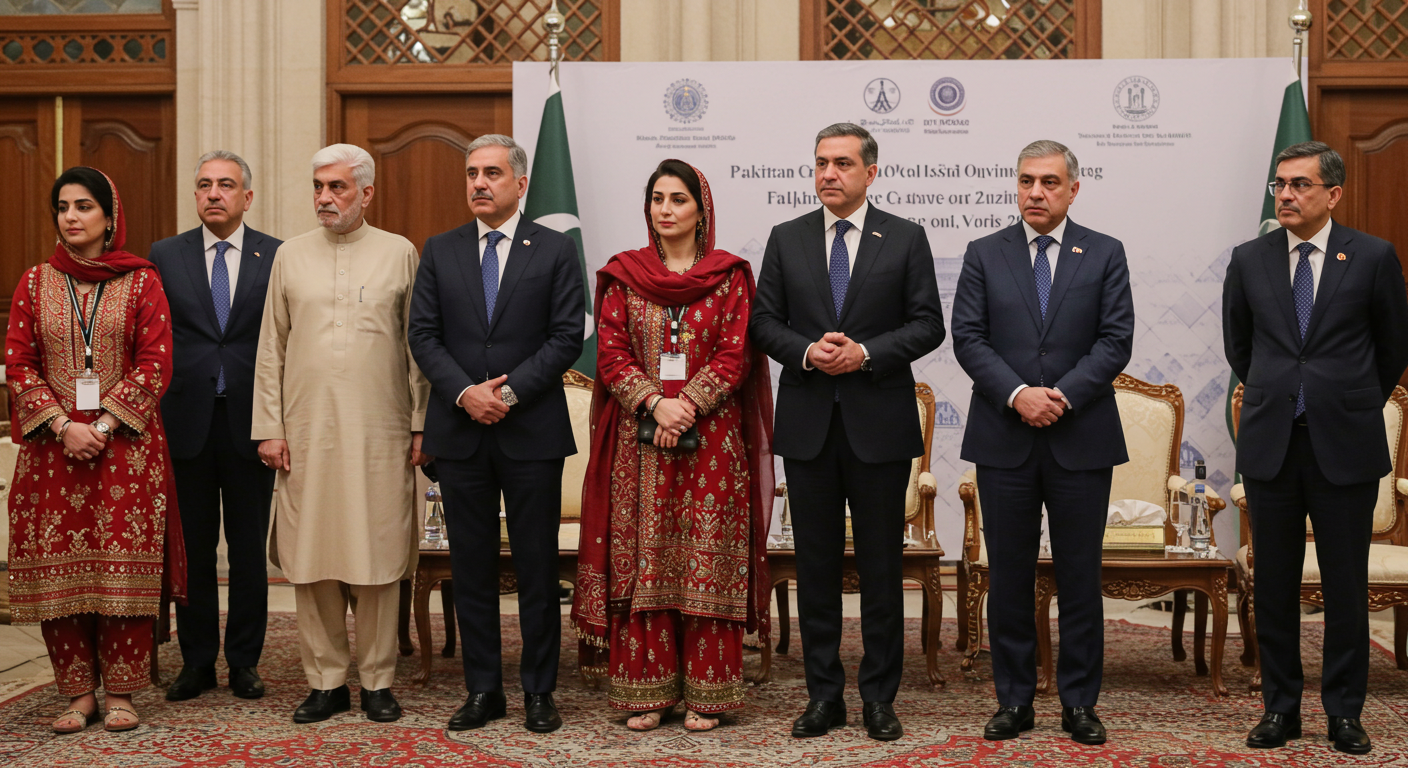
Following a near-military clash between nuclear-powered neighbors, Pakistan’s diplomatic initiative to world capitals is not a routine diplomatic visit but one of securing a rectification of global views, safeguarding national interests, and pleading for the peaceful resolution of a delicate situation. Prime Minister Shehbaz Sharif’s move to send a high-level delegation headed by Bilawal Bhutto Zardari is a turning point for Pakistan’s attempts to win over the international community on issues of the core of its national security, regional stability, and eternal peace.
At the essence of this diplomatic push is that Pakistan desires peace, but peace must be based on the ground of justice, dialogue, and resolution of some pending issues that have haunted the subcontinent for decades. The visits of the delegation to New York, Washington, London, and Brussels are a strategic outreach aimed at putting Indian aggression in the limelight, countering misinformation, and highlighting Pakistan’s viewpoint in a way that would resonate with the world.
The war of words between India and Pakistan has escalated perilously over the recent weeks, with both countries accusing each other of sponsoring terrorism and generating instability in the subcontinent. The military escalation, initiated by a terrorist attack on foreign visitors in Kashmir, led to missile exchanges, drone attacks, and artillery fire, and then diplomatic crises for India’s suspension of the Indus Waters Treaty. The diplomatic envoy’s mission is at a critical juncture, trying to turn around the trend of escalation and to show Pakistan’s attempts at de-escalation and peaceful resolution of disputes.
Among the major messages of Pakistan’s diplomacy is its continuing call for dialogue and diplomacy in reaction to India’s aggressive behavior. Leader of the delegation Bilawal Bhutto Zardari emphasized that Pakistan is itself a victim of terrorism, concerned to eliminate it from the country, and that seeking peace cannot be separated from seeking solutions to the root causes that lead to conflict in the region. Kashmir issue, terror, and the suspended Indus Waters Treaty are the key issues the delegation will bring up in sessions with the world’s most powerful leaders, including UN Secretary General Antonio Guterres and other senior officials at the United Nations.
The stance of Pakistan, as argued by Bhutto Zardari, is unequivocal: Pakistan wants peace but only through constructive interaction, talks, and the resolution of problems that have been a thorn in the flesh of so many decades. The mission of the delegation is not merely to counter the propaganda campaign of India but to communicate a message of peace and truth—a message that needs to be heard by the world.
Pakistan’s largest demand is the unilateral withdrawal of India from the Indus Waters Treaty, something which the state regards as an existential threat to its water security. Relying on the Indus River system for 80% of its irrigated land and virtually all of its hydropower projects, Pakistan’s economic well-being and environmental sustainability is inextricably tied to the free flow of water from the river. The mission of the delegation to bring India’s activities to the forefront of attention in order to highlight India’s activities as “weaponizing” water is not only an invitation for the restoration of the treaty but also a general appeal for the international community to maintain the principles of justice and equity in resolving transboundary conflict.
The invitation of the delegation also highlights the increasing significance of the role of the international community in attaining long-term peace in South Asia. Pakistan’s appeal for a worldwide initiative to open the lines of communication and bring an end to the Kashmir dispute is an essential part of its foreign policy initiative. The Kashmir dispute has been a source of tension between the two countries for decades, and Pakistan insists that the resolution of the dispute peacefully will grant stability to the region. The trip of the delegation to Brussels and Washington, the twin poles of international diplomacy, will be utilized to further Pakistan’s bilateral relationships and reassert its dedication to multilateralism and its desire to engage the world powers in order to attain a sustainable peace agreement.
But the Pakistan diplomatic delegation is not merely about projecting the image of statehood or highlighting India’s belligerence. It is also an indication of the strategic maturity of the country in employing diplomacy as an instrument of peacebuilding. Through a gesture of reconciliation to international organizations such as the United Nations, the Organisation of Islamic Cooperation (OIC), and influential Western allies, Pakistan aims to emerge as a responsible regional state dedicated to maintaining the rule of international law and practices of peace. The mission’s engagements with pivotal stakeholders in New York and Washington play a crucial role in driving this point home.
📄 POLICY WIRE WHITEPAPER PUBLISHED: PAKISTAN'S NATIONAL SECURITY POLICY PRIORITIES
👉 READ BY CLICKING HEREThe inclusion of Special Assistant to the Prime Minister Syed Tariq Fatemi in the delegation for a visit to Moscow is also a sign of Pakistan’s efforts to diversify diplomatic outreach. Moscow, whose traditional relationship with Pakistan and India plays a critical role in regional geopolitics, is extremely significant, and the visit by Fatemi is a sign of Pakistan’s broader strategy to seek diplomatic support from outside core Western allies.
Apart from that, Pakistan’s diplomatic response has to be considered within the overall context of South Asian geopolitics. Growing Hindutva nationalism in India and more assertive Indian foreign policy have made the South Asian security environment more complicated. Both India and Pakistan possessing nuclear weapons makes the specter of conflict escalation to always loom over the region. In such a scenario, Pakistan’s diplomatic intervention is of vital importance in the form of restraint, dialogue, and foreign intervention to avert the further degeneration of relations.
The mission of the delegation is also a reaction to India’s increasing disinformation efforts. India has attempted to establish Pakistan as the sole reason for conflict in the area through social media manipulation, rumour-spreading, and media blitzes. In disseminating its own account, one that has basis in reality and fact, Pakistan is attempting to counter these skewed portrayals and show itself to be a peaceful, stable nation interested in regional cooperation.
Ultimately, whether or not the Pakistani delegation’s success relies on the legitimacy of its argument or not will also depend on whether the international community is willing to be a collaborative force to assist in the resolution of India-Pakistan’s underlying issues. As connectivity of the delegation will certainly influence world opinion, actually, the work is to convert diplomatic work into concrete results. Pakistan’s message of peace, as it is moderated by an appeal to discussion, needs to be heard around the globe if it is to create an atmosphere in which talk, not weapons, is the norm.
Finally, the task of the diplomatic mission is also a defining moment for Pakistan to promote peace, tackle urgent regional issues, and reverse narratives that can destabilize the region. With tensions between India and Pakistan continuing to run high, Pakistan’s diplomacy in world capitals is an unstoppable step toward ensuring peace and interaction remain at the center of international debate on South Asia.
Author