

A Regional Consensus for Saudi Security and Regional Stability
Besides, the recent joint statement issued by Tu00fcrkiye, Saudi Arabia, Pakistan and Egypt goes beyond the immediate context of the attacks against Saudi Arabia. It comes as the result of the...

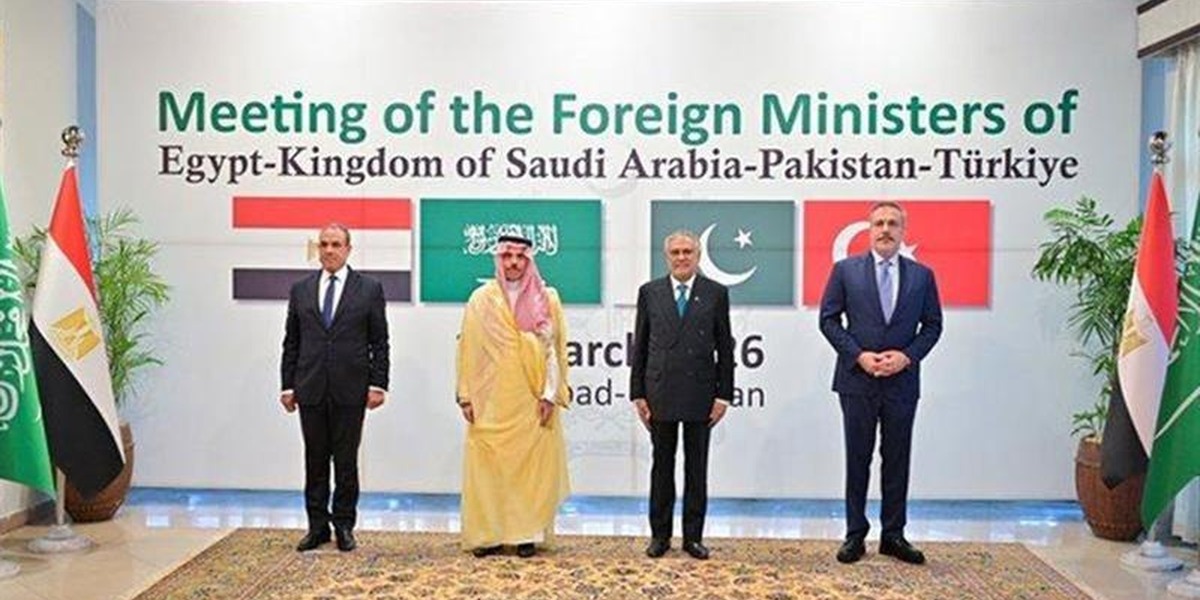
Besides, the recent joint statement issued by Tu00fcrkiye, Saudi Arabia, Pakistan and Egypt goes beyond the immediate context of the attacks against Saudi Arabia. It comes as the result of the discussions held on the sidelines of the 81st Session of the United Nations General Assembly in New York and contains the united position of four powerful regional states which is that Saudi Arabia has the right to defend itself, the security of regional navigation should be maintained, and dialogue is crucial for finding a long-term solution to the issue.
As far as Pakistan is concerned, such a stance can be called not only principled but also consistent because Pakistan has always paid considerable attention to the security and sovereignty of Saudi Arabia, but at the same time advocated peaceful settlement of disputes within the Muslim world.
The immediate background here lies in the renewed upsurge that has occurred in relation to Yemeni Houthis and incidents in which security in Saudi Arabia has been affected, along with their impacts on regional sea routes. In terms of the strategic implications of these incidents, it goes far beyond the scope of the Arabian Peninsula. It is important to realize that the Red Sea and associated sea routes link the Gulf to the Mediterranean and form important passageways for international trade, supply of energy and commercial shipping. Any prolonged disturbance, in such a case, would definitely have wider repercussions.
What makes the stance of Pakistan important here is that its relations with Saudi Arabia are not restricted only to diplomatic relations. Pakistan and Saudi Arabia have decades of cooperation politically, economically, religiously and defense-wise. Pakistan has made it clear in the past that the security and territorial integrity of Saudi Arabia are of immense significance to them. However, Islamabad has always maintained that any regional differences need to be sorted out diplomatically and with respect for sovereignty.
This balance is crucial. While advocating for Saudi Arabiau2019s legitimate right to defend itself in accordance with international law is not a call for indefinite regional tensions, it recognizes an important concept in international politics where states are not supposed to remain inactive while facing an aggression on their own territory, population, and vital infrastructure. Meanwhile, mentioning international law means that such a right belongs to an existing legal framework.
The joint statement is a sign of a new trend in the region where regional powers tend to discuss security questions more actively. Tu00fcrkiye, Pakistan, Egypt, and Saudi Arabia represent distinct geopolitical locations and have different relations with global powers. However, they managed to agree on some essential points such as sovereignty, territorial security, freedom of navigation, regional stability, and diplomacy. This development is significant as the region experiences a number of overlapping conflicts.
Regional diplomacy is of strategic importance for Pakistan as well. Islamabad has consistently worked to prevent any spillover of conflicts into the wider Muslim world and has advocated diplomacy where feasible. The stability of the Middle East is an issue which is strategically and economically important for Pakistan due to trade links, energy needs, large expatriate population and close ties with Gulf countries.
📄 POLICY WIRE WHITEPAPER PUBLISHED: PAKISTAN'S NATIONAL SECURITY POLICY PRIORITIES
👉 READ BY CLICKING HEREYemen reference is also vital in the statement as the four countries endorsed the efforts of the government of Yemen to achieve stability and peace and emphasized that the only way towards a solution was through dialogue and diplomacy. In other words, Yemen conflict was being addressed in a political context as opposed to a military one.
Therefore, the importance of the New York summit is in the restrained and balanced approach which it takes. Solidarity with Saudi Arabia is coupled with preference for caution and diplomacy. This combination is of great importance for Pakistan as the country can fully support security interests of Saudi Arabia while simultaneously pursuing diplomatic solution to regional disputes.
With the world now facing challenges that can quickly evolve from localized tensions to global crises, regional powers have a common agenda in preventing any further escalation. The emerging consensus between Pakistan, Saudi Arabia, Tu00fcrkiye and Egypt proves that the concepts of security and diplomacy do not necessarily stand in competition to one another. Sovereign nations can be safeguarded, international shipping routes can be protected, and political negotiations can go hand in hand with a successful regional policy.
The involvement of Pakistan in this consensus confirms the well-established and pragmatic tenet of its foreign policy u2013 a policy that values solidarity with friends, international law, regional stability, and diplomacy rather than military confrontation. With the Middle Eastern region becoming more divided each day, such a stance provides room for security and diplomacy coexistence, and not for their mutual exclusivity.
Author