



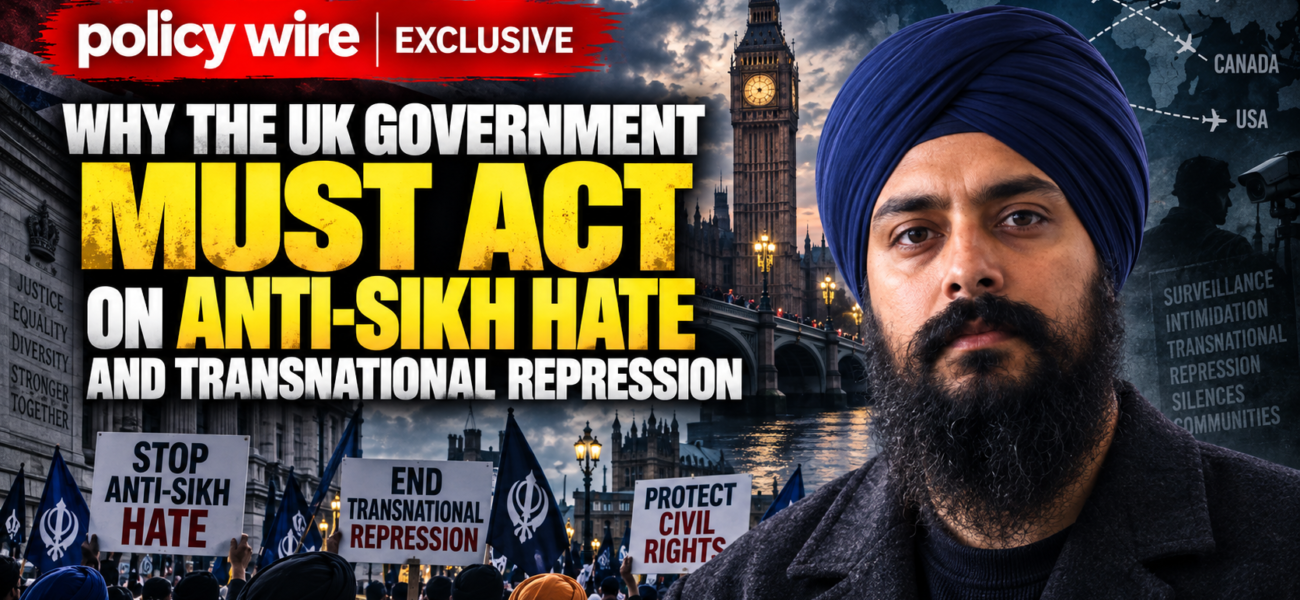
Why the UK Government Must Act on Anti Sikh Hate and Transnational Repression
More than 10,000 Sikhs gathered at the National Sikh Convention in Wolverhampton, issuing a clear 12 month ultimatum to the new UK Labour leadership: the era of quiet diplomacy, empty photo ops, and...

More than 10,000 Sikhs gathered at the National Sikh Convention in Wolverhampton, issuing a clear 12 month ultimatum to the new UK Labour leadership: the era of quiet diplomacy, empty photo ops, and broken opposition promises is officially over.
A 10,000 Strong Mandate in Wolverhampton
Over three days at the Guru Nanak Gurdwara in Wolverhampton, the Sikh Federation UK hosted its National Sikh Convention under the theme “Proud to be a Sikh, Proud to be a Khalistani”. The gathering brought together over 10,000 participants from across Britain, delivering an uncompromising message to both Westminster and international authorities: the Sikh struggle for civil rights, self determination, and justice is resolute.Timed alongside the 25th anniversary of 9/11, a tragedy that historically triggered widespread mistaken identity attacks against visibly identifiable Sikhs worldwide, the convention served as a focal point to highlight entrenched policy failures within the Home Office and Foreign Office.“In communications with the Prime Minister and Foreign Secretary, we have told them they need to be more inventive and resolute in dealing firmly with the Indian government.”Dabinderjit Singh OBE, Chief Executive of Political Engagement, Sikh Federation UK
The Hidden Scale of Anti Sikh Hate Crimes
At the center of the convention findings is a damning critique of official UK hate crime statistics. Community leaders revealed that the true scale of anti Sikh hate crimes in Britain may be up to twenty times higher than officially recorded by police forces. When adjusted for community size and visible identity, anti Sikh hate crimes rival or exceed other targeted religious hate categories.This underreporting is not accidental. Over the last decade, successive ministers and officials have resisted disclosing the true numbers because doing so would expose years of systemic neglect in policy and resource allocation. Recent horrific incidents, including the brutal attack on two elderly Sikh taxi drivers in Wolverhampton and the police failure to charge suspects in the racially aggravated Oldbury rape case, demonstrate that Sikh victims continue to be denied equal priority.Holding Labour to Opposition Promises
Before coming into power, the Labour leadership acknowledged that previous governments had failed the Sikh community. Specific pledges were made to formally recognize and tackle anti Sikh hate crimes, ensure proper ethnic recognition across 40,000 public bodies, and introduce a statutory Code of Practice protecting the 5 Kakaars and Dastaar in public institutions.Sikh Federation UK leadership made it plain that the Sikh community will not allow these opposition promises to be quietly shelved. A strict 12 month deadline has been set for the government to deliver on its legislative commitments, including formalizing ethnic monitoring across public services to address deep rooted inequalities.Confronting Transnational Repression in Britain
A critical focus of the Op Ed and convention proceedings is the rising threat of transnational repression targeting Sikh activists on British soil. The mysterious death of Avtar Singh Khanda on 15 June 2023 remains a source of intense community concern, with calls persisting for a full inquest and public inquiry.Despite the National Security Act 2023 coming into force, authorities have shown reluctance to confront known agents of the Indian government operating within the UK. Legal experts suggest that under the National Security Act, British intelligence and law enforcement possess the tools to investigate, prosecute, or deport foreign operatives who threaten UK sovereignty and Sikh civil liberties. The Sikh Federation UK has formally requested the Home Office and Foreign Office to use these powers robustly.Three Non Negotiable Priorities for Westminster
The convention outlined three urgent foreign policy demands currently before the Prime Minister and Foreign Secretary:- Securing the Release of Jagtar Singh Johal: Jagtar Singh Johal is approaching his ninth year of arbitrary detention in an Indian prison without trial or conviction. Quiet diplomacy has failed completely. The UK government must adopt public diplomatic criticism and demand his immediate release and return.
- A Judge Led Inquiry into Thatcher 1984 Actions: The Sikh community continues to demand a full judge led public inquiry into Margaret Thatcher government collusion with Indian military actions in 1984. While Foreign Office officials resist due to diplomatic friction with New Delhi, the UK government must prioritize historical truth over foreign political sensitivities.
- Zero Tolerance for Foreign Interference: UK authorities must demonstrate the political will to protect British citizens from foreign state surveillance, intelligence harassment, and physical threats on British soil.
The Strategy of Sabotage Has Failed
Addressing attempts by external actors and compromised individuals to undermine Sikh advocacy, Bhai Amrik Singh, Chair of the Sikh Federation UK Strategy Board, issued a direct warning regarding attempts to block government engagement with democratic Sikh organizations. Following a recent Home Office data leak that exposed individuals involved in Kirpan consultations, community unity has solidified around key Panthic red lines.The message from Wolverhampton is unanimous: the UK government must demonstrate consistency, moral clarity, and legislative action over the next 12 months. Empty gestures and deferred promises will no longer suffice.This Op Ed analysis is based on official declarations and press statements issued by the Sikh Federation UK following the 2026 National Sikh Convention.
Author


Subscribe
Login
0 Comments
Oldest