


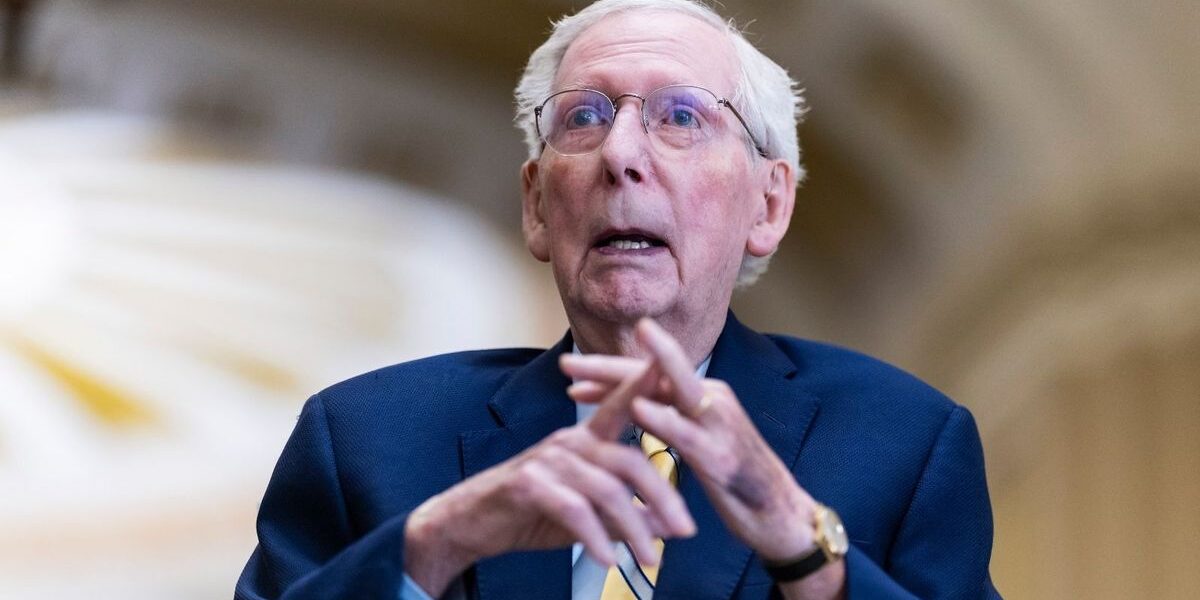
POLICY WIRE FACT CHECK: Did Mitch McConnell vote against sick leave during 4 separate years?
The Claim A viral social media post circulated on platforms such as Bluesky, Facebook, and X, claiming that U.S. Senator Mitch McConnell voted against or blocked measures mandating employees receive...

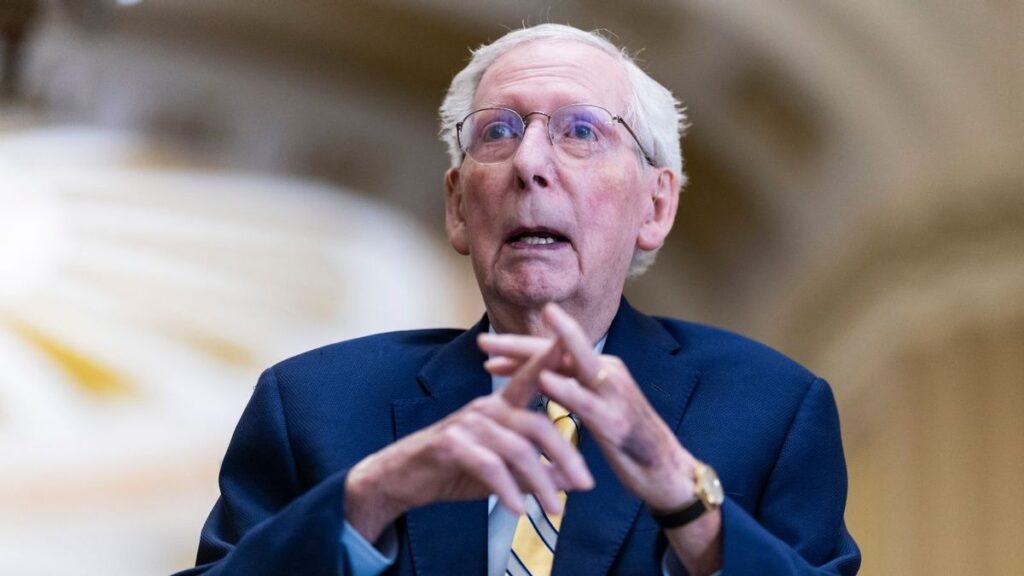
The Claim
A viral social media post circulated on platforms such as Bluesky, Facebook, and X, claiming that U.S. Senator Mitch McConnell voted against or blocked measures mandating employees receive sick leave in four separate years: 1993, 2015, 2020, and 2022. The claim gained traction after McConnell returned to the Senate in September 2026 following a three-month absence due to a health-related leave. One specific post from August 2026 stated, ‘Mitch McConnell is currently on paid sick leave for 2+ months. Fun Fact: U.S. Sen. Mitch McConnell voted against or blocked measures mandating employees receive sick leave in 1993, 2015, 2020 and 2022.’ The post implied a pattern of opposition to sick leave legislation across multiple administrations, raising questions about McConnell’s stance on worker protections.
McConnell, who has served as a U.S. Senator from Kentucky since 1985 and held the position of Senate Majority Leader from 2015 to 2021, has been a consistent figure in congressional debates over labor policies. The claim specifically cited his voting behavior on several key pieces of legislation related to sick leave, including the Family and Medical Leave Act (FMLA) of 1993, a 2015 amendment to provide paid sick leave, the Families First Coronavirus Response Act of 2020, and a 2022 measure aimed at providing paid sick leave for railroad workers. The claim suggested that McConnell consistently opposed these efforts, which were seen by some as progressive labor reforms.
The Details & Investigation
The claim centers on McConnell’s voting record on four specific legislative measures involving sick leave. According to verified records and historical data, the senator did indeed oppose measures related to paid and unpaid sick leave in all four years cited, though with important contextual nuances.
In 1993, the Family and Medical Leave Act (FMLA) was signed into law by President Bill Clinton. The act provided eligible employees with up to 12 weeks of unpaid leave for family or medical reasons. On February 5, 1993, the Senate passed the bill, and McConnell, then a junior senator, voted against it. A C-SPAN video confirms his ‘no’ vote. While the FMLA did not provide paid leave, the claim that McConnell opposed sick leave legislation is accurate, albeit with the clarification that the law in question did not mandate paid time off.
In 2015, McConnell voted against an amendment introduced by Senator Patty Murray (D-Wash.) that sought to establish funding for paid sick leave in the Senate’s budget resolution for fiscal year 2016. The amendment, which did not become law, aimed to expand access to paid leave for workers. A roll call vote shows McConnell cast a ‘no’ vote, aligning with Republican opposition to the measure. At the time, some senators, including Mike Enzi (R-Wyo.), argued that the existing FMLA was sufficient and that extending paid leave would impose unnecessary burdens on employers.
📄 POLICY WIRE WHITEPAPER PUBLISHED: PAKISTAN’S NATIONAL SECURITY POLICY PRIORITIES
In 2020, during the early stages of the COVID-19 pandemic, McConnell supported the Families First Coronavirus Response Act, which included two weeks of paid sick leave for employees affected by the virus. However, he also voted against an amendment proposed by Murray that would have extended the paid sick leave provisions through 2021. This amendment, known as the “Providing Americans Insured Days of Leave Act of 2020,” sought to expand the benefits to include more days of paid leave and additional protections. McConnell, along with 50 other senators, voted against the amendment. Later, as Senate Majority Leader, he reportedly played a role in blocking the extension of the paid leave mandate beyond December 31, 2020.
In 2022, McConnell voted against a resolution that sought to provide seven days of paid sick leave for railroad workers. The measure, which failed to pass due to a lack of bipartisan support, was supported by Senator Bernie Sanders (I-Vt.), who criticized corporate practices that denied workers basic leave benefits. A C-SPAN video of the vote shows McConnell casting a ‘no’ vote, though he did not speak on the issue. At the time, PolitiFact noted that while many railroad workers lacked guaranteed sick leave, a significant number had access to it, complicating the narrative around the need for the legislation.
Based on the evidence, the claim that McConnell voted against or blocked sick leave measures in 1993, 2015, 2020, and 2022 is largely accurate. However, it must be noted that the nature of the legislation varied—some bills did not provide paid leave, and others were non-binding resolutions. The claim is not entirely misleading, but it omits critical details about the scope and intent of the legislation in each instance. Therefore, while the claim is factually correct in its broad assertion, it lacks nuance and could be considered partially misleading without additional context.
The Verdict
The viral claim that U.S. Senator Mitch McConnell voted against or blocked measures mandating employees receive sick leave in 1993, 2015, 2020, and 2022 is primarily accurate based on verified voting records. McConnell did vote against the Family and Medical Leave Act in 1993, opposed a paid sick leave amendment in 2015, voted against an extension of paid leave during the 2020 pandemic, and rejected a 2022 measure for railroad workers. These actions are well-documented in official records, including roll call votes and Congressional records.
However, the claim is not entirely free of mischaracterization. For example, the 1993 FMLA did not provide paid leave, and the 2015 amendment was a non-binding budgetary provision. Additionally, the 2020 paid leave measure was temporary and expired at the end of 2020. These nuances are essential for a full understanding of the issue. Given this, the claim should be rated as MISLEADING, as it presents a simplified version of events that may obscure the actual legislative context and intent.
Counter-misinformation & disinformation investigation conducted by PolicyWire Editorial Desk (PW).