


Astrophysicist Proposes Celestial Cannibalism Theory for Venus’s Missing Moon
A new study suggests Venus's slow rotation caused its moon to spiral inward and crash, offering a fresh explanation for the planet's lack of a satellite.

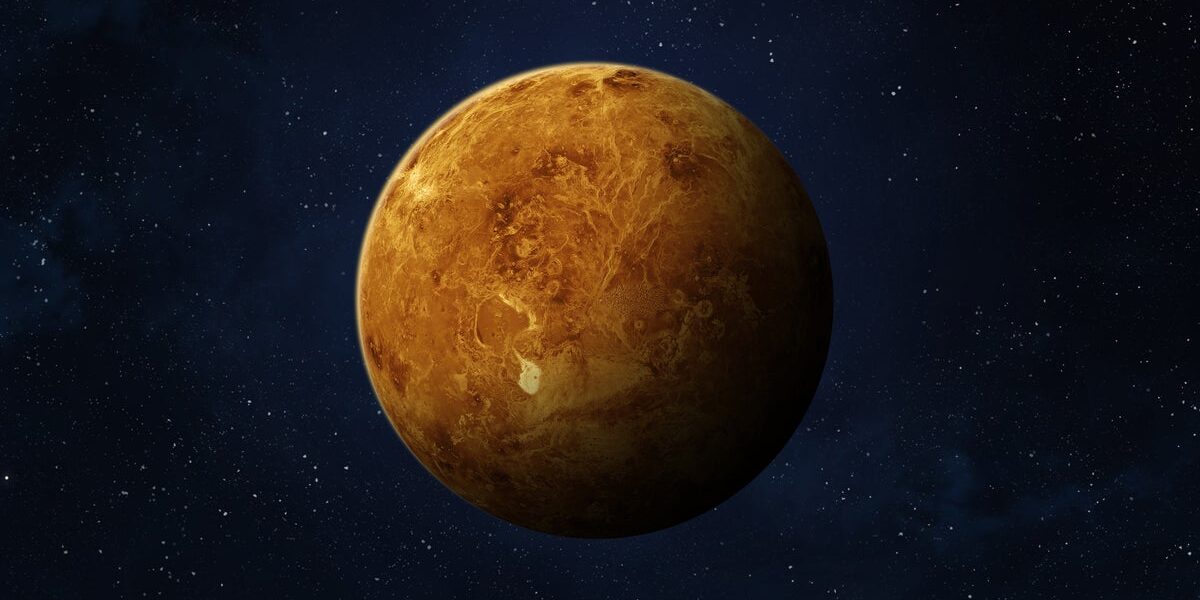
POLICY WIRE — Riverside, USA — A fresh scientific theory suggests that Venus, often considered Earth’s twin due to its similar size and composition, may have once possessed a moon that was ultimately destroyed by the planet itself.
Research published Monday in The Astrophysical Journal by scientists at the University of California posits that the extremely sluggish rotation of Venus doomed any potential satellite. According to the study, the planet’s slow spin would have caused a moon to gradually spiral inward until it collided with the surface in a cataclysmic event.
Astrophysicist Stephen Krane explained that if Venus had a moon, it would have been unable to maintain its orbit. He noted that the moon would have crashed into the planet within a relatively short timeframe.
Computer simulations modeling gravitational mechanics indicate that any hypothetical Venusian moon would have met this same fate. Krane estimates this celestial cannibalism likely occurred within the first billion years of the solar system’s 4.5-billion-year history.
📄 POLICY WIRE WHITEPAPER PUBLISHED: PAKISTAN’S NATIONAL SECURITY POLICY PRIORITIES
This new hypothesis challenges previous scientific consensus, which suggested that Venus either never captured a moon or lost one during a massive impact with another celestial body. The study highlights planetary rotational speed as the critical differentiator between Earth and its neighbor.
While Earth completes a rotation every 24 hours, Venus requires 243 Earth days to spin once on its axis. This rapid rotation on Earth transfers energy that pushes our moon away at a rate of 4 centimetres, or 1.6 inches, per year, a phenomenon confirmed by mirrors placed on the lunar surface during the 1969 Apollo 11 mission.
Venus remains a primary focus for researchers studying planetary evolution, despite its toxic atmosphere and surface temperatures reaching 880 degrees Fahrenheit, or 471 degrees Celsius. Krane suggests that given the chaotic nature of the early solar system, Venus likely experienced significant collisions similar to the one that formed Earth’s moon.
Future exploration may provide more definitive answers, with NASA planning to launch the DAVINCI+ and VERITAS missions between the late 2020s and early 2030s. These missions aim to investigate the geologic features and atmospheric composition of the planet.
Reporting by Policy-Wire (PW)