
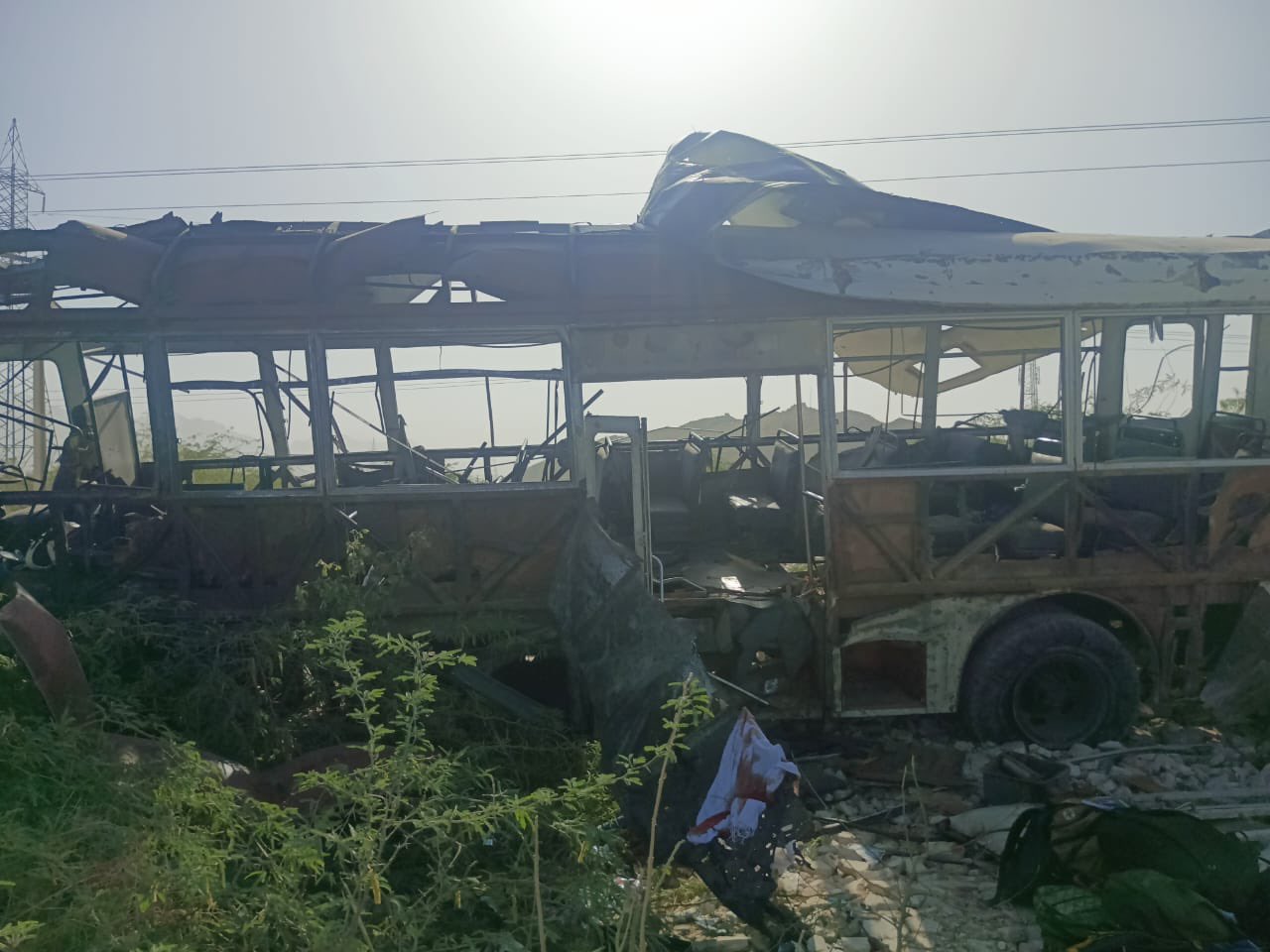
The normal sound of kids going to school was overtaken by an explosion that destroyed both peace and life on a calm morning in Khuzdar, Balochistan. At Zero Point, a regular school run turned into a conflict when a suicide bomber struck an Army Public School bus. Three young ladies, Sania Soomro of the sixth grade, Hafsa Kausar of the seventh grade, and Ayesha Saleem of the tenth grade, were among those who became the target of this adversity. They each carried books, aspirations, and optimism. In addition to killing the driver and a security officer, the explosion injured over fifty people, many of them were students who are currently fighting for their lives in nearby hospitals.
Deputy Commissioner Yasar Iqbal Dashti stated that the Army Public School bus at Zero Point in Khuzdar was the target of a suicide attack. The story was repeated by a senior police official, who pointed out that a soft, civilian victim was specifically chosen to maximize psychological suffering. Prime Minister Shehbaz Sharif gave a message of sympathy and determination as families suffered and the country shook from the tragedy. “The attack on innocent children in a school bus by terrorists working under Indian patronage is clear proof of their hostility towards education in Balochistan”. We are aware of the source of this terror, and we will hold those accountable. This was a deliberate crime that was planned by proxies working for adversary powers; it was not an act of coincidence.
All indications, according to Pakistani officials, point to India, which is once again charged with recreating its ancient plan for using militant networks and sleeper cells for proxy warfare. The attack’s timing is not coincidental. It takes place a few days after Pakistan’s winning Operation Bunyan-un-Marsoos, in which Indian attempts, notably the now-famous Operation Sindoor, were soundly beaten on both a diplomatic and military level. Observers think that after humiliation, India used unconventional tactics to destabilize Pakistan internally by attacking easy targets like schools.
One of the main targets of this type of hybrid warfare has long been Balochistan. A resource-rich region troubled by external subversion, it has been the target of numerous attacks that are frequently attributed to outside assistance. It has become a proving ground for novel warfare due to the existence of separatist organizations and extremist groups, many of whom get tactical and doctrinal support from across the border.
This assertion is not unsupported by evidence. Pakistan has consistently provided proof of Indian diversion, from monitored conversations between RAW handlers and militant groups to the arrest of Indian naval commander Kulbhushan Jadhav for operating a spy agency in Balochistan. The trend now becomes darker and more intentional in light of the Khuzdar tragedy.
The event also evokes unpleasant recollections. The Former TTP leader Ehsanullah, who was connected to the 2014 Army Public School tragedy in Peshawar, had a controversial disappearance for a long time, but now his reappearance and the article published in the Sunday Guardian had made remarks that oddly matched Indian propaganda. Current videos depicting BLA members showing hostages one month after the Jaffar Express incident, coinciding with current terrorist activities, repeated the same narrative, a psychological game intended to weaken Pakistan’s confidence as well as instill dread.
This is the most destructive kind of hybrid warfare. Not conflict, but deliberate terror designed to sink morale and break national cohesion. Now, schools, marketplaces, and houses of worship are all on the battlefield. However, India undervalues the power these areas represent in Pakistani society rather than their susceptibility.
The government’s reaction to this tragedy has been swift and unwavering. The ISPR underlined the military’s determination to eliminate the undercover units involved and condemned their brazenness in striking children in a statement. Balochistan has increased its level of security. There are surveillance operations in progress. Prime Minister Shehbaz Sharif and Field Marshal General Asim Munir paid sympathy visits to the victims’ families and pledged justice. In contrast, the public has been united rather than afraid. Cities throughout the world held vigils. Kids joined the solidarity walk. Prayers were heard in mosques, schools, and homes, not just for those affected but also for the continuing existence of the principles that Pakistan upholds: peace, independence, and the fight against terrorism.
Responses from throughout the world have begun to surface. The bombing was deemed “brutal and unconscionable” by the U.S. Embassy in Pakistan. They additionally said that “Schools and school buses should never be targets“. Beyond words, however, Pakistan now urges the world’s humanity to take action. Unless India is held responsible for applying terrorists as a tool of governance, how number of additional children need to be laid to rest?
Pakistan has contributed by supplying proof, enduring the bloodshed, and carrying on the battle. It is now looking for cooperation rather than condemnation. The Khuzdar incident is an alarm for all countries that claim to uphold peace and equality for all, not just Pakistan.
The Khuzdar bomb assault is ultimately more than just a violent crime. It is an assessment of Pakistan’s will, our diplomatic activity, and Pakistan’s governing bodies. Pakistan, wounded but unflappable, is once again called upon to protect its children with the truth as much as with weapons. And the reality is crystal clear: this is a global conflict between principled opposition and proxy terror, not a local dispute. With a national commitment to never again, the children of Khuzdar, whose goals collapsed in fire and smoke, now live on.
Author