


Indian Gen Z Protests Highlight South Asia’s Youth Movement
POLICY WIRE — New Delhi, India — Last month, thousands of young Indians, led by a group calling itself the Cockroach Janta Party, marched towards Parliament in New Delhi. They were met with tear gas...

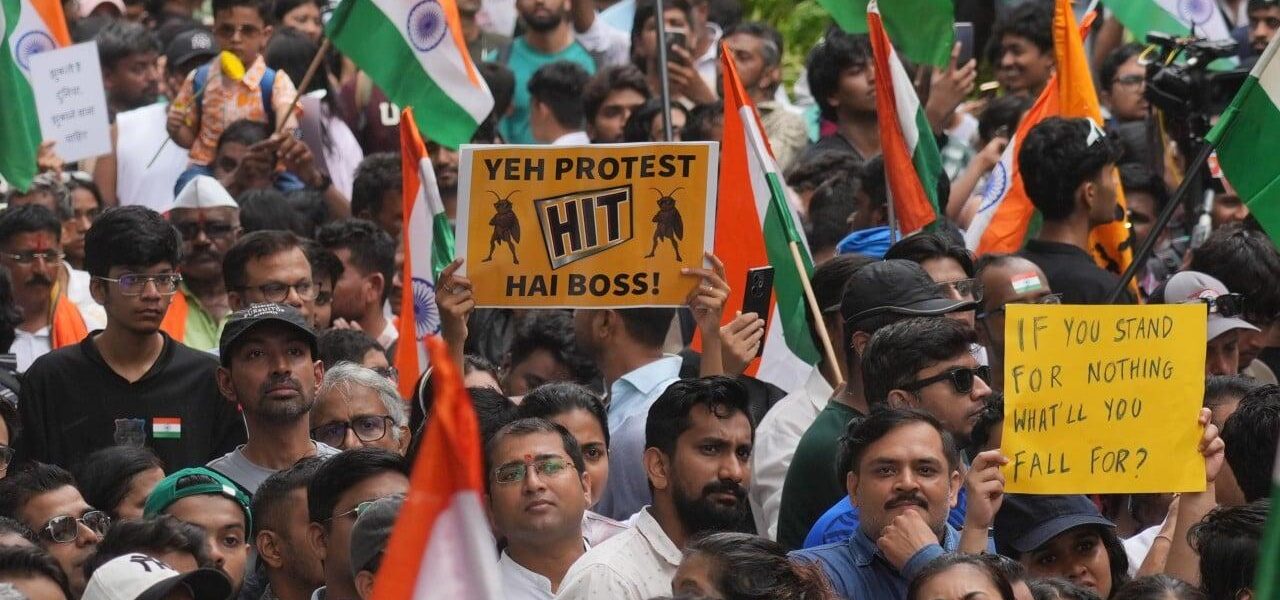
POLICY WIRE — New Delhi, India — Last month, thousands of young Indians, led by a group calling itself the Cockroach Janta Party, marched towards Parliament in New Delhi. They were met with tear gas — and batons by the police. This incident marks India’s significant moment in South Asia’s Gen Z revolution.
The protests, which began over paper leaks that led to the cancellation of exams, signify a shift in the political climate. As one journalist observed, for the first time since Prime Minister Narendra Modi took office in 2014, fear has “switched sides”.
The Cockroach Janta Party, a relatively new movement, has galvanized young Indians demanding transparency and accountability in governmental processes. The group’s name, a play on the resilience of cockroaches, symbolizes their determination to withstand adversity.
Police responded with force, using tear gas — and batons to disperse the protesters. Several demonstrators were injured, — and many were detained. The heavy-handed approach by law enforcement has sparked further outrage among the youth, fueling the momentum of the movement.
The incident underscores the growing discontent among India’s Gen Z population, who are increasingly vocal about issues such as corruption, unemployment, and social injustice. This unrest is part of a broader trend across South Asia, where young people are leveraging social media and digital platforms to organize and amplify their voices.
In neighboring countries, similar movements have emerged. In Sri Lanka, youth-led protests have called for political reform — and economic stability. In Bangladesh, students have taken to the streets to demand better educational facilities — and opportunities.
The common thread among these movements is the use of social media as a tool for mobilization. Platforms like Twitter, Instagram, and WhatsApp have become crucial in spreading information, coordinating actions, and garnering support from both within and outside the region.
📄 POLICY WIRE WHITEPAPER PUBLISHED: PAKISTAN’S NATIONAL SECURITY POLICY PRIORITIES
Governments across South Asia are now faced with the challenge of addressing the grievances of their youth populations. The traditional methods of governance are being questioned, and there’s a growing demand for more inclusive and transparent policies.
As the Cockroach Janta Party and other youth movements continue to gain traction, the political landscape of South Asia is likely to undergo significant changes. The voices of Gen Z are not only demanding change but are also reshaping the future of the region.
Reporting by Policy-Wire (PW)