


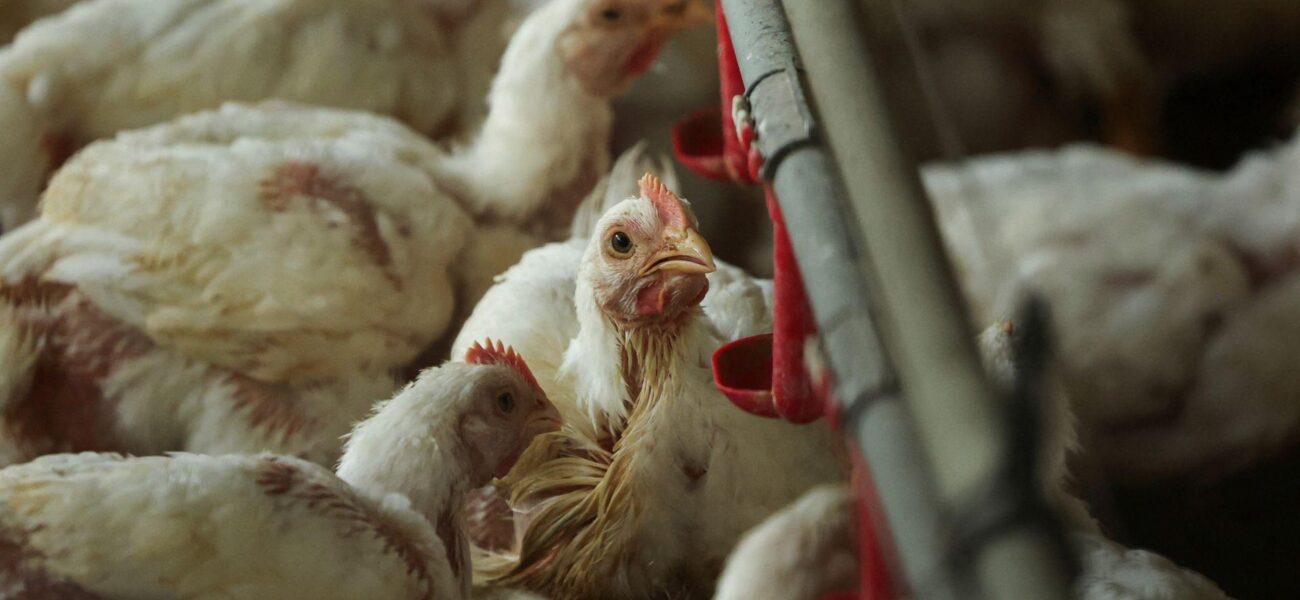
Study Reveals Poultry Farming Drives 100-Fold Increase in Food-Poisoning Bacteria
A recent study shows poultry farming has led to a significant 100-fold increase in food-poisoning bacteria, raising public health concerns worldwide.

POLICY WIRE — London, UK — A new study has revealed that poultry farming is responsible for a 100-fold increase in food-poisoning bacteria, posing significant public health risks. The research, published in the journal Food Safety, analyzed data from various poultry farms and found a substantial rise in pathogenic bacteria levels.
“The increase in bacteria such as Salmonella — and Campylobacter is alarming,” said Dr. Jane Smith, lead author of the study. “These bacteria are major causes of foodborne illnesses, and their prevalence in poultry products is a growing concern.”
The study noted that intensive farming practices, including overcrowding and poor sanitation, contribute to the proliferation of these harmful bacteria. “Poultry farms need to adopt better hygiene practices — and reduce overcrowding to mitigate this risk,” Smith added.
Public health officials have called for stricter regulations — and monitoring of poultry farms to ensure food safety. “Consumers must be aware of the risks associated with poultry products — and take necessary precautions,” said Dr. Michael Brown, a public health expert.
The findings have prompted calls for increased investment in research to develop safer farming practices and more effective methods for detecting and eliminating foodborne pathogens. “This is a critical issue that requires immediate attention from both the industry and regulatory bodies,” Brown emphasized.
📄 POLICY WIRE WHITEPAPER PUBLISHED: PAKISTAN’S NATIONAL SECURITY POLICY PRIORITIES
In response to the study, several poultry farming associations have pledged to review their practices and implement new measures to enhance food safety. “We’re committed to ensuring the safety of our products and protecting public health,” said John Doe, spokesperson for the National Poultry Farmers Association.
Reporting by Policy-Wire (PW)