


Funding Cut Threatens Shutdown of UK’s Largest Telescope
The Jodrell Bank Observatory's Lovell Telescope faces potential shutdown due to funding cuts, impacting UK's astronomical research.

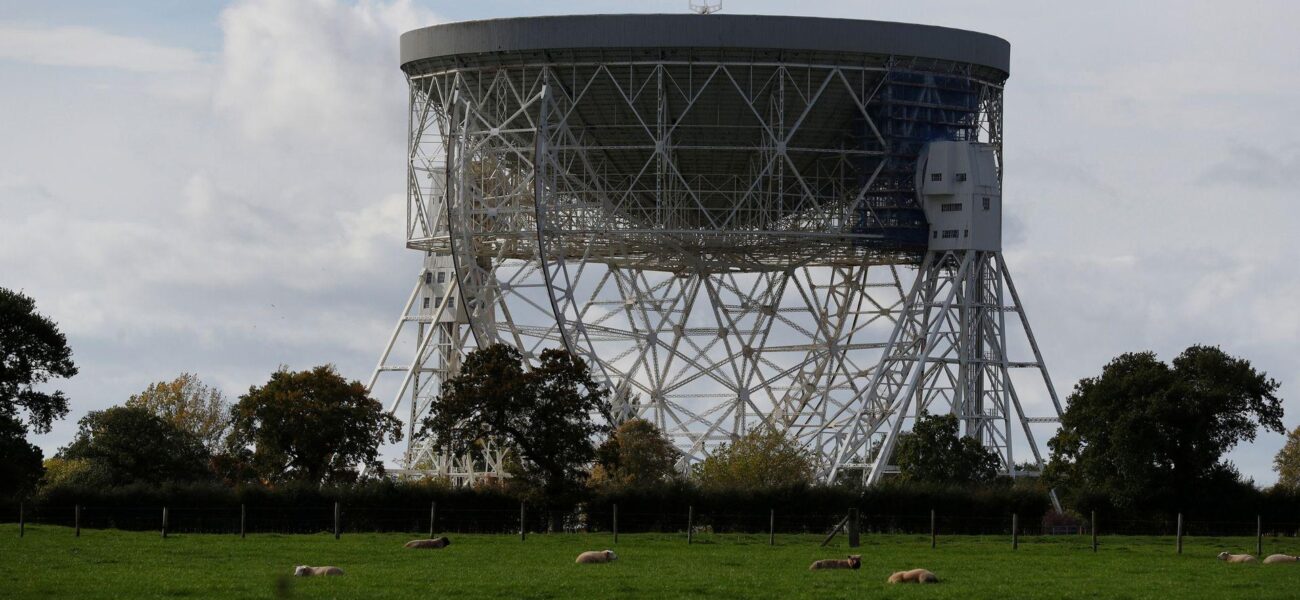
POLICY WIRE — London, UK — The Jodrell Bank Observatory’s iconic Lovell Telescope, the largest of its kind in the United Kingdom, is at risk of being shut down following a significant funding cut. The telescope, a cornerstone of British astronomical research, may cease operations if alternative funding is not secured.
The funding reduction, implemented by the Science and Technology Facilities Council (STFC), has left the observatory in a precarious position. The STFC cited budgetary constraints as the primary reason for the cut, but the move has sparked concern among scientists and the public alike.
“The Lovell Telescope is not just a national treasure but a vital tool for scientific discovery,” said Professor Tim O’Brien, Director of Jodrell Bank Observatory. “Its potential shutdown would be a tremendous loss for the UK’s astronomical community — and beyond.”
The observatory, located in Cheshire, has been a hub for groundbreaking research since its establishment in 1945. The Lovell Telescope, completed in 1957, has played a crucial role in numerous astronomical discoveries, including tracking space probes and studying pulsars.
Efforts are now underway to secure additional funding to keep the telescope operational. The University of Manchester, which manages the observatory, is exploring various funding avenues, including grants, private donations, and partnerships with other research institutions.
“We’re committed to finding a solution that ensures the Lovell Telescope continues its invaluable work,” said Professor Dame Nancy Rothwell, President and Vice-Chancellor of the University of Manchester. “This telescope has a legacy that must be preserved for future generations of scientists — and astronomers.”
The potential shutdown has also prompted a broader discussion about the state of science funding in the UK. Critics argue that consistent underfunding of scientific research could hinder the country’s ability to remain competitive on the global stage.
📄 POLICY WIRE WHITEPAPER PUBLISHED: PAKISTAN’S NATIONAL SECURITY POLICY PRIORITIES
“This is a wake-up call for policymakers,” said Dr. Alice Stevenson, a senior researcher at the observatory. “Science funding must be a priority if we’re to maintain our position as a leader in scientific innovation.”
As the search for funding continues, the future of the Lovell Telescope hangs in the balance. Its potential closure wouldn’t only impact current research but also deprive the UK of a significant cultural and scientific landmark.
Reporting by Policy-Wire (PW)