

Pakistan’s Economic Revival: S&P Upgrade & $10B US Talks
Three years ago, Pakistan was staring down a scenario few countries recover from quickly. Catastrophic floods had submerged a third of the country. The rupee was in jeopardy. Foreign exchange...

Three years ago, Pakistan was staring down a scenario few countries recover from quickly. Catastrophic floods had submerged a third of the country. The rupee was in jeopardy. Foreign exchange reserves had fallen to $6.7 billion in December 2022, barely enough to cover a month of imports. Programs with the International Monetary Fund kept stalling over missed targets. Analysts openly debated whether default was a matter of when, not if.
That Pakistan no longer exists. What has replaced it is a country that pushed through some of the hardest fiscal reforms in its recent history, kept faith with its international creditors and is now being rewarded for it by independent institutions.
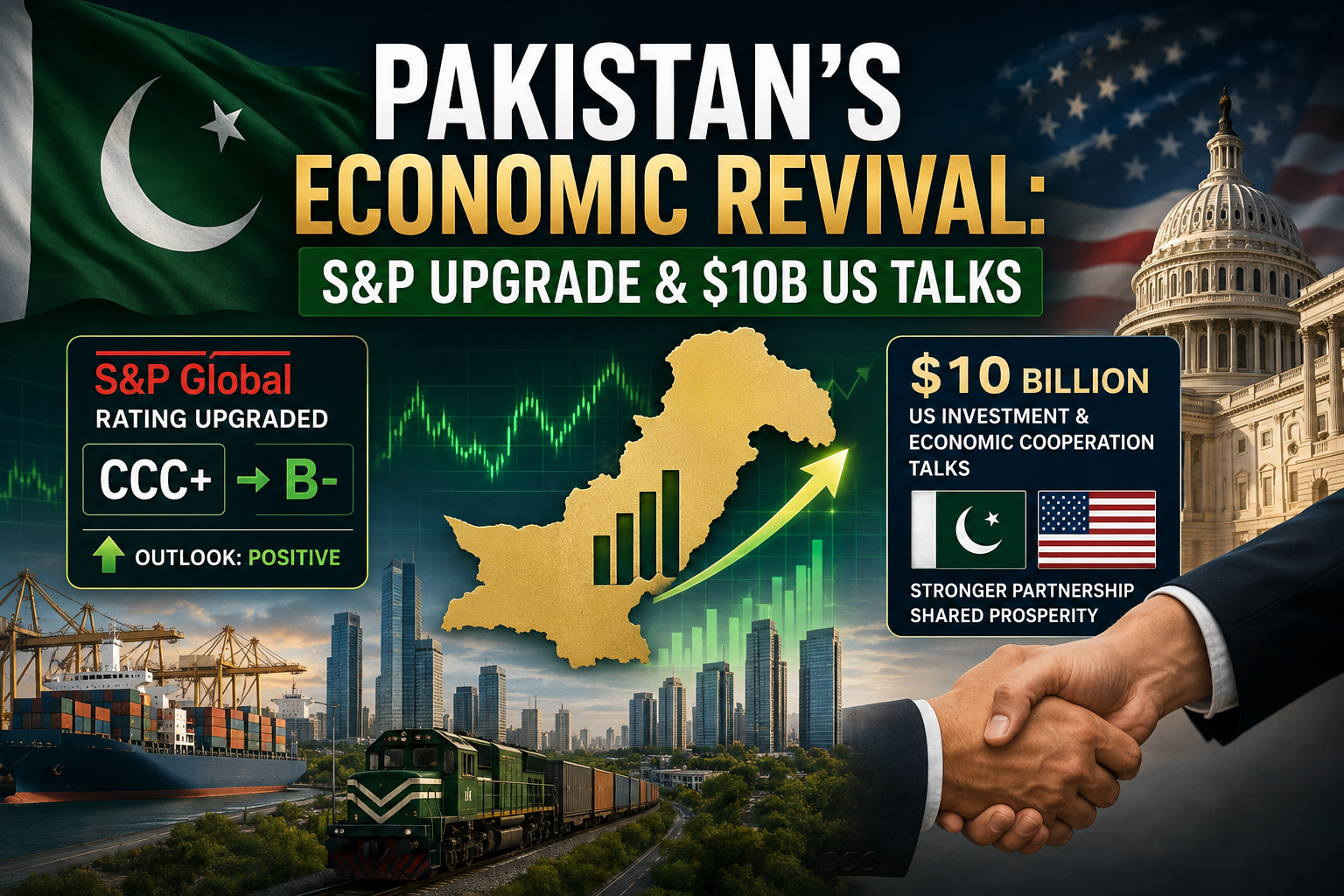
Standard & Poor’s Global Ratings raised Pakistan’s long-term sovereign credit rating to B from B-minus on July 22, with a stable outlook. This is the second upgrade in two years. S&P credited improved political and institutional stability, tax reforms that widened revenue collection and steady progress under the IMF’s $7 billion Extended Fund Facility, approved in September 2024. Pakistan has completed multiple reviews under that program, a discipline that eluded previous governments for years. Foreign exchange reserves, including central bank gold holdings, have nearly quadrupled since the depths of the crisis, reaching $25.3 billion by the end of June, S&P said. That is a genuine national achievement, built on sustained policy discipline.
The upgrade landed alongside a second sign of Pakistan’s rising standing. Reuters reported that Islamabad had asked United States Treasury Secretary Scott Bessent for a $10 billion bilateral exchange stabilization facility with a maturity of up to five years. Finance Minister Muhammad Aurangzeb raised the request during a meeting with Bessent in Washington. If approved, the facility would work as a bilateral financial backstop. It would strengthen reserves, support the rupee and reduce reliance on multilateral lenders rather than deepen it, giving Pakistan more room to manage its own economic future on its own terms.
The United States Treasury’s public statement after the meeting welcomed Pakistan’s progress on fiscal consolidation and its push to return to international capital markets, a notable endorsement from Washington of a reform effort that has demanded real political courage from Islamabad. The statement did not confirm or even mention the reported $10 billion request. That gap is worth noting as Washington chose to praise Pakistan’s reform record on its own merits rather than fold it into commentary on a pending financial ask, which says the credit belongs to Pakistan’s own policy choices, not to any single transaction.
📄 POLICY WIRE WHITEPAPER PUBLISHED: PAKISTAN’S NATIONAL SECURITY POLICY PRIORITIES
Some commentary has linked the timing of the request to Pakistan’s role earlier this year mediating between Iran and other parties, an effort that did raise Islamabad’s diplomatic profile in Washington and reflected the kind of steady, trusted hand Pakistan has increasingly brought to regional diplomacy. That connection deserves an honest hearing rather than a cynical dismissal. Diplomatic standing and economic negotiation move together in real politics, and Pakistan’s willingness to play a stabilizing regional role has plainly strengthened its hand. However, naming that link is different from reducing an economic turnaround built over three years to a single transaction. Treasury grounded its praise in fiscal consolidation, revenue collection and reserve accumulation, the same metrics S&P cited two days earlier. Two independent institutions converging on the same numbers looks less like a backroom arrangement and more like overdue recognition of hard-won progress.
Governments do not open talks on multibillion-dollar bilateral stabilization facilities with counterparts they consider unreliable. That the United States is even discussing a facility of this scale, on top of a credit upgrade delivered independently by a private rating agency, reflects how far Pakistan has rebuilt its credibility with the world’s most important financial power in a remarkably short span of time.
None of this means the work is finished. At B, Pakistan remains in speculative-grade territory, still several notches from investment grade, but the trend line is unmistakable, reserves rebuilt, reviews completed, a rating raised twice in two years and a great power now willing to talk about deeper financial cooperation. That is the story Pakistan has earned, and it deserves to be told on its own terms, not buried under speculation about hidden motives.
Author